Artificial intelligence in education and training: issues, opportunities and challenges
The logic of charters is a legal logic that tries to say what should apply to everyone. Will charters succeed in regulating A.I.?
Publish at October 02 2024 Updated October 02 2024


The school inevitably deals with issues of concern to the general public. The environment has been a hot topic for decades, even if it doesn't show up in the public speeches of some leaders.
The school system has a knack for using its curricula to bounce back and teach children about the environmental issues of the day. The author of these lines well remembers periodically seeing the themes of the ozone layer, acid rain and the timid beginnings of the subject of climate change during his schooling.
Today, climate change is one of the most important subjects taught, but is it really well presented? For one thing, it requires a consistency that some teachers and schools lack when it comes to ecological gestures. What's more, there are hostile critics who say that it has no place in the education of students.
Indeed, some consider that ecology is not a science but an opinion or ideology. The latest barometer of critical thinking carried out by Universcience shows that 75% of French people think this way. This led to an article in "Le Monde" in June 2024 by ecology researchers who are disturbed by this perception when, scientifically, the ecological crisis has been proven time and time again. In their view, the topics are well covered in the classroom, but far too superficially, while the issues at stake are complex.
The issue is not new in France. As far back as the 1970s, associations and environmental movements were calling for scientific knowledge to be taught in education at all levels, from the earliest age. However, public authorities have taken timid steps to integrate it without ever considering it as an objective of the school system. Perhaps this is due to the fact that, until now, this call has come mainly from activists who are aware of the issues surrounding the pollution of natural environments.
These researchers' plea adds an important new layer in that it underlines the fact that this is no longer a matter of opinion. Scientific ecology is more present than ever, and must be part of the didactic discourse. Ecological literacy is essential to instill in children and teenagers throughout their school career.
Some people wonder whether ecology shouldn't be a separate subject at school, like mathematics, French or history. For the moment, the approach used is more cross-curricular, allowing the subject to be tackled in different contexts. But doesn't this underline the fact that the teacher or school itself considers the ecological question to be ancillary to more serious subjects? However, such a solution would require a severe rebuilding of the curriculum, with the risk of debate from those who see the change as ideological.
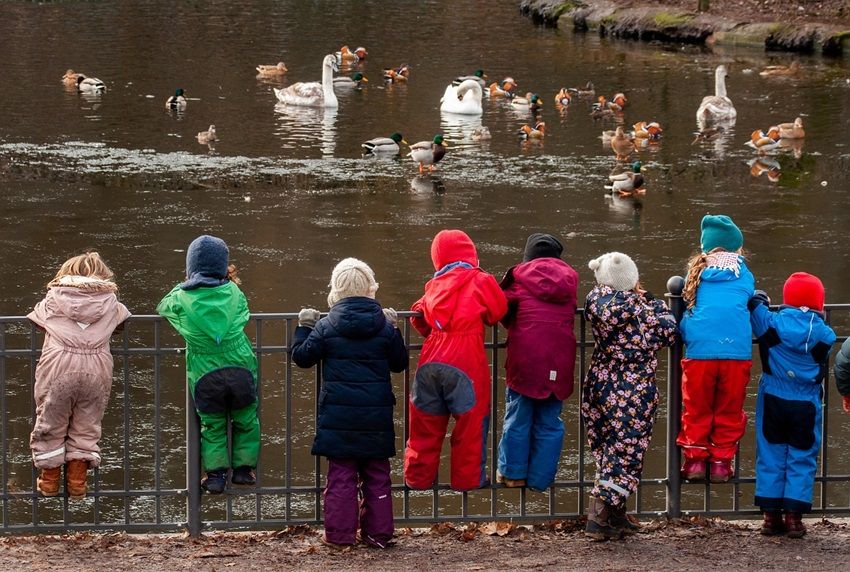
In the researchers' forum, the solution lies in a greater emphasis on participatory science at school. This means using more experiments linked to life sciences and ecology. Above all, as this 2021 text emphasizes, this teaching would involve getting out of the classroom and confronting different environments and ecosystems. Because seeing them in images on a whiteboard or in a game, and perceiving them with all the senses, can hardly be compared.
It's easier to explain the links between the various plant and animal species by seeing them. The Vigie-Nature École project is a good step in this direction, enabling various teachers to integrate ecology into different protocols.
This participatory approach also calls for greater collaboration between teachers and researchers. The latter could provide information, co-lead classes or create educational activities that place scientific ecology at the heart of the approach. This alliance would provide a more solid foundation on which to build ecological education in schools. Teachers could remind skeptics that the whole thing is based on the method and data of national researchers.
Image: wal_172619 from Pixabay
References:
Benjamin B. "How to (properly) teach ecology at school?" The future is good. Last updated: November 27, 2023. https://www.laveniradubon.fr/lifestyle/comment-bien-enseigner-lecologie-a-lecole.
"How does teaching SVT in high school prepare for ecological challenges?" Stewdy. last updated August 18, 2024. https://stewdy.com/soutien-scolaire/comment-lenseignement-de-la-svt-au-lycee-prepare-t-il-aux-defis-ecologiques/.
Leclercq, Benjamin. "Ecologie: l'école n'a pas la main verte." Libération. last updated June 27, 2022. https://www.liberation.fr/plus/ecologie-lecole-na-pas-la-main-verte-20220516_FDIWWWJRZNAM5LSGTMUFPQFFBY/.
"Ecology is an opportunity for education." Vigie-Nature. Vigie-Nature. last updated September 12, 2024. https://www.vigienature.fr/fr/actualites/ecologie-est-opportunite-enseignement-3820.
"My vision of ecology in schools." Le HuffPost. last updated September 9, 2022. https://www.huffingtonpost.fr/life/article/ma-vision-de-l-ecologie-a-l-ecole_207536.html.
"What methods should be used to teach children the basics of ecology through everyday experiences?" Le Next. last updated June 5, 2024. https://lenext.fr/796/quelles-methodes-pour-enseigner-les-bases-de-lecologie-aux-enfants-par-des-experiences-quotidiennes/.
Turpin, Sébastien, Bastien Castagneyrol, Muriel Dagens, Denis Dessagne, Mathieu Farina, Anne-Françoise Gibert, et al. "Quel enseignement de l'écologie à l'école?" HAL Open Archive. last updated November 18, 2021. https://hal.science/hal-04332018.
"" To accompany the ecological transition, it is urgent to reinforce scientific and experiential teaching at school." Le Monde.fr. Last updated: June 12, 2024. https://www.lemonde.fr/sciences/article/2024/06/11/pour-accompagner-la-transition-ecologique-il-est-urgent-de-renforcer-l-enseignement-scientifique-et-experientiel-a-l-ecole_6238675_1650684.html.
You might also like:
Artificial intelligence in education and training: issues, opportunities and challenges
The logic of charters is a legal logic that tries to say what should apply to everyone. Will charters succeed in regulating A.I.?
Practice first, then theory: a path linked to constraints in the field
Theory and practice go hand in hand. In teaching, the former generally precedes the latter. However, there are situations in which you enter a sector through practice, gradually absorbing theoretical knowledge.
Now it's time to tackle school dilapidation
The issue of school stock is not one to be taken lightly. The neglect of recent decades has led to a rather depressing picture. Solutions do exist, and they certainly require good money, but above all a philosophy of the school as a changing living environment that prepares future generations for the challenges of tomorrow.
Building an irreversible experience of creative cooperation
What are the conditions for creating an irreversible experience of creative cooperation? How does a learning team meet challenges?