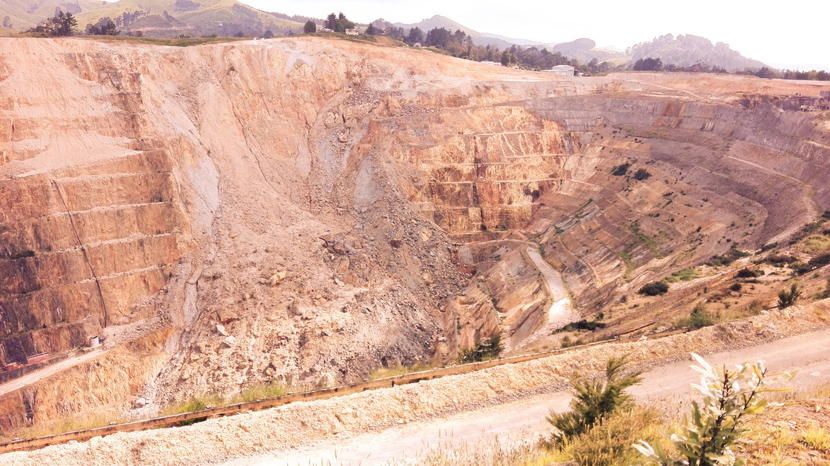
Wearing a piece of jewelry made from gold, buying the latest phone - it's all very pleasant! But do we wonder how these materials are collected so that we can have at our disposal the gadgets we love so much?
While the abolition of slavery dates back several centuries, we have to believe that the world's scramble for mineral resources has given rise to a new form of slave. These are the people who spend hours in the mines to escape the precariousness and poverty that surround them. While for them, this work represents a means of escaping their oppressive situation, they all agree on the dangerous nature of their activity and, for some, on their status as outcasts.
Despite the profits that foreign mining operators can make from the work of local convicts, and the glitter and glitz that the word "gold" conjures up in the mind, the underbelly of gold mining or any other mineral exploitation is not so glamorous. Behind it lies social and environmental injustice.
Land expropriation and the disruption of social equilibrium
Expropriation by force or consent, abandoning land that has long supported the equilibrium of an individual, his community and his environment, is no mean feat, given the social fabric created by interactions between people and their environment.
Even if another life is offered to them through relocation, as is the case in Congo after the installation of a Chinese potash mining plant, the balance from a social and food security point of view is forever disturbed.
Speaking of his former home, Luemba Mavoungou told TV5 Monde in a report from Mpili, Congo: "Here, we could go into the forest, pick palm nuts or go fishing. Today, we don't even have fields to cultivate".
This piece of text reveals the existence of a real social and, to a certain extent, cultural imbalance, orchestrated by a series of expropriations. These cut all ties between the land and its people. Given that the definition of identity implies an attachment to the land, to a space with which the individual is at one (Guy Di Méo, 2007), behaviors related to material space are undergoing changes that negatively affect people's experiences.
In the case of the Congo, food insecurity has been established, as Luemba's neighbor acknowledges: "Everything here is bought. You need money for everything. We're not the same people we were in our village. Here you have to buy everything: firewood, manioc. Nothing is free anymore. We no longer have access to the forest here. We live like the people in Pointe-Noire [Congo's economic capital]".
A population abused
When projects of this magnitude are launched, it goes without saying that the benefits of the venture should accrue primarily to the local population. It seems that when it comes to mining, things work differently.
In fact, it seems that the local population is the one who benefits the least, as it finds its tranquillity invaded and disturbed by the invasion of its land by strangers and machines of all kinds. And as if that weren't enough, instead of improving their living conditions, this exploitation actually makes them worse.
In eastern Cameroon, for example, a member of the association "Trop c'est trop!" expresses his frustration by declaring: "What's the point of plundering the resources of our land if it doesn't do anything for us, leaving a terrible disaster in our rivers, forests and so on?
A major ecological impact
While the discovery of mines represents an opportunity for countries to attract foreign direct investment, the activities linked to mineral exploitation have a strong environmental impact. Vegetation, which is supposed to regulate temperature and absorb particles harmful to humans, is destroyed, endangering human health and biodiversity, not to mention the landscape, which is disfigured by mining.
This is the case of the hydrographic network and riparian forests in East Cameroon. On top of this, water is contaminated by mercury, which is used to extract gold powder, making access to drinking water difficult, if not almost impossible. In addition to this scenario, once the mines have been exploited, they are hardly ever rehabilitated. As a result, excavations cover the entire perimeter. In the rainy season, these become death traps for people and livestock.
Responsible mining
It is clear that the abusive exploitation of natural resources is damaging the environment and the lives of present and future generations. On the one hand, countries really can't do without mining resources, and on the other, we need to ensure more sustainable exploitation in the interests of the planet. Can these two aims coexist, given the predominant role played by these resources in the global economy?
Despite this complex challenge, environmental education and respect for human rights are part of the solution. This mission falls primarily to schools. Indeed, PISA and World Values Surveys between 2005 and 2012 reveal that a higher level of education improves understanding of the risks associated with environmental deterioration, which affects both short- and long-term human behavior towards the environment.
Beyond the school system, it is important for governments to ensure respect for human rights, especially those of indigenous peoples, so that they can continue to enjoy their right to land and natural resources, in the interests of sustainable social and environmental justice.
In addition to awareness-raising speeches, it is necessary to take significant action, such as rehabilitating exploited areas. One example is the rehabilitation of the Geiseltal mining area in Germany, once the pulse of brown coal mining, into an artificial lake - the largest in the Saxony-Anhalt region - in the town of Műlchen, now converted into a tourist attraction. Proof that there can also be good in this kind of activity, as long as it's responsible and fair.
Image by Yathursan Gunam on Pixabay
References
World Conservation Congress, 1996, Montreal, Canada, online
https://portals.iucn.org/library/sites/library/files/resrecfiles/WCC1_RES_051_FR.pdf
Deshaies Michel, 2001, "La réhabilitation des paysages dans l'ancienne région minière du rebordal oriental du Harz (Saxe-Anhalt)", vol. 41, N0 1-2, Current Problems in Germany,
https://journals.openedition.org/rge/3831
Di Méo Guy, 2007, "Identités et territoires: des rapports accentués en milieu urbain?", Vol 1, Varia, online https://doi.org/10.4000/metropoles.80
Jaoul-Grammare Magali, Stenger Anne, 2022, "What role does education play in environmental concerns?", Cairn, Vol 1, N0 417, p 1-4, online
https://shs.cairn.info/revue-cereq-bref-2022-1-page-1?lang=fr
Voundi Éric, 2021, "Extractivisme minier dans l'Est-Cameroun et controverses socio-environnementales: quelles perspectives pour un développement paisible des communautés locales?", Belgeo, Vol 2, p 1-31
https://journals.openedition.org/belgeo/48699
See more articles by this author