Learn the mechanisms of misinformation with Bad News
Understand the strategies of online disinformation through an interactive experience that puts you in the shoes of a fake news propagator.
Publish at October 23 2024 Updated October 23 2024


We've all heard the stories of inheritance. Whether it went smoothly or was a tug-of-war, a huge part of a family's continuation is through the legacies of the elders before them. Sociology has long been concerned with the question of inequalities in socio-economic backgrounds through, among other things, culture. Bourdieu showed, for example, that the less well-off did not have equal access to books, the arts, knowledge and so on. On the other hand, this is just as verifiable in monetary terms alone.
Wealthy clans not only share larger inheritances, but also make many more informal donations over the course of a lifetime. What's more, states that have often divested themselves of public policies rely on this family generosity. However, this generosity only applies to a handful of families at most. What's more, the poor are generally penalized by certain gifts, or simply by the fact of living together.
What's more, as sociologist Sibylle Gollac reminds us, in addition to socio-economic inequalities, gender inequalities persist. Indeed, despite a French civil code that requires equitable sharing between members of the same family, women are often at a greater disadvantage than men. The latter will usually receive major assets such as residences, businesses and major assets, while women will settle for sums of money at X time. As a result, even notarial law reproduces societal inequalities.
The family, a place of solidarity? Yes... but it's better to be born a man into a rich family.
Running time: 25min50
Image by IA (Copilot)
You might also like:
Learn the mechanisms of misinformation with Bad News
Understand the strategies of online disinformation through an interactive experience that puts you in the shoes of a fake news propagator.
Develop your musical ear through play with Meludia
To a layman, music is just a tune performed by a musician. Yet, if he were to play Meludia, he would learn all the rudiments and terms associated with musical practice.
A series of games that require an ear.
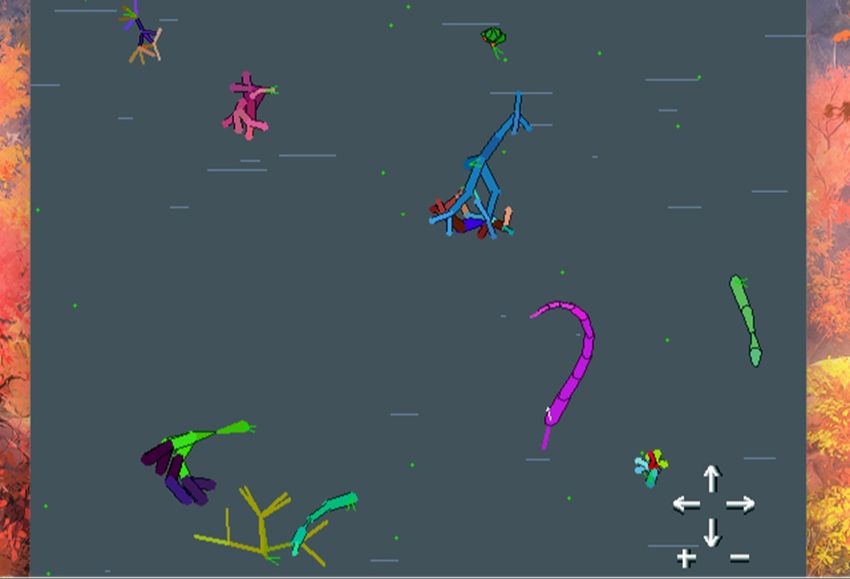
A virtual aquarium to understand Darwinian evolution
Is it possible to understand evolution through simulation? It would seem so. A very interesting resource for high school science classes.
The Englishes MOOC course was developed by an artist and is designed for anyone interested in the (English) language. It explores the history of English, its pronunciation, and its relationship to the art world.