
Teachers and schools have long learned to adapt their activities when it's too hot on their premises, but now it seems that traditional responses are insufficient. Are they?
Publish at November 27 2024 Updated November 27 2024


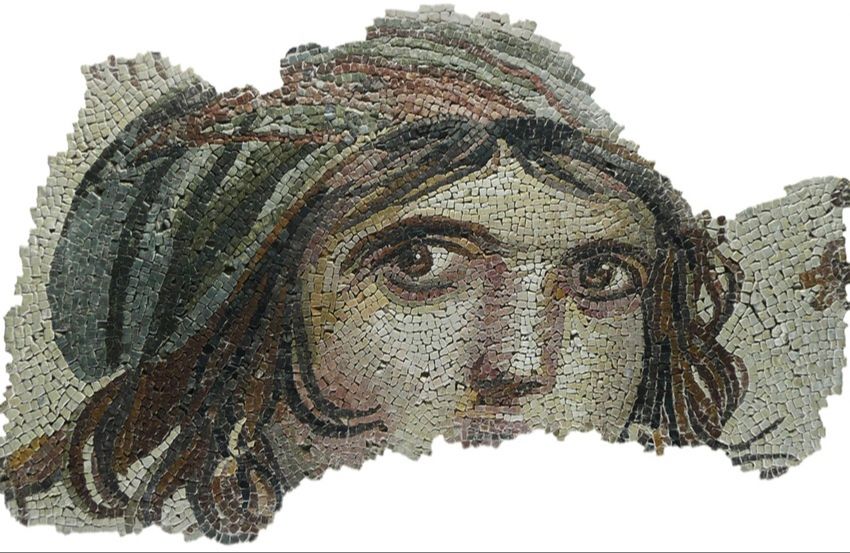
Would we be able to recognize Julius Caesar or Leonardo da Vinci if they were back among us today with their original features? It's a question that fascinates historians and archaeologists alike, as this video by Charlier Danger, a yachtswoman and archaeology popularizer, clearly demonstrates.
If Homo Sapiens is the only humanoid race in existence today, this was not the case in the Paleolithic or Neolithic periods. Different human species adapted to different environments. Thus, with the loss of hair, humans from the cradle of humanity developed dark skin to survive UV rays. White-skinned humans were to appear later in Europe and Eurasia, among other places, as a result of the agricultural lifestyle. This led to a shortage of vitamin D in the diet, so natural selection led to paler pigmentation to absorb more sunlight for the synthesis of this vitamin.
The question of the population of ancient Egypt will sow many debates among historians, but in recent years, it seems that a majority agree on the cosmopolitan aspect and therefore different skin tones. In the Middle Ages, the elites depicted emaciated peasants surrounded by work in their illuminations. Yet archaeology and the analysis of skeletons found would seem to show more robust populations with excellent dentition, contrary to popular belief.
On the other hand, the arrival of various epidemics was to have an impact on human stature and height, which fell by more than ten centimetres in just a few centuries. In fact, it wasn't until the twentieth century that height and stature climbed to Paleolithic levels. This can be explained by diet, working conditions, age of access to jobs, etc.
Running time: 29min21
You might also like:
Teachers and schools have long learned to adapt their activities when it's too hot on their premises, but now it seems that traditional responses are insufficient. Are they?
Deconstructing conspiracy theories
The Internet is fertile ground for conspiracy theories. Skepticism and suspicion frequently recur on social networks or in search engine results. As a result, children find themselves immersed in a world of anxiety where they are encouraged to be suspicious of everything. Is it possible to alleviate their fears through education?
From the Spectacular “Hammer Blow” to Compassionate Words
Coaching terminology, which was originally developed with a focus on performance or materialistic objectivity, is evolving toward a more human-centered approach
The complexity of the building sector, between ecology and digitalization
Meeting the demand for new housing also means being flexible about current issues.
Prestige in education: developing and maintaining it
Prestige is built on achievements and appreciation. What are institutions doing to develop their reputation and renown? Why is it always the same people who stay ahead?