Elude: a serious game for understanding depression
An original approach to depression. The game's metaphor is well conceived, a little dark and informative about a problem that affects millions of people.
Publish at January 29 2025 Updated January 29 2025



Do we have the attention span of a goldfish? We might think so, in a world where a literal market for attention has developed. However, as professor of developmental psychology and educational cognitive neuroscience Grégoire Borst reminds us, this is not the case. It's true that attention is more in demand than ever before, but current neuropsychological tests show that children and adults alike have the same capacity.
First of all, we need to understand how attention works. Attention is the ability to focus on specific information, ignoring all others. This attentional blindness is what enables motorists to concentrate on the road and what's happening on it, for example. For students, it's being able to take note of what the teacher is saying up front. However, this attention can ignore other elements if it is not directed to focus on them.
So, for Professor Borst, the issue of attention in the classroom reveals that for children who are struggling (without a diagnosis of attention disorder of any kind) is that their attention doesn't feel that it's the most relevant information at the moment. Perhaps we need to change the didactic approach so that they understand it better?
Running time: 8min18
You might also like:
Elude: a serious game for understanding depression
An original approach to depression. The game's metaphor is well conceived, a little dark and informative about a problem that affects millions of people.
"Space Shelter: Google's cybersecurity game
All our lives have an online component. As a result, a large proportion of Internet users are at risk of being tricked by hackers. A short game invites Internet users to remember certain elements of cybersecurity using a space theme.
A multiplayer game designed for people with disabilities
Video games designed for people with disabilities are already a rare resource. An experience that allows multiple players is even rarer. Yet this latest creation from "Ludociels for All" challenges players to light up an entire maze by walking balls of light.
"Phalenes! understanding natural selection through play
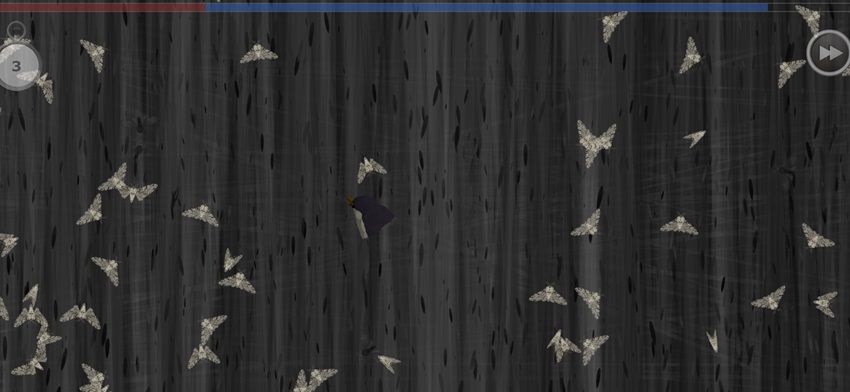
A serious game designed to demonstrate natural selection and its effects on a moth population.
Tests of vigilance and attention
Measuring attention remains a concern in many settings. Some work tasks are not very error tolerant. Here are a series of sample tests to measure attention in children and adults.