In every society in the world, learners are influenced by the environment in which they live, and their physical and intellectual development depends to a large extent on the characteristics of the environment in which they live. What are the contextual factors that help or hinder this development?
Some statistical data
The question that arises here is whether societies take sufficient account of the learner's environment when it comes to learning. In fact, education is not simply a question of the content transmitted, but also of the quality of the environment in which the learning process takes place.
According to a study carried out by the CIDB (Centre d'Information et de Documentation sur le Bruit) on 844 pupils, 74% of children (average age 8.8) are bothered by noise at school. It's not just noise.
Similarly, learners' performance is closely linked to the quality of the air they breathe. Studies have shown that a high concentration of carbon dioxide reduces learners' cognitive functions by 50%. To continue, over 90% of children in East Asia live in areas where pollution exceeds WHO-recommended thresholds, considerably affecting their cognitive development.
Forms of environmental pollution.
The learner's environment can be polluted by various intrinsic or extrinsic factors. The learner sometimes finds himself trapped without being able to react effectively and extricate himself. He faces several challenges:
- Sensory pollution: depending on the context, learners are occasionally or even regularly overexposed to noise, which has a negative impact on their learning. Examples include noise from parents, siblings or neighbors.
- Attachment type: according to attachment theorists, children's insecure attachment to their parents has a negative effect on the personality-building process. If care-giving is not provided by parents, the child will feel insecure. Consequently, it will be difficult for them to develop their capacities. If a parent doesn't respond adequately to a child's needs in the early years, the child's attachment will be impaired.
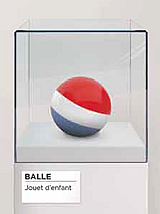
- Unsuitable accessories: do parents think about the type of toys and learning accessories to buy for their children's predispositions? In fact, unsuitable accessories can be detrimental to development. In this case, we're talking about deficient quality, for the simple reason that the products don't meet any standards or expectations in terms of quality, if only in terms of toxicity or ergonomics.
Ignoring the obvious to glimpse the future
The harmful effects of noise, although they exist, do not prevent us from putting things into perspective, because we cannot martially say that noise is always unfavorable. In fact, in other situations, noise helps children to blossom, since in a playground, for example, they need to express themselves, let loose and be creative. Ultimately, it's a question of context. If it disturbs learning, a noise optimizer could be a solution to reduce it.
Conversely, appropriate music can heal one's relationship with the world and even clean up one's surroundings. As the philosopher Kant once said: "Music is the language of emotions. Without really knowing why, it has the capacity to transport us and touch us at the deepest level." In the end, calm is not appropriate at all times, as we sometimes need to listen to people expressing themselves through music or in some other way, without it being a source of disturbance.
As far as attachment is concerned, if children are totally dependent on their parents, to the extent that they are not also capable of taking initiative, they will find it difficult to forge a certain autonomy even at an advanced age. Although parents are important supports, if they spend their time always responding favorably to their children's every solicitation, the latter may not take flight on their own. So we need to find the right balance.
Illustration: image generated by AI Meta
Source:
The impact of parent-child attachment on children's learning skills
https://dumas.ccsd.cnrs.fr/dumas-03857888v1/document
The impact of noise on the health of students and teachers
https://environnement.brussels/sites/default/files/user_files/pres_20141204_bruit_ecoles_impactsante.pdf
Noise exposure and academic performance of CE2 pupils
https://www.sciencedirect.com/science/article/abs/pii/S0033298414000466
EWA acoustic optimizer
https://einrichtwerk.fr/Formation-pour-adultes/Optimiseur-acoustique/
The power of music
https://canalalpha.ch/play/ma-foi-cest-comme-ca/episode/34232/le-pouvoir-de-la-musique
The impact of air pollution on students' health and performance
https://www.atmosud.org/actualite/limpact-de-la-pollution-de-lair-sur-la-sante-et-la-performance-des-eleves
Air pollution: "devastating" effects on children, warns UNICEF
https://www.ouest-france.fr/sante/thailande-vietnam-mongolie-les-effets-devastateurs-de-la-pollution-de-lair-sur-les-enfants-22873e2c-e542-11ef-9afb-41e1b47a1356
See more articles by this author