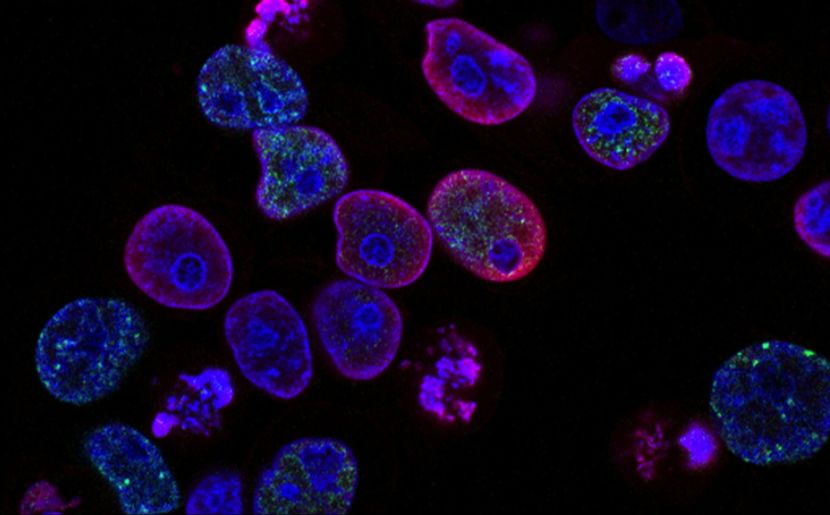
The cells of all living organisms maintain constant symbiotic relationships, and all forms of life have evolved through mutual interdependence."
An illusory break between humans and their environment
Since the rise of Cartesian thought and industrial modernity, humans have often represented themselves as separate from the world, as masters and possessors of nature. This dualistic vision, opposing nature and culture, mind and matter, subject and object, has led to an approach to learning largely centered on the accumulation of abstract knowledge, thought of as extractions disconnected from the dynamics and flows of the living world.
Yet contemporary science, from biology to neuroscience, from mesology to ecological economics, reveals a profound interdependence between humans and their environment.
Not separation, but biological and ecological interdependence
Human beings cannot be understood in isolation from the living world of which they are a part. His body is itself an ecosystem: his microbiota, made up of billions of bacteria and other micro-organisms, is essential to his digestion, immunity and even mood (Sender et al., 2016).
This symbiotic interaction is not a human exception, but a fundamental principle of living things, as Lynn Margulis (1981) showed with his theory of endosymbiosis. Beyond the body, human life depends on ecological balances.
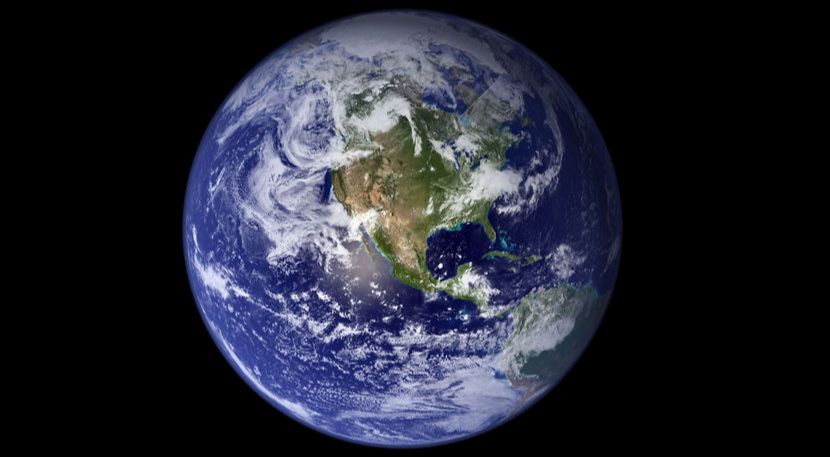
James Lovelock's Gaia hypothesis (1979) proposes that the Earth functions as a self-regulating system, where climate and living conditions are co-produced by all living things. This perspective calls into question the separation between human and nature, and encourages us to think of learning not as an extraction of knowledge, but as an ongoing interaction with the world. While extractive thinking seeks to unravel the mysteries of matter, holistic thinking seeks to live with it.
Not creationism, but a human being shaped by his environment
Far from being an abstract, autonomous being created ex nihilo, humans are part of a dynamic of adaptation and mutual transformation with their environment. The work of Tim Ingold (2000) shows that the nature/culture distinction is artificial: human practices are shaped by the environment in which they develop.
Archaeology and paleoanthropology attest that human evolution has always been a coevolution with the natural and technological elements of its time (Larson & Fuller, 2014). We are not one thing and the environment something else that influences us; we are an encounter.
From a mesological perspective, Augustin Berque (2000) points out that the relationship between humans and their environment is mediated by a process of trajection, in which they transform themselves at the same time as they transform their environment.
The Japanese concept of fûdo (Watsuji, 1961) expresses this inseparable relationship between landscape, climate, material conditions and the cultural structures that emerge from them. So, learning is not about extracting knowledge from an external world, but about developing an active sensitivity to the relationships that bind us to living things. This is what Varela will explain.
No learning without embodiment and relationship
Neuroscience and enaction theory (Varela et al., 1991) confirm that cognition is not a purely cerebral process, but a dynamic interaction between body and environment. Cerebral plasticity (Merzenich et al., 1984) shows that our learning capacities evolve as a function of our experiences, which implies that learning cannot be reduced to the transmission of information, but involves sensory and relational immersion.
We are much more than data exchange and AI computation. From this perspective, traditional education, based on the separation between theory and practice, appears incomplete. Learning requires cultivating an embodied intelligence, where sensory experience, attention to natural rhythms and cooperation with other living beings (human and non-human) are essential. Otherwise, I'll invent the atom bomb and destroy myself.
No theoretical economy outside the soil and outside the territory
While classical economics has long separated humans from the biosphere, placing them as rational agents above natural constraints, ecological economics (Daly & Farley, 2011) challenges this vision. It sees human activity as a sub-part of a larger system, subject to physical and ecological laws.
Transposed to learning, this means that education cannot be thought of independently of the material and ecological conditions that make it possible. Learning from the living world cannot be an extractive process (reducing the world to a resource of knowledge), but must be regenerative, i.e. designed to maintain and reinforce the balances that sustain it.
The robustness of learning lies in its capacity to regenerate itself constantly, at the risk of becoming rigid and ultimately a copy of a copy of a copy, which is what we're witnessing with AI, which ends up running in a loop and producing perfect texts with no flavor.
Towards learning about living things by and for living things
From these various observations, we can extract some fundamental principles for robust learning from living organisms:
- Principle of interdependence
Learning must be conceived as a continuous interaction with the environment, integrating biological, ecological, social and cultural dimensions.
- Principle of embodiment
All knowledge is rooted in bodily and relational experience. Learning must mobilize the body, the senses and the rhythms of the environment.
- Symbiosis principle
Rather than extracting knowledge unilaterally, learning must be conceived as a cooperation with the living (human and non-human).
- Principle of attention to the environment
Education must train people to actively listen to the world, to develop a keen perception of the relationships that structure an ecosystem.
- Principle of regeneration
All forms of learning must seek to strengthen and revitalize the environments from which they emerge, rather than impoverish them.
These principles imply profound transformations in the way we conceive education and the transmission of knowledge. It's no longer a question of accumulating knowledge detached from reality, but of cultivating a relational intelligence, anchored in the rhythms of the living world.
Towards a new epistemology of learning
These perspectives invite us to rethink education from a living perspective, fully integrating the interdependencies that structure our existence. Far from being a process of accumulating theoretical knowledge, learning becomes an act of active participation in the world, a way of inhabiting the living world with care and responsibility.
In the face of today's ecological and social crises, this rethinking is urgently needed. Far from separation, we need to rediscover a symbiotic relationship with the world, where learning means above all cultivating sustainable relationships with living things. In this sense, learning from living beings and for living beings promotes robustness.
Sources
Berque, A. (2000). Écoumène: Introduction à l'étude des milieux humains. Belin.
https://amzn.to/41tdhWy
https://www.leslibraires.ca/livres/ecoumene-introduction-a-l-etude-des-augustin-berque-9782701199511.html
Cristol, D. (2022). Pour une mésologie de l'apprenance. Phronesis, 11(4), 112-132.
https://www.erudit.org/fr/revues/phro/2022-v11-n4-phro07295/1092337ar/
Daly, H. E., & Farley, J. (2011). Ecological Economics: Principles and Applications. Island Press.
https://amzn.to/3DeWvT6
Ingold, T. (2000). The Perception of the Environment: Essays on Livelihood, Dwelling and Skill. Routledge.
https://amzn.to/3Xo1V5a
Lovelock, J. (1979). Gaia: A New Look at Life on Earth. Oxford University Press.
https://amzn.to/4i6V5JE
Margulis, L. (1991). Symbiosis in Evolution: Origins of Cell Motility: Origins of Cell Motility. In Evolution of life: fossils, molecules, and culture (pp. 305-324). Tokyo: Springer Japan.
https://amzn.to/4heaiad
Sender, R., Fuchs, S., & Milo, R. (2016). Revised Estimates for the Number of Human and Bacteria Cells in the Body. PLoS Biology, 14(8), e1002533. - https://pubmed.ncbi.nlm.nih.gov/27541692/
Varela, F. J., Thompson, E., & Rosch, E. (1991). The Embodied Mind: Cognitive Science and Human Experience. MIT Press. - https://amzn.to/4bqLYAJ
https://www.leslibraires.ca/livres/the-embodied-mind-thomas-r-verny-9781639364626.html
Watsuji Tetsurô, Fûdo. Ningengakuteki kôsatsu 風土。人間学的考察,(2011) (Milieux. Étude de l'entrelien humain), Tokyo, Iwanami, 1935. Translated by Augustin Berque, Fûdo, le milieu humain, Paris, CNRS Éditions.
https://amzn.to/3Dqnif6
See more articles by this author