Merit, Fame and Celebrity [Thesis].
Let's discover the emergence of the culture of celebrity with Marie-Ève Beausoleil's thesis proposing a historicization of this phenomenon and the question of public recognition in the France of the Enlightenment.
Publish at April 01 2025 Updated April 02 2025


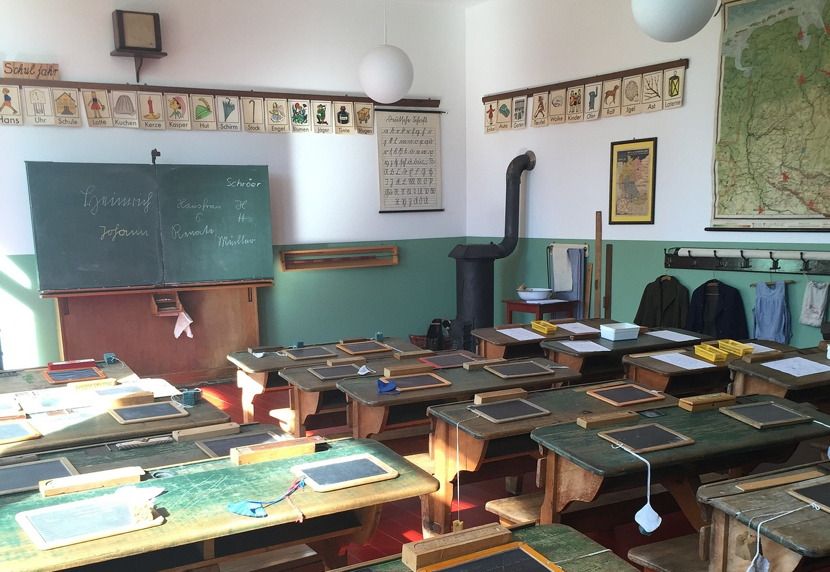
Equitable access to quality education has long been on the international agenda. Fueled by the interest shown in achieving the Sustainable Development Goals, it is clear that, from my point of view, this MDG 4 has a major link with the other sixteen, since education is an essential element in building a fairer society.
But for developing countries, it's just one more challenge to reduce the number of young people who don't go to school, and there's no respite; they also have to address the financial challenge, which leaves young people vulnerable to extremist ideologies, clandestine emigration, dropping out of school and unemployment.
Faced with this situation, there is an urgent need to mobilize funding to improve equitable access to education. In this report (.pdf), CONFEMEN (Conférence des ministres de l'éducation des États et gouvernements de la francophonie) suggests ways out of the crisis to its member states. So what are these strategies for meeting the financial challenge?
Africa is one of the world's fastest-growing continents. As such, the school enrolment rate is bound to rise, which means massive investment in this sector, as the lack of funding means that children are forced to opt out of school, due to the lack of teachers and school infrastructure. As a result, the internal efficiency of school systems is low, with curricula that are ill-suited to the local context, making it more difficult for young graduates to enter the job market.
Some CONFEMEN countries do their best to finance the education sector by injecting a considerable percentage of their GDP into it, as is the case with low- and middle-income countries. Admittedly, the resources allocated to education are low, at 3.98% and 3.4% respectively. For Cameroon, the resources allocated to education are highly dependent on the weight of total public expenditure, fiscal pressure, external revenue received by the state, the overall budget balance and external and internal debt servicing. This means that all these parameters influence the quality of the financial resources allocated to education.
On the other hand, economic growth, improvements to the tax system, the mobilization of domestic resources through taxation, the formalization of the informal sector, the fight against fraud and tax evasion, as well as the reduction of tax expenditure, are all conducive to a significant increase in tax revenues, which can be injected into the budget allocated to education.
In Senegal, for example, tax expenditure can cover the entire cost of education. The proof is that they amount to as much as 500 billion CFA francs, compared with 637 billion CFA francs allocated to the Ministry of Education in 2017. It's clear, then, that these losses incurred by governments not only handicap the education sector, but also the attractiveness of foreign investment. For if private investors are looking for new markets, they need to be able to find a skilled, educated workforce.
In addition to fiscal expenditure, foreign debt is also a brake on achieving MDG4. The higher it is, the less CONFEMEN member countries' public spending will be able to cover sectors such as education; especially since for seventeen of them, this debt doubled between 2008 and 2015. In Mauritius and Cape Verde, the external debt ratio rose from 11.3% to 49.6%, and from 93.1% to 108.7% respectively. Under these conditions, it's easy to understand why the education sector is failing. Can we count on the private sector and development aid to help us get back on track?
Although the private sector is a crutch for education from the state, its contribution cannot really be quantified due to the lack of data linked to specific surveys on this subject. Nevertheless, we can rely on household surveys carried out by UNESCO in 2012 as part of its anti-poverty policies to get an overview of the reality. As a result, households contribute 4.2%, or 1.4% of GDP, equivalent to just under half the public resources allocated to education (3.7% of GDP).
In continuous decline since 2009, aid for education in developing countries has fallen drastically as a result of the crisis that has hit developed economies since 2007. Although very salutary, the amount earmarked for education is not really conducive to achieving MDG4, especially for low-income countries, for which $10.6 billion a year is needed instead of $2.3 billion according to UNESCO in 2015. Isn't it time to think about other innovative sources of financing?
The failure of traditional financial backers prompts us to think about innovative sources of funding. The truth is that governance is not only based on inter-state relations, but also on non-state bodies such as NGOs, multinational companies, local authorities and so on. Thus, several sources of recovery for the education sector can be envisaged, both domestically and externally:
To take advantage of potential innovative sources of financing for education, we need to :
Faced with declining investment from traditional donors, ministries of education in CONFEMEN countries need to focus on results-based management, in order to justify to public opinion the proper use of resources allocated to education. And finally, the establishment of national accounts for education to develop a culture of accountability.
Illustration: Sabine Nuffer - Pixabay
Reference
Conférence des ministres de l'éducation des Etats et des gouvernements de la francophonie (CONFEMEN), 2017, Sustainable financing of education: what strategy should be considered? online
https://www.confemen.org/wp-content/uploads/2022/07/Document-financement-Education.pdf
You might also like:
Merit, Fame and Celebrity [Thesis].
Let's discover the emergence of the culture of celebrity with Marie-Ève Beausoleil's thesis proposing a historicization of this phenomenon and the question of public recognition in the France of the Enlightenment.
The school experience of the descendants of North African immigrants [Thesis]
Descendants of North African immigrants can have a positive school experience, provided their parents are involved in their schooling.
Our relationship with things: 15 minutes of use and an eternity of obsolescence [Thesis].
Obsolescence is the subject of much discussion, be it economic, political or ecological. But what do we mean by obsolescence? What is our relationship with it? What is its history and logic? To find out, I invite you to discover Jeanne Guien's impressive thesis entitled "Obsolescences: Philosophie des techniques et histoire économique à l'épreuve de la réduction de la durée de vie des objets".
The treasure of musical texture for deaf children [Thesis].
Listening engages the external and internal auditory system, the central nervous system, but also the whole body! The musical texture that has been very perceptible since the 20th century is particularly well understood by deaf children with implants, as well as by adult musicians. This understanding, supported by the development of pedagogical methods that involve rhythm, space and movement, consolidates temporal and language learning.
The clown game as an alternative to the serious I [Thesis].
Serious games suggest that non-serious games cannot be educational. But what if it were possible to train serious people with clown play? Let's find out with the clown researcher Rafaël Resende Marques da Silva and his thesis "Development of a pedagogy of clowning: a journey between Brazil and Europe".