Research in the educational sciences is too often precisely wrong.
A critique of training sciences that too often focus on approaches that are disconnected from reality
Publish at April 09 2025 Updated April 09 2025


There's no point in man winning the moon if he loses the earth.
François Mauriac
The current ecological crisis raises profound questions about how to reconcile social and environmental challenges. Social workers, traditionally involved in supporting vulnerable populations, are now faced with the imperative of integrating ecological issues into their practices.
This evolution in missions calls for a more systemic approach, taking into account the interconnection between the individual, society and the environment. The idea of Deep Ecology sheds light on this perspective, emphasizing that social and ecological crises are symptoms of a rupture between humans and nature. The internal state of an individual - whether agitated, fragile, confused or angry - can have repercussions on the immediate environment and, by extension, on global ecosystems.
An internal imbalance can contribute to the "warming" of minds, fuelling global warming, to paraphrase Paul Virilio. This dynamic interconnects personal disturbances with wider ecological crises. This phenomenon calls for inner and social transformation, in which social workers, in their supportive role, become mediators in this reconciliation between humans and their environment.
Self-care is a fundamental step in the ecological commitment of social workers faced with the very visible consequences of the disruptions suffered by the most vulnerable. In order to act sustainably and effectively, a social worker must first be able to preserve his or her own physical, emotional and psychological balance. Personal fulfillment and the sustainability of social action depend on this inner stability.
Self-care also means managing personal ecological impact. For example, adopting practices such as reducing business travel, using sustainable materials and managing resources responsibly in the workspace are concrete ways for social workers to reduce their ecological footprint while remaining effective in their interventions and not exhausting themselves traveling around sprawling cities.
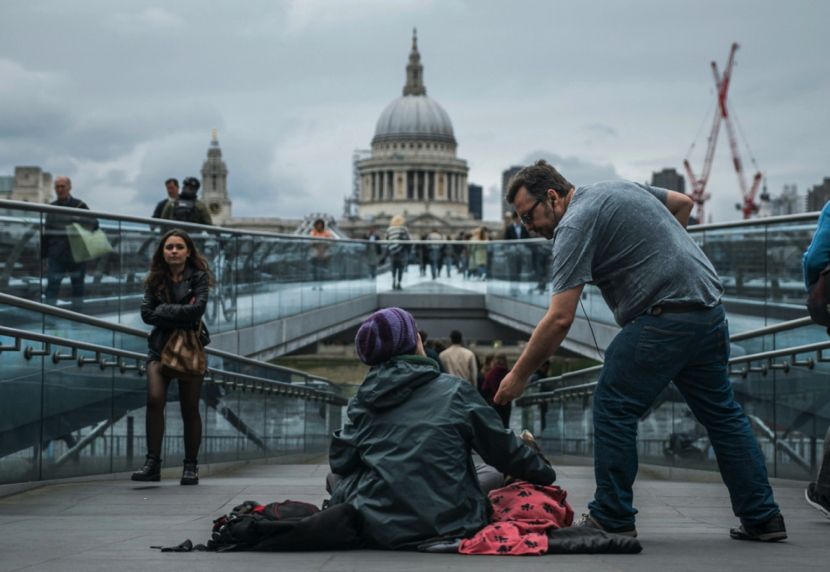
Social work extends beyond the simple management of social suffering to a comprehensive approach to care. The most vulnerable populations, already exposed to social inequalities, are also often the first victims of ecological crises: fuel poverty, unequal access to natural resources, climatic migrations.
Social workers are now integrating these dimensions into their work, helping individuals to adapt to environmental change. The model of co-construction of social projects, proposed by Dubasque (2009), is becoming a key tool. It involves beneficiaries in collective projects aimed at reconciling social justice and ecological transition. This includes initiatives such as shared gardens and short food circuits.
These projects not only promote social resilience, but also reconnect individuals with living things while reducing their collective ecological footprint. Philosopher Cynthia Fleury (2019) insists on the importance of reciprocity in care with the idea of the patient school. Rehabilitating the mastery of use, she shows the power of each individual to take care of themselves and others. As a facilitator, the social worker becomes a key player in this reciprocity, encouraging individuals to actively engage in sustainable practices, both for their own well-being and that of the planet.
Taking care of the planet, in the context of social work, is part of a logic of interdependence. Individuals and their environments are intrinsically linked. Social ecology, as Albert, Étienne and Midrez (2024) point out, is based on the idea that ecological and social challenges are inseparable.
Social workers are mediators, facilitating not only the accompaniment of individuals in their daily personal challenges but also their ecological awareness, in order to promote mutual care between humans and the planet. Social work managers play an active role in transforming reception spaces and adopting ecological practices.
This includes reducing energy consumption in reception facilities, using recycled materials and promoting soft mobility practices. If there's a link between one's internal state and the externalities of one's behavior, the converse is true: taking care of the planet also means taking care of one's self-esteem. With this in mind, social workers play an essential role in creating and nurturing this dialogue between the human being and the environment, by integrating ecological issues into their day-to-day practices, with benefits for everyone's mental health.
Here are 10 key actions for an ecological transition in social work, in line with the notion of "taking care":
By integrating ecological issues into its practices, social work becomes a central player in the transition to a fairer, more sustainable future. Taking care of oneself, others and the planet is not just an individual objective, but a social imperative, in which every professional gesture contributes to a world of greater solidarity and respect for the environment.
By applying these principles and adopting eco-responsible business gestures, social workers can support vulnerable populations while promoting the transformation of social and environmental practices.
Sources
Fleury, C. (2019). Care is a humanism (pp. 2-46). Gallimard.
https:// amzn.to/3XKDQpm
https://pantoute.leslibraires.ca/livres/le-soin-est-un-humanisme-cynthia-fleury-9782072859878.html
Albert, I., Étienne, P., & Midrez, P. (2024). Social ecology and social work. Vers une transformation des organisations et des pratiques pour un monde plus juste et durable? Sociographe, N° 86(2), 11-15.
https://shs.cairn.info/revue-sociographe-2024-2-page-11?lang=fr
Dubesque, D. (2009). L'intervention sociale d'intérêt collectif: un mode d'intervention en travail social pour retrouver le sens du vivre ensemble? Informations sociales, 152(2), 106-114.
https://shs.cairn.info/revue-informations-sociales-2009-2-page-106?lang=fr
Jaeger, M., Barges, I., Bouquet, B., Casagrande, A., Dubasque, D., Dubéchot, P., ... & Garcia, A. M. (2015). Refounding the relationship with people." Please don't call us users anymore. (Doctoral dissertation, Conseil supérieur du travail social; Direction générale de la cohésion sociale).
https://hal.science/hal-01419809/file/Rapport%20CSTS%20-%20Refonder%20le%20rapport%20aux%20personnes.pdf
You might also like:
Research in the educational sciences is too often precisely wrong.
A critique of training sciences that too often focus on approaches that are disconnected from reality
Higher education's carbon footprint
Academia studies the effects of carbon but continues to produce it intensively
Teachers as drivers of educational transformation
Education is changing little by little. This is certainly due to technological advances but also to the role of teachers who adopt different approaches according to ICT. However, this evolution, desired by all, will not be possible in a context where the teacher's job is becoming less and less attractive.
In a hurry to live, exhausted to exist
We've never run so much, and yet never felt so much like we were missing out.
When researchers encounter or confront other ways of thinking
When they leave their labs, scientists meet people for whom the universe is not made up of equations. Paranormal enthusiasts talk of obscure forces and chains of causality riddled with contradictions. Others, on the contrary, see the results of their research used to demonstrate anything and everything...