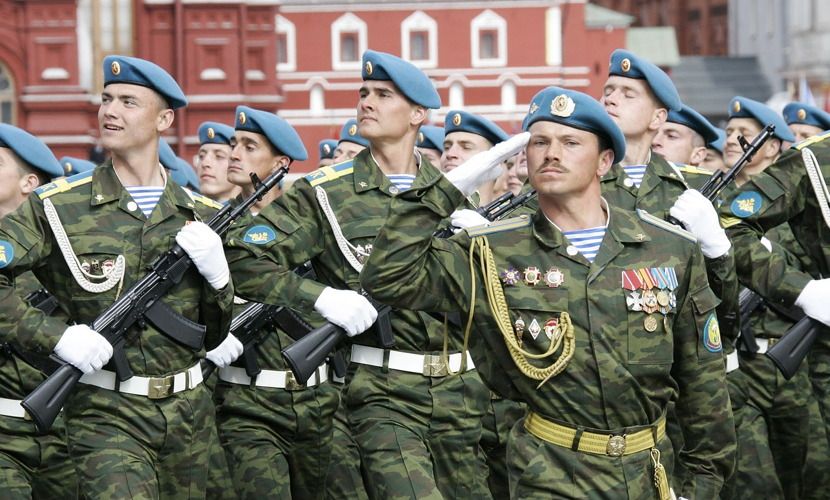
Since Sun Tsu, the military treatise "The Art of War" has been constantly rewritten, amended, enriched and recomposed (1). It would seem that conflict is in our genes. It probably is. Even the humblest living organisms have developed an impressive variety of defense strategies: poison, camouflage, stealth, horns, carapace, etc., all deployed in different techniques and strategies. Any healthy organism knows how to defend itself, and the same applies to societies. It seems we'll always need to know how to defend ourselves.
The saying "Si vis pacem, para bellum" (If you want peace, prepare for war) dates back to the 5th century and comes from the Roman military treatise "De Re Militari". The counterpart was "Si vis pacem, para pactum" (If you want peace, agree to keep the peace), which favors prevention rather than confrontation.
But in reality, when one of the belligerents wants war, you have to face up to it. "Si vis pacem, face bellum" (If you want peace, go and fight) is the most common response. Clausewitz lends a revealing quality to combat.
The cost of myths and principles
When a problem is fed, it grows. Since war is a problem, the longer it drags on, the heavier the costs become, to the point where they outweigh any benefits originally envisaged. For example, one party uses an arbitrary pretext to impose its neighbor (the myth), while its neighbor defends itself in the name of a principle. The attacker invests a certain amount of effort in a campaign of submission and, through a more or less astute calculation, estimates an advantage. Ditto for the neighbor, who calculates that defending the principle is worth a few sacrifices. After some time and gradual destruction, the cost of what might otherwise have been invested is beyond comprehension.
For example, the cost of the First World War in Europe would have made it possible to build a single-family home for ALL the inhabitants of Europe!(3) Instead, for an equivalent debt, we were treated to a decade of misery and the foundations for another, even more costly conflict. The war effort in Ukraine (from February 2022 to April 2025, and counting) has cost Ukraine's allies over 200 billion euros (2), and even more on the Russian side, not to mention over 500 billion in destruction on the Ukrainian side, and certainly several tens of billions on the Russian side. Added to this is the collateral economic damage in terms of lost business (hundreds of billions on a global scale) and the loss of a substantial proportion of young people, which will handicap the future of both Ukraine and Russia.
So what should we invest in to avoid having to go to war?
Defense principles
There is little rationality in war; the motivations for committing oneself to it may be diverse, but they can also be dissuaded. The principle is simple: the benefits of waging war must be less than the benefits of not waging war. If a region is attractive, its defense capacity must be proportional to its attractiveness.
Ways of reducing the appeal of attacking:
- Defense capability, of course, which includes equipment, infrastructure, organization and training;
- the ability to rapidly mobilize competent forces;
- the ability to make territory inhospitable;
- the ability to mobilize support from the population and allies;
- the economic capacity to support defense activities;
- the demonstrated ability to handicap a potential adversary in all these areas.
The means of encouraging appeasement are at least as strategic:
- channels of communication between entities (diplomacy);
- pretexts and agreements for collaboration;
- strict control of the military industry;
- negotiating, monitoring and judicial bodies;
- shared responsibilities and values;
- economic exchanges;
- cultural exchanges.
Conflicts are often prepared over the long term, and undermining activities are aimed precisely at one or more of these points, such as disinformation, economic weakening, financing dissension, infiltration, breaking agreements, hacking, fraud and various forms of sabotage. The appearance of these phenomena, if not deterred from the outset, signals to the social organism that it's time to step up its defense efforts.
The physics of defense
In the days of medieval cities and warring kingdoms, the defense effort could consume over 70% of a social entity's budget. Forget education, health and social services. A small population had to bear the weight of a substantial army and heavy infrastructure (fortifications) for every town and village. This budget has steadily decreased over the centuries to less than 7% today (7), due to several concomitant phenomena:
- The size of regions, which have grouped together to form nations and even federations. As a result, the population supporting the effort is growing proportionally faster than the surface area and perimeter to be defended. When a defense effort relies on more people, its relative weight decreases.
- Troop movement speed. With the advent of the railroad, troops could be concentrated and deployed rapidly anywhere in the country. It was no longer necessary to maintain large garrisons at every frontier. Today, with land and air transport, these delays are reduced to a matter of hours. Today, less than 0.04% of the world's population (less than 30 million people) is actively mobilized in the army(4).
- Technological development. The power of weapons and the means of detection and communication make military activities much more delicate to use, and encourage greater restraint. When a weapon can inflict significant losses on an adversary, the reason for using it must be justified. As a result, even if the number of deaths due to armed conflict varies greatly from year to year, spread over the population, the probability of being involved is radically lower than in previous centuries (5).
- Economic development. When a defense effort is based on growing economic activity, its relative weight decreases. World GDP has grown by an average of 3% a year since 1960 (6].
- This is without taking into account the fact that the defense effort is always less than the attack effort, which forces an attacker to plan much more resources. A strong defense is all the more dissuasive.
In short, even if total military budgets reach colossal sums, their weight is spread over a larger, more productive and wealthier population. There are fewer reasons to attack one's neighbors, and the advantages of doing so diminish in proportion to the ties that are forged.
For the rest, the physics and principles of defense remain unchanged. There is an optimum to aim for and not to exceed, because too much defense imposes a stifling group conformism.
The price of freedom remains essentially a willingness and an alert ability to defend it.
illustration : zhuravlevzhuravleva - Pixabay
References
1- Manuals
The Art of War - Sun Tzu - https://sympa.inria.fr/sympa/arc/typographie/2011-08/msg00072/art-de-la-guerre.pdf
The Thirty-Six Stratagems - https://www.taopratique.fr/wp-content/uploads/Les_trente-six_strategies.pdf
Arthashastra (Treatise on Politics) - https://www.worldhistory.org/trans/fr/1-12635/arthashastra
De Re Militari - The Military Institutions Of The Romans - https://archive.org/stream/pdfy-sOkC3FmoLlr4C6zz/The+Military+Institutions+Of+The+Romans+%5BDe+Re+Militari%5D_djvu.txt
On War - Carl von Clausewitz - https://excerpts.numilog.com/books/9782081309890.pdf
The Prince - Machiavelli - https://abracadabrapdf.net/file/Le_Prince.pdf
Rules for radicals - Saul Alinsky - https://chisineu.wordpress.com/wp-content/uploads/2014/02/saul-alinsky-rules-for-radicals-1989.pdf
Data
2- Which countries have provided the most aid to Ukraine?
https://fr.statista.com/infographie/27290/guerre-ukraine-pays-selon-le-montant-des-aides-accordees-aux-ukrainiens-par-type/
3- C'était la guerre des tranchées 1914-1918 - Tardi
https://www.leslibraires.ca/livres/c-etait-la-guerre-des-tranchees-jacques-tardi-9782203289826.html
4- The world's largest armies
https://fr.statista.com/infographie/20408/pays-avec-les-plus-grandes-armees-en-nombre-de-militaires-actifs
5- War and Peace - Our world in data - https://ourworldindata.org/war-and-peace
6- World GDP - https://www.lafinancepourtous.com/decryptages/politiques-economiques/theories-economiques/pib/pib-mondial/
https://fr.statista.com/statistiques/571245/croissance-du-produit-interieur-brut-mondial-pib-en-2020/
7 - Military expenditure (% of government spending)
https://ourworldindata.org/grapher/military-expenditure-as-a-share-of-government-spending
Strategic news sites
Géostratégia - Cnam - https://www.geostrategia.fr/
Comparative Strategy Institute - https://www.institut-strategie.fr/
Theatrum Belli - https://theatrum-belli.com/
French Institute of International Relations - https://www.ifri.org/fr
Zone militaire - https://www.opex360.com/
Foundation for Strategic Research - https://frstrategie.org/
iAffairs - https://iaffairscanada.com/
Institut de recherche stratégique de l'École militaire - https://www.irsem.fr/index.html
Revue Défense Nationale - https://www.defnat.com/revue-defense-nationale.php
Centre sur la sécurité internationale - https://www.csi.esei.ulaval.ca/
See more articles by this author