By reconnecting with nature, immersing ourselves in the seasons and letting our emotions and bodies guide our minds... What effect do the seasons have on pedagogy?
Publish at May 14 2025 Updated May 15 2025


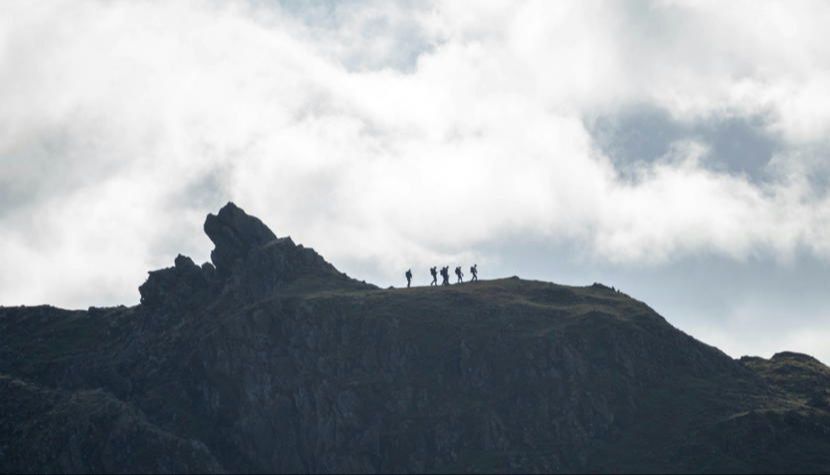
The popular adage of obscure origin "Alone we go faster, together we go further" resonates in many contexts: team projects, learning organizations, local or international cooperation. It condenses a shared intuition: the individual is efficient, but the collective is sustainable.
However, this apparent opposition between individual speed and collective scope is less a truth than a dynamic tension. And for this promise of "going further together" to really come true, we need to create the conditions for cooperation. Facilitation plays a central role here, as the art of orchestrating the group's social and cognitive dynamics.
Numerous scientific studies highlight the advantages of individual action. Working alone means
In groups, individuals are more exposed to the phenomena of
Consensus, often sought in collectives, can also curb creativity or promote reactivity by generating conformism (Asch, 1955) or groupthink (Janis, 1982), or even absurd decisions Morel (2014).
However, once past the starting line, individual projects quickly run out of steam. The collective, on the other hand, enables you to go further, provided you mobilize its internal resources:
Groups that cooperate effectively develop a form of collective resilience, capable of absorbing shocks, transforming failures into learning and generating new perspectives (Weick & Sutcliffe, 2001). In organizations, collaborative practices, when properly supported, are vectors of social innovation, shared ethics and sustainable development (Ostrom, 1990).
However, the promise contained in the adage does not automatically come true. Bringing people together to work on a project does not imply collective intelligence or co-creation. This is where facilitation comes in. Facilitation refers to practices such as sociocracy and decision by consent, or dialogue circles that enable a group to think, decide and act together, while taking care of relational, cognitive and emotional dynamics. It draws on theories from social psychology (Mercier & Sperber, 2011), organizational learning (Argyris & Schön, 1996) and systems thinking (Senge, 1990).
Facilitation makes obstacles to cooperation visible: inequalities of expression, implicit power relationships, emotional blockages or avoidance logics. It creates the conditions for everyone to contribute fairly, listen actively, argue without dominating, experiment without fearing failure. In this way, it does not aim to erase conflicts, but to work through them in a fruitful way.
It transforms coordination into shared intelligence, exchange into learning, and divergence into a driving force for transformation. Mehdi Moussaid shows us the subtleties of crowds and the order of influence of leaders in decision-making.
"Alone we go faster, together we go further" is an inspiring promise, but a fragile one. Without facilitation, the group can become a place of directionless slowdown, inertia disguised as cooperation, or a fusion that annihilates differences.
With facilitation, the collective becomes an environment of emergence, meaning, creation and robustness. It's not just a question of going far together, but of going well, while respecting each other and keeping pace with the common good.
References
Argyris, C., & Schön, D. A. (1996). Organizational learning II: theory, method and practice. Addison-Wesley.
Asch, S. E. (1955). Opinions and social pressure. Scientific American, 193(5), 31-35.
Darley, J. M., & Latané, B. (1968). Bystander intervention in emergencies. Journal of Personality and Social Psychology, 8(4), 377-383.
Hackman, J. R. (2002). Leading teams: setting the stage for great performances. Harvard Business School Press.
Hutchins, E. (1995). Cognition in the wild. MIT Press.
Janis, I. L. (1982). Groupthink: psychological studies of policy decisions and fiascoes. Houghton Mifflin.
Jehn, K. A. (1995). A multimethod examination of the benefits and detriments of intragroup conflict. Administrative Science Quarterly, 40(2), 256-282.
Kahn, W. A. (1990). Psychological conditions of personal engagement and disengagement. Academy of Management Journal, 33(4), 692-724.
Latané, B., Williams, K., & Harkins, S. (1979). Many hands make light the work. Journal of Personality and Social Psychology, 37(6), 822-832.
Mercier, H., & Sperber, D. (2011). Why do humans reason? Arguments for an argumentative theory. Behavioral and Brain Sciences, 34(2), 57-74.
Morel, C. (2014), Les décisions absurdes. Folio
Ostrom, E. (1990). Governing the commons: the evolution of institutions for collective action. Cambridge University Press.
Page, S. E. (2007). The difference: how the power of diversity creates better groups, firms, schools, and societies. Princeton University Press.
Sawyer, R. K. (2007). Group genius: the creative power of collaboration. Basic Books.
Senge, P. M. (1990). The fifth discipline: the art & practice of the learning organization. Doubleday.
Weick, K. E., & Sutcliffe, K. M. (2001). Managing the unexpected: assuring high performance in an age of complexity. Jossey-Bass.
You might also like:
By reconnecting with nature, immersing ourselves in the seasons and letting our emotions and bodies guide our minds... What effect do the seasons have on pedagogy?
Collective intelligence for successful multicultural integration at work
In a context of globalization and multicultural integration, do we have all the tools we need to develop synergy with others? Should we prioritize certain approaches, depending on the community and the situation? Who should do this?
School stress: how to calm everyone down?
It's almost a truism to say that we live in a stressful world. We all want to perform at work. This pressure is the same for students and their teachers. Recent findings even show that the two groups can stress each other. So perhaps it's time to implement strategies to reduce stress in both groups.
How can we learn slowly and regularly, rather than trying to go faster and faster?
Third places, tomorrow's localities?
We are in the process of reinventing "lieux-dit" based on "tiers lieux" and, in so doing, we are creating new narratives of the territory so that we can finally learn to live together.