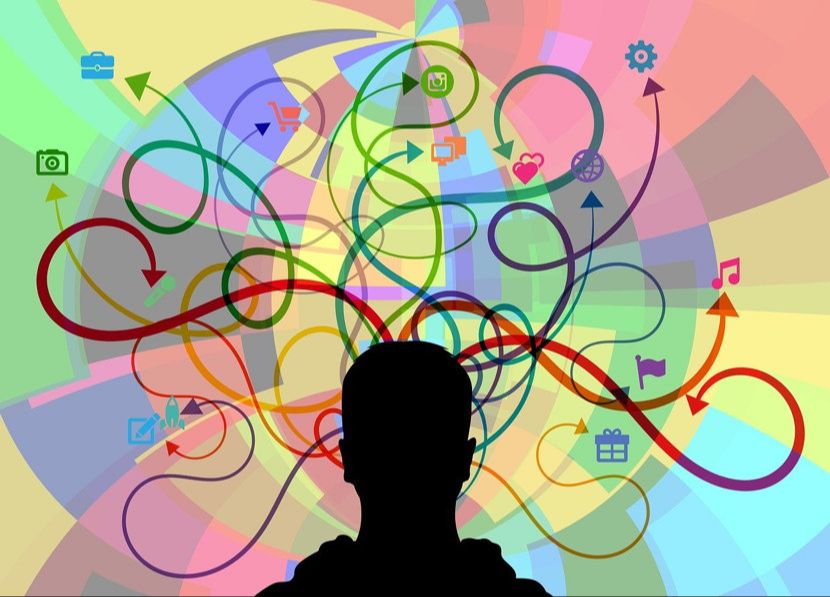
In an article published by The New Atlantis in 2008, Christine Rosen alerts us to the dangers of multi-tasking, which characterizes many people "in the know".
Who hasn't been puzzled by a teenager doing homework while listening to music, watching TV and chatting on instant messaging simultaneously?
Who hasn't been irritated by an interlocutor who, while pretending to be having a serious conversation with you, answers three phone calls, sends five e-mails and regularly slips away to give instructions to his colleagues working in the office next door?
Both the teenager and the person you're talking to are caught up in what's known as "multi-tasking".
This ability to handle several things at once is celebrated as a quality of modern man, and is largely the result of the increasing use of information and communication technologies. More generally, the value of this ability is based on the following premise: if information mastery is seen as an increase in power, then those who manage to capture the greatest amount of information at once will be the most powerful.
For some time now, however, the scientific research and empirical observations cited by C. Rosen in his article have been calling into question the advantages of this ability to manage several things at once. It has been shown, for example, that it takes a worker an average of 25 minutes to get back to his or her main task after being interrupted by phone calls or e-mails. We also know today that prolonged multi-tasking causes short-term memory loss, due to the disruption of hormone and adrenaline flows in the brain.
In addition to employees subject to a constantly increasing workload, multi-tasking mainly concerns children and teenagers, at least those who have always lived with information and communication technologies. For them, multi-tasking is habitual, and the bombardment of information from a variety of visual and audio sources constantly stimulates their attention. Hence the importance of understanding what this state of affairs provokes in them, in terms of attention span and, more profoundly, in terms of changes in their neurological functioning.
Here, empirical observations are confirmed by medical research: young people are more technologically intelligent and creative than their elders. On the other hand, they suffer from a permanent sense of impatience, can't stand silence and get bored extremely quickly. They suffer from attention deficit disorders more often than their elders, and have greater difficulty in retaining information for long periods. Have you noticed?
Is it that serious? After all, attentional mobility should be seen as the hallmark of an immature brain. And a mature mind is characterized precisely by its ability to concentrate. But beware: the ability to concentrate does not come about by itself, with the mere passage of time. C. Rosen insists that it is the result of personal willpower, the kind that enables us to resist distraction, to voluntarily submit to a single task.
How can young people acquire this ability, when they are exposed to far more stimuli than their elders and find great sources of satisfaction in them? Who can help them acquire this maturity?
Educational environments undoubtedly have a key role to play here. Provided they don't set the wrong objective: it's not a question of systematically favoring the completion of single, monotonous tasks, on the pretext of not distracting learners and increasing their productivity; the assembly-line work still in vogue in many industries demonstrates that this is a real impoverishment, which causes enormous havoc among those subjected to it. Instead, we need to develop rich tasks, whose complexity and interest demand a high level of concentration, enhance learners' skills and develop their creativity as much as and better than multiple, uncoordinated stimuli. In this way, young people can make the most of their characteristic speed of thought, while developing their critical thinking skills and wisdom step by step.
Are we up to the challenge?
Illustratiopn: Gerd Altmann -Pixabay
References
The Myth of Multitasking, article by Christine Rosen in The New Atlantis, 2008.
On the difference in brain function between young people and adults, see also: Concentration et créativité : un difficile équilibre, article by Rémi Sussan in Internet Actu, June 2008.
See more articles by this author