Autism Spectrum Disorder (ASD) is a very early-onset neurodevelopmental disorder characterized by difficulties in communication and social interaction.(sources )
Autism is not a problem of education, but a different brain development, present even before birth. Recent research goes even further, explaining autism by a genetic origin.
An autistic person experiences "difficulties in seeking interaction where it is socially relevant"(sources). This lack of interest, motivation and pleasure in social interaction has even been demonstrated in mice in a Geneva laboratory.
Contrary to popular belief, autism is not a total rejection of the outside world, but rather a "hypersensitivity" to the environment.
A hypersensitive relationship with the environment
In the RTS (Radio Télévision Suisse) documentary, we meet little Julia and her relationship with the environment. Julia has a "sensitive attraction to things, rather than a "functional" behavior. She's drawn to reflections on the wall, to little specks; as soon as her attention is "absorbed" by these details, it's difficult to capture her for social interaction. This can give others the impression of a certain "asociability".
Visual exploration - recorded using an eye-tracking device - shows an orientation focused on objects (feet, wheels, plate, teddy bear, etc.) rather than gaze, making it possible to observe and understand social relationships. Moreover, in animal models (mice), we observe a drop in pleasure at social interaction, linked to an alteration in the brain's reward system.
MRI scans of autistic children show an alteration in this system, particularly in the nerve fibers linked to reward, in proportion to the severity of the disorder.

The case of Temple Grandin
An extraordinary career
A professor of animal husbandry and science at Colorado State University, she was diagnosed with "brain damage" at the age of two, and didn't speak until she was three and a half. Yet she went on to study for her doctorate and is now an expert in livestock equipment design at the age of 77!
She is also known for being the first person with autism to give an account of her life experience, helping to better understand and document this disorder.
Through her experience, she provides insights for both family members and the professionals who work with them.

Her perspective sheds light on the incredible diversity of the autism spectrum, highlighting the unique strengths and ways of thinking that people with autism possess.
Autism is like a continuum: it varies widely, from non-verbal people to extremely brilliant minds like Einstein, Mozart or Tesla. Recognizing this diversity is essential to understanding and supporting people with autism.
Thinking in pictures
Temple's explanation of visual thinking - "movies in your head" - highlights how many people with autism process information differently. This way of thinking can be a considerable asset, especially in fields requiring precise visualization such as design, engineering or animal behavior.
The value of detail and categorization:
His emphasis on attention to detail and the categorization of sensory information gives an insight into how autistic minds excel in certain areas but may encounter difficulties with social cues or abstract reasoning.
Overall, Temple Grandin's ideas invite us to rethink our perception of autism, highlighting strengths, promoting inclusion and recognizing the essential contributions of autistic minds to society.
From animal welfare to cuddle machine
She is involved in defending animal welfare, advocating greater consideration for animal suffering during breeding and slaughter, opposing battery farming in particular. She campaigns for the rights of autistic people, and for autism to be recognized as a disability rather than a mental illness.
In "L'Interprète des animaux", she compares animal perception with that of autistic people, particularly in terms of sensitivity to the environment. Based on her personal experience and observation of cattle, she invents the Cuddle Machine, a device designed to calm hypersensitive people.
the personal bubble & the cuddle machine


In her youth, Temple Grandin realized that she was looking for deep pressure and stimulation:
"Another thing I never told the psychiatrist was my desire to build a device that would give me well-being through touch.
Even I felt that this kind of idea would be listed in the "weird" column on my chart."
Initially, she met with disapproval from the psychologists at her college, who sought to confiscate her prototype.
Autism in the feminine
The experience of an autistic person is characterized by suffering and a feeling of being permanently out of step, which requires over-adaptation to the environment, where sensory stimuli are multiplied, all of which leads to significant fatigue!
Some autistic people camouflage or mask their difficulties in integrating socially, at the cost of an enormous effort. Women in particular... Autism in women was revealed in thebook by Adeline Lacroix and the B-D by Julie Dachez. Both are late diagnosis autistic women. Autistic women without intellectual deficits or language delays (formerly known as Asperger's) tend to go unnoticed; their "quirkiness taking a socially acceptable form, on the other hand:
- Camouflage can lead to fatigue, anxiety, seizures and even hospitalization.
- The majority of autistic women have long been under-diagnosed or misdiagnosed. Their interests and behaviors may differ from stereotypes and be more socially acceptable.
- Sensory sensitivity (sounds, smells, textures) is a major handicap in everyday life.
Specific (visual) communication mode
People with ASD don't understand implicit meaning. For example, Romane in the RTS documentary, tends to answer yes or no when asked a closed question with "Est-ce que". This causes a certain amount of discomfort, as the interviewer expects her to elaborate further!
Romane has discovered her discrepancy thanks to Julie Dachez's comic strip, "La différence invisible" (The Invisible Difference).
Visual thinking (also known as pictorial thinking or non-verbal thinking) is a mode of thought and cognitive process based essentially on the brain's processing of visual information (mental images, possibly colored, diagrams and other visual representations), as opposed to a mode of thought analogous to language processing, known as linguistic thinking, verbal thinking or auditory thinking, more commonly used to understand, process and communicate information.
This singular way of thinking is also characterized by a need for creativity. At the same time, for someone who "thinks differently", taking a step to the side is somewhat natural. The graphic proximity between "autistic" and "artist" seems to find its explanation here ;-)
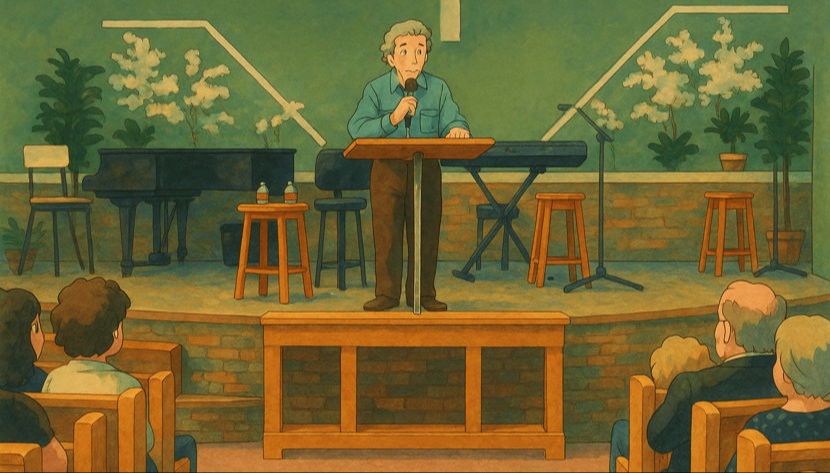
Illustration: photo from fi-florida.org (Temple Grandin) generated by bylo.ai
Sources
wikipedia "Temple Grandin " https://fr.wikipedia.org/wiki/Temple_Grandin
Temple Grandin (2001, 1st original edition 1986) "Ma vie d'autiste" Paris: éditions Odile Jacob.
https://www.decitre.fr/livres/ma-vie-d-autiste-9782738109194.html
https://amzn.to/4dIG3Z3
https://www.leslibraires.ca/livres/ma-vie-d-autiste-temple-grandin-9782738109194.html
Interview with Temple Grandin (2024)5NEWS https://www.youtube.com/watch?v=kxrH8GBEa8Y
Ted talk 2013 "The world needs all kinds of minds - Temple Grandin"
https://www.youtube.com/watch?v=UKhg68QJlo0
"fiches pratiques sur l'autisme", Maison de l'autisme https://maisondelautisme.gouv.fr/fiches-pratiques-autisme/
"L'autisme au féminin" (March 2020) thot cursus https://cursus.edu/fr/21538/lautisme-au-feminin
Adeline Lacroix (2023) Autisme au féminin UGA Editions https://www.decitre.fr/livres/autisme-au-feminin-9782377473922.html
RTS (2024) "L'autisme au féminin: la différence invisible" https://www.youtube.com/watch?v=39PTRa3OKck
https://www.leslibraires.ca/livres/la-difference-invisible-julie-dachez-9782756072678.html
https://amzn.to/4jyUJvb
Thot cursus (2020) "What has genetic research learned about autism? Discoveries are gradually being made about the genes of people with autism" https://cursus.edu/fr/21535/qua-appris-la-recherche-genetique-sur-lautisme
The Aspergers way of learning - Denis Cristol - Thot Cursus
https://cursus.edu/fr/11672/la-facon-dapprendre-des-aspergers
See more articles by this author