
Ancestor worship in Africa: a factor of social stability
For Africans, ancestor worship is a way of living in harmony and ensuring that life goes smoothly. It guarantees the social and family stability of descendants of the deceased.
Publish at June 11 2025 Updated June 11 2025


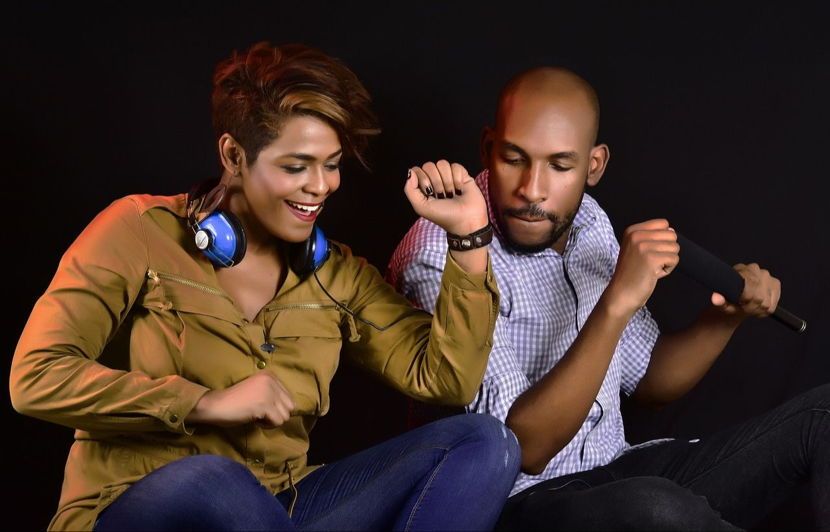
"You have to trust your magic to be a musician. This magic has to be worked, and so does improvisation.
Patrick Scheyder.
There is indeed something magical about collective musical expression, provided at least two essential ingredients are present: trust in one's playing partners and a form of letting go, of physical and mental relaxation that some call "Flow".
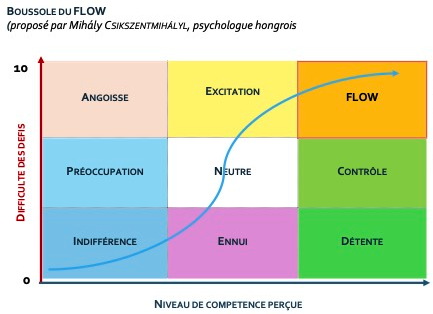 This magic is all the more present when you don't follow a score, when you don't try to reproduce an existing melody, but confide in the unknown of the present moment and let yourself be carried along by the collective energy - in other words, when you compose with what's there. Then anything can happen.
If this moment of creation is governed by the ephemeral, with no objective of result, we live and let those who listen experience a suspended, unforgettable moment. This is what we call "living music".
As François Louche, musicologist and creator of the Art of Listening method, points out, "Sound stimulates the whole body. It also awakens pleasure, emotions, memory, the imagination, the desire to express oneself, to speak, to sing and to dance". Our bodies, like everything else in the world, are made to vibrate and resonate with their environment. The collective musical experience is a privileged instance of this.
Improvisation is played in the moment, without any preconceived idea of the result to be achieved. It's a leap into the unknown, the indeterminate and, as far as possible, the unexpected. The surprise of what is created is one of the joys and beauties of the endeavor. You can improvise alone, but you need to let go enough to surprise yourself by exploring new paths each time. When you're with others, you have to deal with each other's progress and energy. It's a real adventure.
In fact, what is commonly known as "improvisation" in the musical world is based on precise codes and know-how that are not all that intuitive. Numerous studies have been carried out on the ability to improvise of jazzmen, whose virtuosity is far from being accessible to the average person, even if, at the time of the birth of jazz, those accustomed to classical music regarded these musicians as madmen who did anything. In reality, few musicians can embark on a daring improvisation without a minimum of training in rhythm and harmonization, especially when composing with others.
Jean-Luc Amestoy, another musician and musicologist who has studied the mechanisms of collective musical improvisation, identifies it as a complex process with a self-organizing dimension, similar to the collective behavior observed in animal societies. To understand how music and biology are linked, he distinguishes three essential points in the practice of improvisation:
"The musician's listening on the lookout, in that it constantly overturns the decisions he or she is going to make, is the source of multiple interactions; these interactions give rise, in the physics of complexity, to the phenomena of emergence. Finding one's place is an individual endeavor which, from a dynamic perspective, underpins the mainsprings of collective behavior; (it's a matter of) extending this idea from a geographical space to a musical one. Letting go means trusting in the creative character of chance and time".
"When it comes to musical material (...), everyone has within their reach a range of listening trajectories forged by emotional history, cultural background and the diversity of conditions already encountered in the course of a long musical experience, whether fully conscious or more intuitive. This ear, so well trained, has a strong capacity to give meaning".
Improvisation without musical skill is not impossible, however, if you're well accompanied, since music is part of every human being, whether or not they call themselves a musician. Proof of this can be seen, for example, in the experience of the Chant pour tous movement, which began in France in the mid-2010s and has since spread throughout Europe and even to Quebec.
People who don't necessarily know each other, and aren't necessarily musicians, get together for a few hours to create ephemeral music. No musical experience is necessary. It's just a matter of relaxing, listening and reproducing sequences of sounds suggested by one another. And, of course, you need a facilitator who can encourage, facilitate and support.
As specified on the dedicated website, a song for all meets the following four conditions:
The musical principle behind these collective workshops, which bring together groups of 6 to several dozen participants, is based on that of circle songs, an ancestral practice revived by singer and improviser Bobby McFerrin, who is known for getting the thousands of spectators who come to hear him sing along to melodies created in the moment.
"My instrument is not only me here, but also you. So you're my instrument as much as I am.
Bobby McFerrin
In circle songs, as the name suggests, we stand in a circle and "spin" improvised melodic-rhythmic loops that gradually overlap, creating an evolving polyphony. To improvise collectively, in fact, the main skill to develop is listening - to oneself, to others and to the collective sound.
"To hear is not to listen, for hearing is a sense, but listening is an art".
Epictetus
The difference between listening and hearing is the same as between looking and seeing: it's a question of paying attention. So there are three dimensions to listening, when it comes to creating music with others:
In our individualistic society, saturated by information, over-solicitation and noise of all kinds, it has become difficult to really listen with full attention. It requires a concentration that demands too much energy. Genuine listening is therefore a skill that needs to be upgraded, and requires specific training. Collective musical improvisation is a joyful and regenerating way of doing this.
Five years ago, two musician friends with meditative backgrounds decided to launch a sound journey in a small chapel in Rouen. Initially, the idea was to offer a meditative sequence, based on attentive, non-judgmental listening to whatever sounds were proposed.
At first, the instruments used were mainly singing bowls, a few percussion instruments and an Indian string instrument (Anantar), as well as the musicians' voices. Given the success of the project, it became a monthly event, and a third member joined the first two (one man and two women). The range of instruments has grown with the discoveries and journeys of each member: more singing bowls, various drums (shamanic drum, steel drums, ocean drum, tambourine...), small percussion instruments, flutes, guitar, chimes, bells, Shruti box and other world instruments... and also instruments created from everyday objects (bags filled with paper, bottles, water, wooden blocks...).
Each member of the trio's contribution is informed by his or her own musical, artistic and/or caring background. Depending on their personal experiences and/or professional practices, these may include singing and musical acting, dramatic clowning, Chinese energetics, meditation and deep breathing.
Listeners are invited to let themselves be carried along by the energy of the present moment, and to consider all sounds as welcome, even if they may seem unpleasant or disharmonious to the ear. Listeners/participants themselves can contribute if they wish, with their voice, breath or even other instruments. The sound of rain or conversation or passing cars in the street can all contribute to the soundscape and inspire the musicians. No one knows in advance what sounds or melodies will emerge. Each session is unique, made up of the moment, the presence of those playing and those listening, and the creativity and emotions of the musicians, who generously share their inner musicality.
Mutual complicity and respect were present right from the start. The absence of any projection of results, a deep ability to listen, a capacity to let go, to welcome proposals and bounce back, all developed over time, to the point where it was even possible to welcome an additional musician from time to time, without the musical complicity being disrupted - on the contrary. Gradually, a more intimate relationship with the instruments used has also emerged. The percussion instruments, in particular, each have their own personality, and their sound matches that of the player to create unique atmospheres.
Around two years ago, it was decided to stop managing the registration process for the event, and the small group of three musicians took the name Niokobok (shared pleasure in Wolof), with the idea of playing systematically, whether or not there were listeners. The session is announced via mailing lists and each other's networks. Word of mouth also works very well. The session takes place on the same day of the month, at the same time and place. The financial contribution is voluntary and voluntary.
There are regular participants who wouldn't miss the event for the world, one-off participants who have heard about it and come to experiment, and some who come back from time to time. Some evenings, three people are there to listen and travel. Other nights, there are fifteen or twenty. They sit or lie down, sometimes entering a state of semi-sleep or reverie, sometimes contributing their own voices or drums.
One might imagine that this almost total freedom in modalities could only result in musical chaos, with no very clear form or identifiable melodic line. In fact, this is not a concert in the traditional sense. Nor is it a wellness workshop, structured from start to finish with an objective in mind. It's a journey that surprises everyone present every time. Mutual trust and listening between the musicians, as well as their meditative posture, ensure constant harmony and a fluid yet disconcerting transition from one sonic ambience to another. It's a musical conversation. The suggestion of one stimulates the impetus and creativity of the others. Unlikely or familiar sounds appear and disappear, converse or argue, chase or stalk each other, much to the delight of the musicians, who never know what to expect.
Is this music in the usual sense of the word? Probably not, but that's not the idea in any case, unless you consider that all sound is potentially musical, which is the proposed approach, on the other hand. Sometimes vocal improvisations, single-voice or polyphonic, emerge from the melodies, which one or other accompanies on guitar or drum. Sometimes, a newly-formed soundscape is structured and renewed by a repetitive rhythm.
It's all about listening and harmonizing. For there is no chaos in this proposal. On the contrary, newcomers among the participants are astonished every time to learn that nothing has been predefined or written down in what they have heard. The astonishment also often comes from the fact that the emotional journey is different from one individual to the next. Some explore the Amazon or China, while others are taken back to the death of a loved one or to their childhood.
At the end of the session, which lasts around an hour, participants are first invited to join in a collective chant, in the form of a mantra, and then to try out the instruments if they feel like it. In the end, everyone - musicians included - goes home both nourished and lightened, with the feeling of having truly shared a collective human experience.
Resources
Amestoy, Jean-Luc. Brad Mehldau and letting go: a behavioral approach to musical improvisation. Doctoral thesis in musicology. At: https: //theses.hal.science/tel-05052270
Aubry, Gaël. The history of songs for everyone. Updated April 2025. At: https: //www.chantpourtous.com/origine-et-avenir-de-chant-pour-tous/
Boyer, Christophe. The Tao of spontaneous singing . Ed. Lulu. com, 2017
Demouth, Olivier. Le Voyage sonore: https: //terre-etoilee.fr/2021/05/11/voyage_sonore/
McFerrin, Bobby. Bobby McFerrin explains his beginnings in improvisation. Aarhus Vocal Festival 2011, Master class. On: https: //www.youtube.com/watch?v=cDKEY4H5ugk
Musical improvisation: https: //fr.wikipedia.org/wiki/Improvisation_musicale
Improvised music and self-organization. Interview with Jean-Luc Amestoy. On: https: //www.youtube.com/watch?v=pVUsp-S6jIk
Scheyder, Patrick. Dialogue sur l'improvisation musicale. Ed. de l'Harmattan, 2006.
Chant pour tous: https: //www.chantpourtous.com
Niokobok, sound meditation in Rouen: https: //presencevocale.fr/2025/02/05/niokobok-voyage-sonore-a-partager/
Vocal improvisation resources: https://ressources-improvisation-vocale.org
Spirale Voice, vocal improvisation: https: //www.spirale-voice.fr/
You might also like:
Ancestor worship in Africa: a factor of social stability
For Africans, ancestor worship is a way of living in harmony and ensuring that life goes smoothly. It guarantees the social and family stability of descendants of the deceased.
Can we learn in a world without electricity?
If the electricity runs out, we will live a crisis, we will have to do without our phones, digital screens and remote communication means, but there are plenty of practices to cope and learn differently...
Our self-confidence is much more than the sum of our self-confidence. It's an increase in our collective power to act, induced and demonstrated by collective action.
How do you approach recycling in a class?
School is as much a place for learning the rules of life as it is for learning theories. For this reason, teaching the right recycling reflexes is a particularly interesting approach. From the smallest classes to the highest, it's possible, depending on the level of the pupils, to take a broader view of the product life cycle.
After reading dozens of these tips, one can begin to grasp the spirit of them: it is about séduire and each employer will be séremute differently.Of course you have to be readable and to be in front of the recruiter's eyes, but for the rest, as much on the form as on the content, there is not a single quality or a single need that cannot be perceived as an advantage or a disadvantage in one context or another... So how does one go about it?


