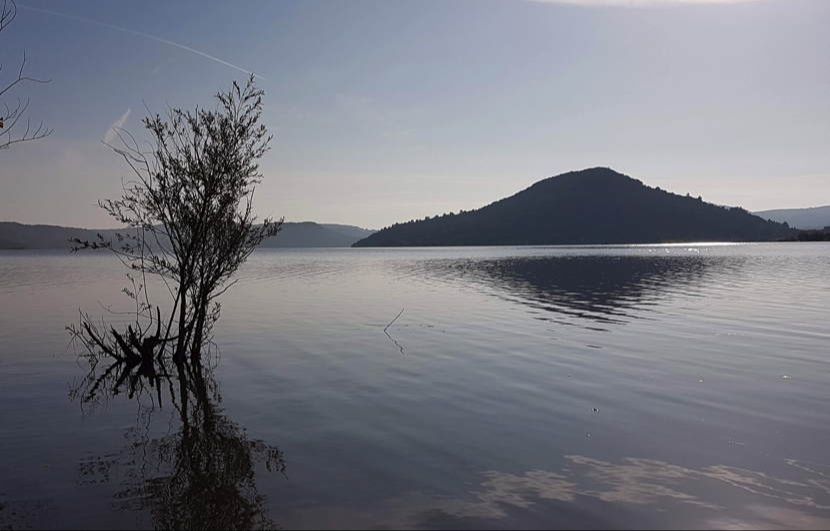
In the long history of territories, localities are oral imprints. Their names come from the people who live here, walk here, cultivate here or cross here, marking a place of memory or meaning. "Le bois des âmes", "La fontaine aux loups", "La croix du poète": so many micro-toponyms that tell a story, a relationship, a usage.
These places are said, not just to designate, but to anchor in language a relationship with the world. And this is precisely what third places seem to be reviving today, in a different form.
But what are they? They're not quite homes, nor offices, nor workshops, nor places for leisure or education. They are hybrid spaces, interstices, environments where other ways of being together are invented. Active libraries, artistic wastelands, shared farms, fablabs, project houses or associative spaces: their names vary, their functions metamorphose. What unites them is less what they are than what they enable us to say and do.
From lieu-dit to lieu-disant
The lieu-dit refers to what has been said about the place. Third-place could refer to what is said there now, in a word that engages, proposes, deliberates and connects. While the lieu-dit preserved the past in a patrimonial orality, the tiers-lieu opens it up to the future in a political orality.
Circles, meetings, life stories, open debates, project discussions and dreams of alternatives are held here. In this sense, they are places of discourse, stages for speaking out on the territory. Speech in these spaces is not merely descriptive. It is performative, in the sense given to it by John Austin (1962): to say, here, is to do. Saying "we're going to set up a cooperative canning factory", "we're setting up a shared workshop", "we're organizing listening nights" in a third-place is not just wishful thinking: it's often already setting the process in motion. The territory is transformed as it is said differently. The word becomes the place.
Situated, collective, inhabitant speech
It's not the word of the expert planner or the delegated politician. It's the word of local people, whether they've been living there for a long time or are just arriving with the intention of joining forces. The "tiers-lieu" becomes an interface between the individual and the collective, between the local and the global, between the lived and the planned. We experience a form of vernacular governmentality, to borrow a phrase from James C. Scott (1990), where decisions are taken on a human scale, with a detailed knowledge of the context.
From this point of view, third places are the narrators of the territory. They invent shared narratives, produce sensitive diagnoses, and generate visions rooted in experience. The place then becomes not only what welcomes, but what enunciates. A space that is not neutral, but charged with a discursive intention: to say what we want to see happen.
A mesological dynamic: saying and inhabiting
Philosopher Augustin Berque (2000) has proposed the term mesology for thinking about the co-constitution between humans and their environment. In his view, this is not a utilitarian relationship with the environment, but a poetic inhabitation: we produce our world by inhabiting it, and it produces us in return.
Third places are part of this mesogenesis: they are places where we live by saying, where speech, action and materiality are inseparable. In this logic, third places are not development tools, but environments for re-figuring the territory. They transform it through storytelling, through doing, through collective attention. They are thresholds: between the intimate and the political, between the individual project and the common future.
A return to speaking places
If we follow this reading, third places are not simply facilities or coworking spaces. They are the territory's new talking places: no longer marked by a past event that must not be forgotten, but the bearers of a saying in the making. They welcome the new, the possible, the fragile. They give voice to the silence of the territory. They enable residents to once again become authors of the place - in the double sense of the word: those who speak of the place, and those who make it happen.
So yes, third places are perhaps the places of tomorrow - not because they preserve memory, but because they invent meaning, commonality and the future. In this sense, they are laboratories for inhabitant storytelling.
Bibliographical references
Austin, J. L. (1962). How to Do Things with Words. Oxford: Clarendon Press.
Berque, A. (2000). Écoumène: Introduction à l'étude des milieux humains. Paris: Belin.
de Certeau, M. (1990). L'invention du quotidien. Tome 1: Arts de faire. Paris: Gallimard.
Lefebvre, H. (1974). La production de l'espace. Paris: Anthropos.
Scott, J. C. (1990). Domination and the Arts of Resistance: Hidden Transcripts. New Haven: Yale University Press.
See more articles by this author