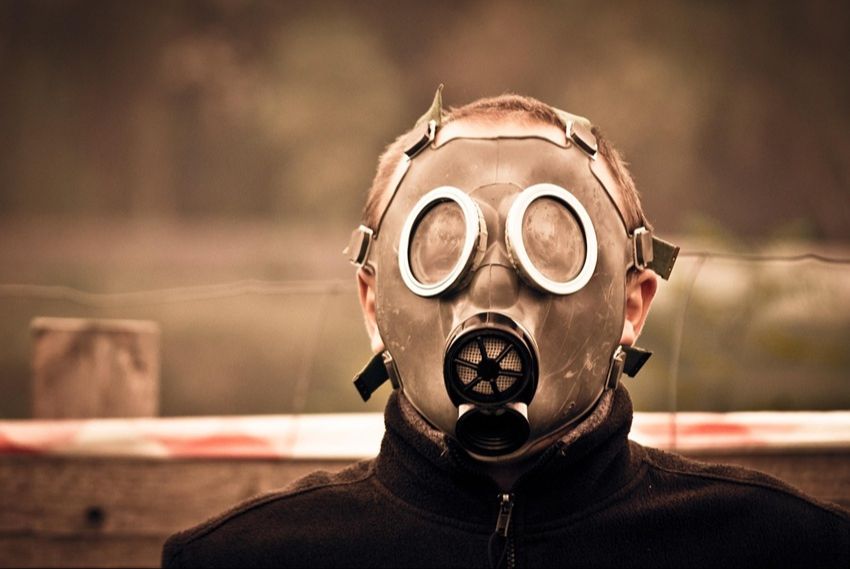
The First World War was one that led to numerous military developments between 1914 and 1918. Chemical weapons were used extensively. The idea had already existed and had been considered in other conflicts before, but it was really the first global conflict that brought it to fruition.
It's important to understand that assaults were infrequent, with the sides generally in trenches. To push the enemy back a little, the use of gas on both sides began to multiply. It was during the attack on Ypres, Belgium, on April 22, 1915, that the first mass gas offensive was carried out by the German block with chlorine gas. Tens of thousands were poisoned, and 1,000 died, forcing the Germans to give way.
From this date onwards, both sides produced progressively more dangerous gases to attack each other, including the well-known mustard gas, so named because its odor was somewhat reminiscent of the plant. Not surprisingly, each side tried to protect itself from attack. The first gas masks were mainly cloths soaked in various chemicals. Each side went on to develop increasingly elaborate masks, taking advantage of the opportunity to apply them to the animals used on the battlefield. The gases themselves were not so lethal. According to some sources, 93% of affected soldiers were able to return to combat. Nonetheless, the long-term effects on health were sometimes very harmful.
Many years later, these masks are less common during conflicts, but they are still used by firefighters, sanitation workers and others who need to protect their lungs from various harmful products.
When we talk about the Internet and children in the media, the message is always the same: be careful! The Internet is dangerous for them! While it's true that a relatively large percentage of the Web is unsuitable for minors, should we become paranoid and monitor children's every move on the Net? Not necessarily.
It's all about making robots more friendly, and also making us more open to their presence; the enterprise of robotic inculturation has begun, and is spreading across the board. Asimo is well known, but what can we say about Geminoid F, a real human avatar, Pepper, who goes to a real high school, Aiko Chihira, who knows sign language, Hanako, a typical patient for a dentist, Tipron, the home projector robot and even Hal, who offers human-robot hybridization...
Wim Hof has turned his practice of ice baths and exposure to the cold into a philosophy of healthy living, and although the method may seem controversial, several authors emphasize the benefits of exposure to the cold.
AI is covered in all the evils and would spoil the human genius and if AI was cure and poison in the opportunities and risks that this computing power offers us?