Professional recognition of the home help profession
Professional recognition of the homecare profession, cleaning values.
Publish at November 05 2025 Updated November 05 2025


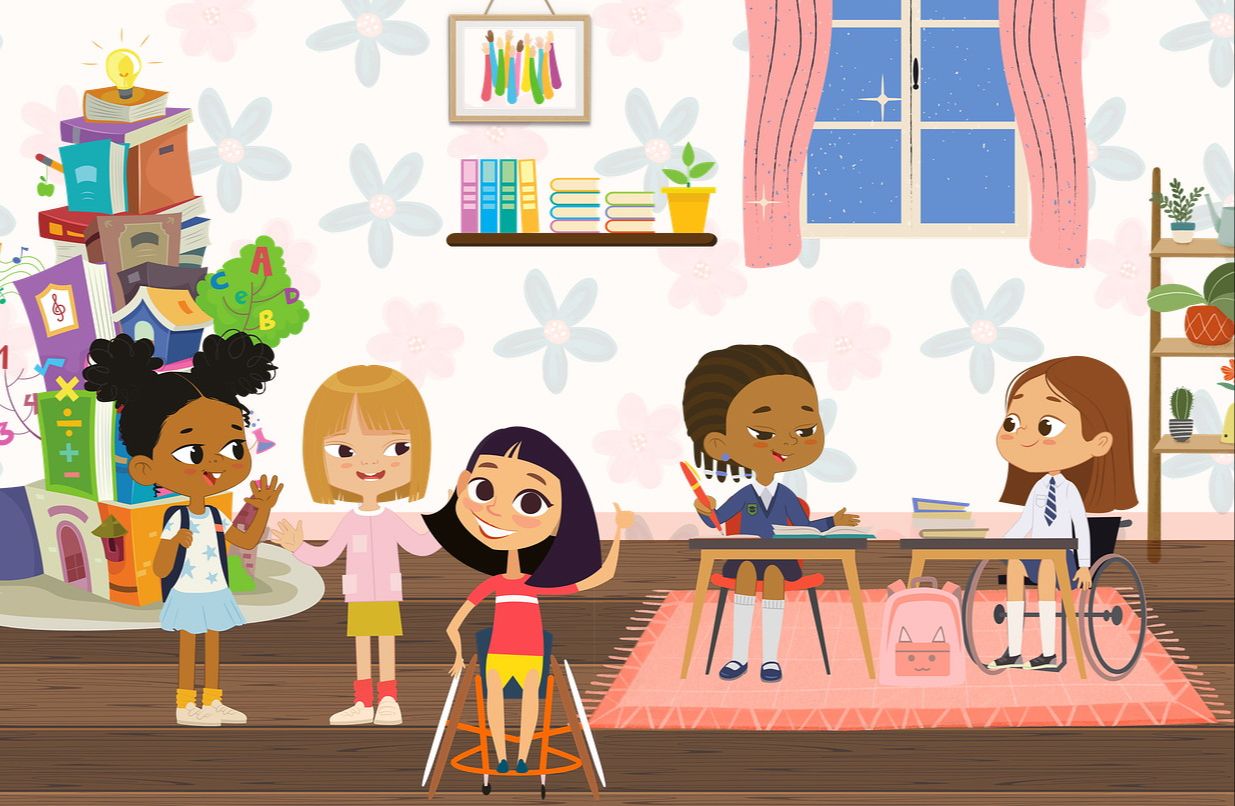
Difference has always existed, but perhaps not to the same extent as today. Spurred on by an unprecedented wind in France in 1789 with the advent of the Declaration of the Equality of Mankind, then reinforced by the globalization of common interests through the Brundtland report on sustainable development, notably the construction of more inclusive societies, it was to be expected that schools would adapt to these changes.
That's why the law on "Equal rights and opportunities, participation and citizenship for people with disabilities" (February 2005), and the 2013 law on "Orientation and programming for the refoundation of the school of the Republic", were set up to adapt the school to the needs of all. Pupils and teachers have had to come to terms with the presence of atypical new pupils, who need to be supported, especially on the teacher's side, if they are to succeed at school.
While it's true that the youngest pupils aren't really interested in difference of any kind, once they reach the age of reason, questions about difference arise, and sometimes pupils who aren't considered different are simply marginalized. Faced with this reality, how can the school, through the teacher, create a benevolent learning climate that facilitates student learning? A hostile environment can affect a student's school experience, even more so if he or she is facing physiological difficulties.
Difference is one of those words whose definition is known to all, yet remains difficult to define. Fortunately, there are a number of standard definitions to settle the debate. According to the Centre national des ressources textuelles et lexicales (CNRTL), difference is a character which, as a result of comparison, distinguishes a being or thing from other persons or things. It is therefore something that is specific to each student, and can influence his or her ability to learn. In this way, the teacher's identification of each student's priority needs can facilitate the acquisition of knowledge.
Bearing in mind the types of socio-affective, cognitive and academic differences identified by Jean-Michel Zahkartchouk, Maslow's needs are closely linked to the sources of marginalization addressed by Robert Castel:
Unfortunately, they lead to such a stigmatizing categorization that Castel prefers the term disaffiliation to "social exclusion" or "marginalization", which he groups into three categories:
In view of the importance of managing differences for the successful education of learners, how do schools manage these differences?
To make schooling more inclusive, a number of teaching methods have been developed, including individual, mutual and simultaneous teaching, culminating in the advent of pedagogical differentiation.
The first method involves taking each child individually to teach him or her a lesson, for example; the second uses the tutoring system; and the simultaneous method involves using different teaching aids to adapt to the particular needs of each pupil.
As a logical follow-up to these methods, Appoline Grevet, in her Master's thesis "Tackling the theme of difference with pupils to create a classroom climate conducive to learning", chose to experiment with pedagogical differentiation in a rather innovative way in her CE2 class (3rd year elementary), with a view to easing tensions between classmates who were making fun of their atypical compatriots, creating a rather chaotic working environment.
To give an overall picture of the class, out of a total of twenty-eight (28) pupils, four had disorders of various kinds: ADHD, myopathy, William-Beuren disease, dyslexia and dysorthographia.
With a view to creating a caring learning climate over several weeks, the teacher set up a pedagogical approach divided into three (03) phases:
Against all expectations, the students were receptive and, in the end, they became aware of the injustice they were inflicting on their classmates, which considerably improved the class climate.
All in all, the best way to teach about difference is through communication; education leading to a real awareness of the negative effects of intolerance for the person experiencing this form of stigmatization.
If constructive discussions about the importance of respecting differences, whatever they may be, were held within families, it's highly likely that humans would be less unfair to each other.
Illustration: Rosy / Bad Homburg / Germany - pixabay
References
Grevey Apolline - Aborder le thème de la différence avec les élèves afin de créer un climat de classe propice aux apprentissages, Master's thesis, Métiers de l'enseignement, de l'éducation et de la formation, online-https://dumas.ccsd.cnrs.fr/dumas-03253468v1
You might also like:
Professional recognition of the home help profession
Professional recognition of the homecare profession, cleaning values.
From the streets to social reflection: the interesting journey of an alternative publication
In Montreal in the 1990s, a series of initiatives emerged from the community to work in the fields of publishing and popular culture. United around a single goal: to recognize the potential of young people. This article tells the story of a Montreal publication and the projects that have been added to it over the years.
Exit! Change your life [Thesis]
"The aim of this work is to examine, through downward bifurcations, the distance to a social ideal of income growth and upward professional career [...]. This ideal can be questioned at once from the point of view of work, consumption and political commitment by taking it as a whole, the form of daily life in its material dimension, that of the material conditions of existence."
Forming, developing, repairing. But how far?
Humanity's fate is on the brink... It's time to get our act together, and in this increasingly competitive field, there's no choice but to train, again and again, to face the changes and challenges... Authors humorously qualify the desperate energy we devote to perfecting ourselves.
Machinism, mental load and disengagement
The domestication of energy has offered humans the possibility to develop assistance to physical work at first and more recently to intellectual work thanks to artificial intelligence. This has allowed us to produce more while engaging less in the activity. When tasks are taken over, we tend to disengage and reduce the mental load, with consequences on motivation and individual commitment...