The origins
German psychotherapist Bert Hellinger, who uses Gestalt and primal therapy, as well as transactional analysis and NLP with his patients, developed his family constellation method in the early 1990s. This approach is based on an intervention method elaborated by the Palo Alto School and developed by its current research centers.
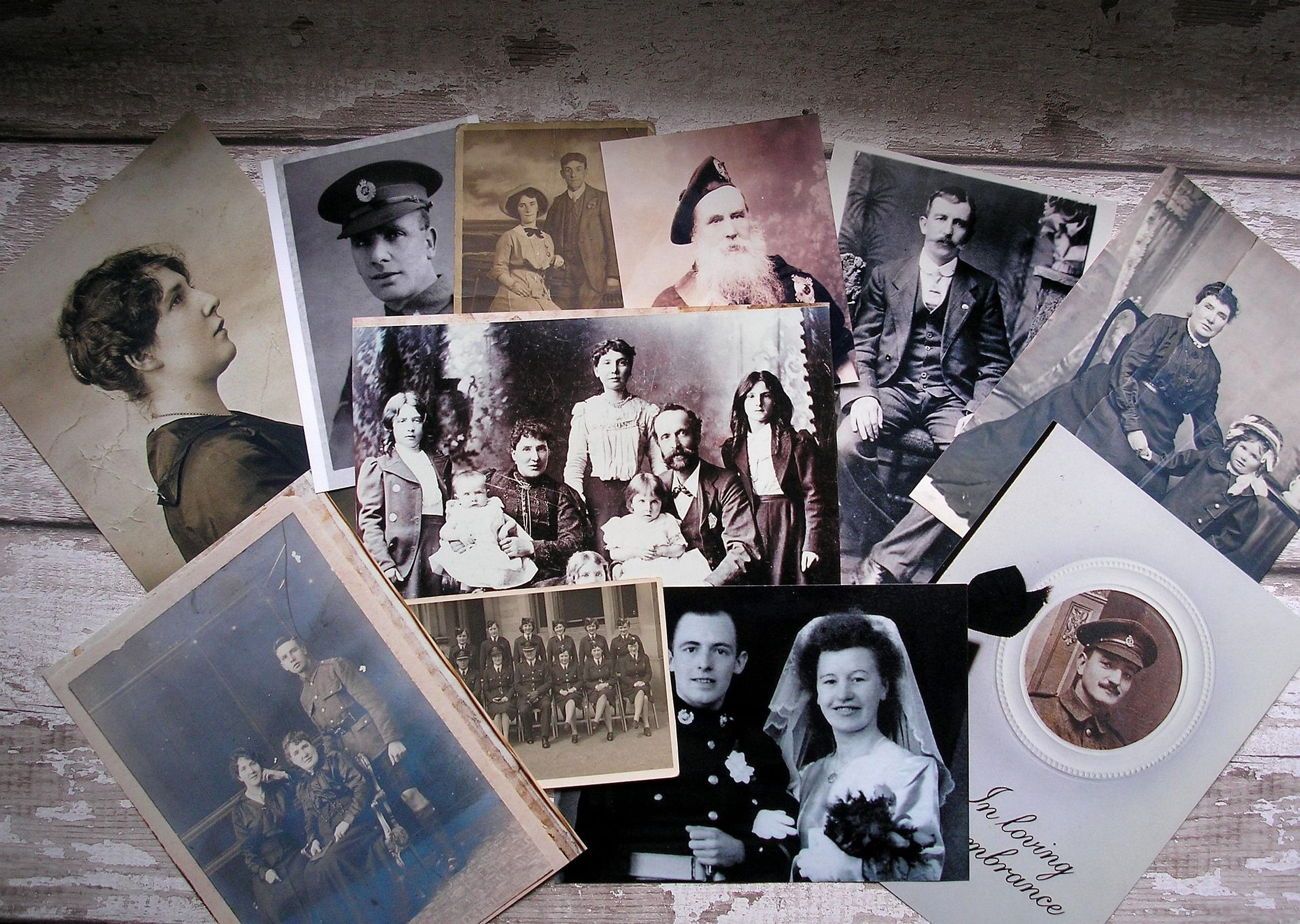
"Family constellations are based on the idea that certain emotional blockages or inappropriate negative behaviors can be linked to events or traumas experienced by family members, sometimes over several generations".
Pierre Lucas, coach and trainer.
"Whether we like it or not, we are all heirs to a history that precedes us. Family beliefs are an intangible heritage that is passed on from generation to generation, often without our knowledge, shaping our behavior, our choices and our vision of the world (...) From a systemic perspective, these beliefs are not simply individual mental contents, but relational constructs that emerge and are maintained through family interactions".
The family constellation approach, as its name suggests, initially focuses on the family system, verifying in particular how the laws of systemics apply (see below), in an attempt to identify and understand individual problems.
Since the 90s, however, the approach has broadened to encompass all kinds of problems, including collective ones, in environments that function as systems in their own right, including professional ones, without ever straying so far from the archetypal origin of the family.
The approach is based on a number of postulates.
- Psychological: according to Carl Gustav Jung, humanity shares a collective unconscious.
- Psycho-sociological: the family functions as a system with its own laws, whose links need to be made visible.
- Psycho-genealogical: the transgenerational family system has an impact on the problems that individuals encounter throughout their lives.
- Psycho-corporal: the unconscious can be accessed by listening attentively to bodily manifestations.
The principles
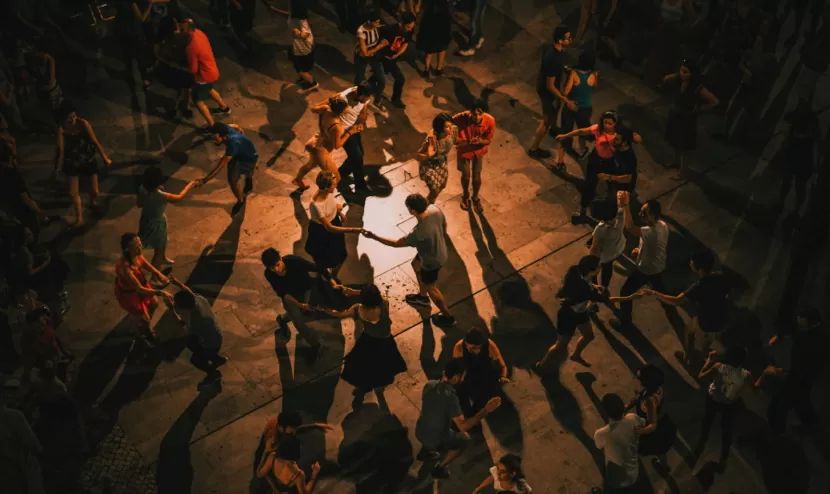
As Hellinger's original German term makes clear from the outset, "Familieaufstellung" means "placing the family in space". In other words, a constellation is a spatialization of the system, whatever it may be, in which the problem to be analyzed evolves.
- The notion of system
A system is much more than a simple collection of elements. It can be defined as "a whole whose elements are interconnected, influence each other and progress towards a common goal" (Peter Senge). This definition highlights three essential characteristics:- Interaction: the elements of the system are linked by ties of mutual influence.
- Totality: the system is a collection of elements, and cannot be reduced to them (the whole is more than the sum of its parts).
- Organization: the elements of the system follow a hierarchical and functional distribution.
In addition, there are two other characteristics:
- Dynamics: these interactions evolve over time.
- Purpose: the system pursues one or more objectives.
The systemic approach integrates these principles to create a systemic diagram that enables us to analyze and intervene in complex situations. This method emphasizes :
- Relationships rather than isolated elements.
- Patterns rather than one-off events.
- Circularity rather than causal linearity.
Systems are governed by systemic laws, whose application and balance the constellation approach will verify, and if necessary, try to restore, in other words, the health or morbidity of the system:
- Belonging
All elements belong to the system, or have a reason to belong. This belonging is governed by a contract and a more or less explicit clarification of roles. The feeling of belonging, of being part of a whole, a system, a community, is fundamental to the construction of the identity of human individuals.
- Rank (hierarchy) and order
Systems operate with an explicit or implicit chronology and hierarchy. There is an order in which individuals are introduced into the system (e.g. family, generations). An imbalance in rank and place (e.g. a child replacing its mother or father) can create chaos and suffering.
- Place
Place concerns the individual's position in the system and the role he or she plays within it. It's the individual's reason for being in the system. Each place has its own specific responsibilities, rights and duties. Finding or not finding one's place is directly linked to self-esteem. This is the origin of the impostor syndrome, which is widespread among women. An imbalance in this law can lead to conflict and power plays.
- Loyalty
Loyalty links the elements of the system, the individuals, to each other. It concerns the reproduction of mechanisms, respect for learned rules, collective memory and shared culture. Loyalty can be virtuous and nourishing, but it can also be destructive, leading to pointless sacrifices or perpetuating dysfunctions in individuals.
- Reciprocity - giving and receiving
Any healthy relationship presupposes a balance in exchanges, a sharing of resources and mutual attention. Depending on whether this exchange is equitable or not, reciprocal or not, recognized or not, it can nourish and unite, or, on the contrary, create resentment and fatigue by creating for some a burden, a weight, responsibilities too heavy to bear.
- Causality
Every cause has an effect, and every effect has a cause, creating a permanent feedback loop. Similarly, every action has the potential to affect the entire system, positively or negatively. In complex systems, interactions are multi-dimensional and can have multiple effects that can have a long-term impact on the system. By integrating causality, we can identify the source(s) of recurring problems and envisage more strategic solutions.
The 5 wound theory
The family constellation approach also takes into account Lise Bourbeau's well-known theory of the 5 wounds:
Abandonment / Rejection / Betrayal / Injustice / Humiliation.
All these wounds are linked to powerlessness and a lack of consolation. According to Lise Bourbeau, all human beings have been wounded in this way at some point in their lives, and when these wounds were experienced in childhood, they may have left deep and lasting traces that have led to the development of unconscious automatic self-defense systems. Constellation can also highlight these automatisms, which can affect the way in which systemic laws are applied.
The facilitation method
The space
The space in which the constellation takes place is "sacred" and formally delimited. No one enters unless they are part of the constellation. You don't physically leave this space during a constellation (except when the constellated person takes on his or her own role and replaces his or her representative). As long as you're in the constellation space, you occupy a role that respects the constellation principles. When the constellation is over and the space desacralized, you leave your role and formally reintegrate your own identity.
3 essential ingredients are constantly examined:
- The link between system elements / constellation members ("representatives")
- Emotional expression
- body awareness/listening
The objectives pursued
The aim is to identify links, causalities, imbalances... not to treat them directly. The aim is to uncover implicit and unconscious phenomena.
We start by asking what is blocking the problem from the point of view of the person presenting the problem (the constellated person). This is the starting point. What is the question as posed to the constellated person? How does it relate to that person's history? As a coach rather than a therapist, we'll also ask the constellee at the outset what results (benefits) he or she expects from the constellation.
Among the points that can be identified beforehand to determine the question to be asked, or pointed out at the end of the constellation, are cognitive dissonance (what I'm doing versus what I am or want to be, how I'm compensating), the impression of carrying something that doesn't belong to us (entanglement), the impression of repairing in the place of an ancestor who didn't finalize/succeed (substitution), the fact of remaining faithful, consciously or unconsciously, to a value we haven't chosen (loyalty), the impression of not finding our place, our role, our meaning in life (place).
Individual roles
The people (or objects) taking part in the constellation are called " representatives ".
The choice of roles can be blind or not (the representative may or may not know who he or she represents). Representatives can represent people, concepts or projects. The representative experiences what's going on without questioning or judging. Their responsibility is to observe what they feel, their impulses, their desire to move towards or away from this or that element of the constellation, to move or remain motionless, to look or avoid looking, and to respond as best they can to the questions asked by the consteller (even if it's to refuse the consteller's suggestion of movement or expression).
The assistant (the consteller) expresses factual observations aloud, concerning, for example, each person's position in the space and observable bodily attitudes. He questions the implementation of systemic laws, links, place, loyalties, the imbalance between giving and receiving... He asks each person about their bodily sensations. He observes and questions emotional manifestations. He may suggest meetings between representatives. He or she may also suggest that each person name him or herself out loud, with the aim of restoring the right place, the right role, when there is entanglement or confusion.
Depending on the consteller's proposal, the person being constellated may be an actor or an observer in the constellation. They may also be observers at the beginning, and enter the constellation during the process, replacing the person who represented them until then.
In principle, there is no collective debriefing at the end of the constellation. We don't talk about the roles we've represented, even less informally over a cup of coffee. Nor, of course, do we talk about them outside with people who didn't take part. On the other hand, the constellated person may benefit from individual support from the Consteller, if he or she so requests.
Typical steps in a session
- Opening the field: defining the sacred space of the constellation. Framing.
- Choice of representatives, according to the chosen method.
- Silent observation phase: the consteller notes the position of each representative and names them aloud.
- Systemic debriefing: for each observable micro-movement or emotional expression, the facilitator questions the "field" (see questioning above).
- Restoring order: ritualized phrases (e.g. I see you, I name you, I give you back your place in the system) are spoken.
- Closure: exit the sacred space, representatives take over their roles...
Different ways of doing things
Constellations can be carried out "blindly", or by defining all the roles and their occupants from the outset.
The person being constellated can choose the representatives "blindly" (by closed-eye contact, for example) or designate people in the group (who can accept or refuse) to occupy a particular role.
Classical constellations are implemented with individuals. But it is potentially possible to constellate with symbolic objects, photos and even sheets of paper on which you have written what they represent. What's important is the system, not the way it's represented. When objects are used, the Consteller will question their arrangement in space, the link that the constellated person makes between them, and suggest shifts to envisage other perspectives in interactions.
Constellations can be applied to personal as well as professional issues. Constellations can also be applied to collective issues (team or company issues, for example).
"Many things can be "constellated": the interactions between members of a management committee, a department, a team, a strategic plan, the elements that favor burn-out, the causes of an increase in absenteeism...".
Pierre Lucas, senior coach, trainer and Consteller.
A special constellation method: constellation with horses
Equine-assisted interventions have been shown to be effective for a variety of disorders (anxiety, PTSD, cognitive spectrum disorders). Therapies based on the company of specially trained horses (equitherapy) have been widely developed over the past fifteen years.
Horses are particularly sensitive creatures, with the ability to finely perceive human emotions ("Horses spontaneously discriminate human facial expressions; an angry face activates a left gaze bias and a heart acceleration, a sign of perceived danger". Quoted on Chevaux-en-harde.com).
It reacts instantly to changes in mood, and thus promotes emotional release in patients. It helps to reconnect with the body and reduce stress, by lowering heart rate ("Cardiac coherence analyses (HRV) reveal a bidirectional synchronization of the autonomic nervous system between humans and horses, modulated by the degree of familiarity and the type of interaction. The electromagnetic field of the equine heart, five times larger than that of humans, extends this feedback loop several meters, creating a "physiological matrix" in which each participant bathes simultaneously." Quoted on Chevaux-en-harde.com) and by promoting the secretion of oxytocin, inducing a state of mindfulness.
From the 2000s onwards, facilitators and therapists came up with the idea of holding their workshops not in a room, but in the midst of a semi-free herd. The herd (the gregarious instinct is also present in humans) is in fact an organized system. Horses have an almost 360° panoramic field of vision, enabling them to instantly detect the slightest movement in their environment, and therefore, in the case of a constellation, every micro or macro movement of the representatives. "Transposed to the constellation, this talent (i.e. emotional reading and lateralization) enables the animal to "point out" the representative carrying the conflict load: a simple ear pivot becomes a reliable clinical indicator that the facilitator can interpret. Quoted on Chevaux-en-harde.com).
"In the herd animal, this sensory hyper-sensitivity is coupled with a vocation for collective regulation: any postural or emotional imbalance in a conspecific triggers an adjustment (lateral placement, wither orientation, tail wagging) aimed at restoring group coherence".
On Chevaux-en-harde. Com.
It's easy to see how using horses as representatives in a constellation can be very useful. Of course, there are a few things to bear in mind. The animal must be confident, and therefore treated with gentleness, respect and kindness at all times. It must have been prepared for this role. The members of the constellation must be able to interact with the animal without fear, in a spirit of mutual respect, not only with the animal but also with each other. The Consteller must, of course, be skilled in both areas.
Observed results
At the very least, constellation will facilitate the expression of emotions, even in people who are not used to it, by the simple obligation to observe factually the reactions of one's body rather than one's thoughts. It also encourages full awareness of the moment.
Its aim is therefore to give access to perceptions and understandings that are invisible and unconscious, as well as to a rigorous reading of the operating parameters of a family systemic. The result is a clearer understanding of the underlying structural characteristics of the issues at hand.
At a deeper, psychological level, constellation can help relieve guilt, alleviate or repair, at the level of the person being constellated at least, issues that have been present in families for generations, and which manifest themselves through questions encountered in everyday family life or relationships (e.g. Difficulties in dialogue between a parent and his or her teenage son or daughter. Positioning difficulties between a daughter and her mother. Difficulties in forming a couple. But also difficulties in making choices, taking responsibility, establishing balanced relationships, etc.). What's more, it's not uncommon to find that this work of resolution launched by a person for him/herself can have healing effects, including on his/her family and immediate entourage.
For those who accept the role of representative, it's an intense way of "putting themselves at the service", but as we all know, one person's problems are often similar to another's, and participating in a constellation for someone else can often help to resolve one's own. What's more, it's regularly observed that there's nothing random about the choice of role assigned to a particular representative. It very often "resonates" with his or her personal history.
Vigilance
The Wikipedia article on family constellations presents them as a controversial approach, under the watchful eye of France's Miviludes (Mission interministérielle de vigilance et de lutte contre les dérives sectaires). In fact, as with any therapeutic personal development practice implemented without regulation/certification by the State or a duly accredited organization, many aberrations are possible. The vigilance requirements are pretty much always the same.
Once you have validated the approach and its principles, the most important vigilance concerns the skills required of the Consteller. A Consteller's training is long and in-depth in a variety of fields. Not only must he/she know and be able to apply one or more constellation methods, but he/she must also be able to set up a solid safety framework, and not get caught up in the inevitable power plays/psychological games that this type of approach can entail, and that the posture of companion/facilitator/mediator necessarily induces.
He/she must have worked hard enough on him/herself to avoid unconsciously trying to take power or project his/her own problems onto the people he/she assists. As you will have gathered from this article, the Consteller is not a guru, nor even a "know-it-all". He simply possesses a few keys to reading and experience that enable him to facilitate situations and make them easier to understand. Of course, he or she must adopt a totally benevolent stance, having first eliminated his or her own preconceptions. He or she must be able to accompany emotional outbursts and provide support and reassurance, so that participants leave the session on their own two feet. Preferably, he or she should be able to offer a follow-up to the constellated person, if he or she feels the need. And last but not least, he or she must be totally discreet about the issues addressed, as well as about the course of the sessions and the participants in the constellations.
The popularity of family constellations continues to grow, with more and more proposals appearing every year. It's a good idea, therefore, to check the background of the facilitator, to find out beforehand from people who have taken part in constellations he/she has facilitated, and to check the security of the setting (location, duration, modalities). In this respect, it is essential to be wary of the promises of results made on certain sites.
A constellation is an intense, magical moment which, according to some participants, can even constitute a "moment of grace" between human beings (and, sometimes, with horses), but you can never predict the results. It's important to take part without preconceived ideas or high expectations, and simply to be sure of the trust placed in you by both parties.
Resources
Horses in a herd. Equine-assisted family constellations: towards a relational ecology amplified by herd dynamics. 2025. https://chevaux-en-harde. com/constellations-familiales-assistees-par-les-chevaux
Family constellation. On Wikipedia, updated Oct. 2025. https://fr.wikipedia.org/wiki/Constellation_familiale
Gallin, Emmanuelle. The influence of family beliefs on intergenerational transmission.
On Lact.fr: https: //www.lact.fr/nos-videos-articles/854-linfluence-des-croyances-familiales-sur-la-transmission-intergenerationnelle
Grometto, Isabelle. L'impact des non-dits et secrets familiaux sur la dynamique relationnelle.
On Lact.fr: https: //www.lact.fr/nos-videos-articles/867-limpact-des-non-dits-et-secrets-familiaux-sur-la-dynamique-relationnelle
Hellinger, Bert. Constellations familiales: Comprendre les mécanismes des pathologies familiales, Ed. Souffle Or, 2001
Institut de formation en équithérapie. What is equitherapy? September 2021.
On: https: //www.ifequitherapie.fr/ressources/definitions/definition-equitherapie
Lucas, Pierre. Systemic family constellations applied to business. On BAO Zoom, November 2024.
https://baozoom.com/les-constellations-familiales-systemiques-appliquees-aux-entreprises-par-pierre-lucas/
Mission Psychologue. What are family constellations? Sept. 2024.
On: https: //www.missionpsychologue.fr/actu/204/que-sont-les-constellations-familiales
Motto, Chantal. Guérir le passé, vivre au présent: les constellations familiales pour comprendre son histoire et mieux s'en libérer, Eyrolles, 2019
Learning from a horse, "Horse coaching" - Denis Cristol - Thot Cursus - https://cursus.edu/fr/22170/apprendre-dun-cheval-horse-coaching
Testimonials
Family, systemic and individual constellations. On: BAO Zoom, July 2020.
https://baozoom.com/constellations-familiales-systemiques-et-individuelles/
Pigani, Éric. Method: family constellations. On Psychologies.com, Dec. 2013. On Psychologies.com, Dec. 2013.
https://www.psychologies.com/Therapies/Developpement-personnel/Methodes/Articles-et-Dossiers/Methode-les-constellations-familiales
See more articles by this author