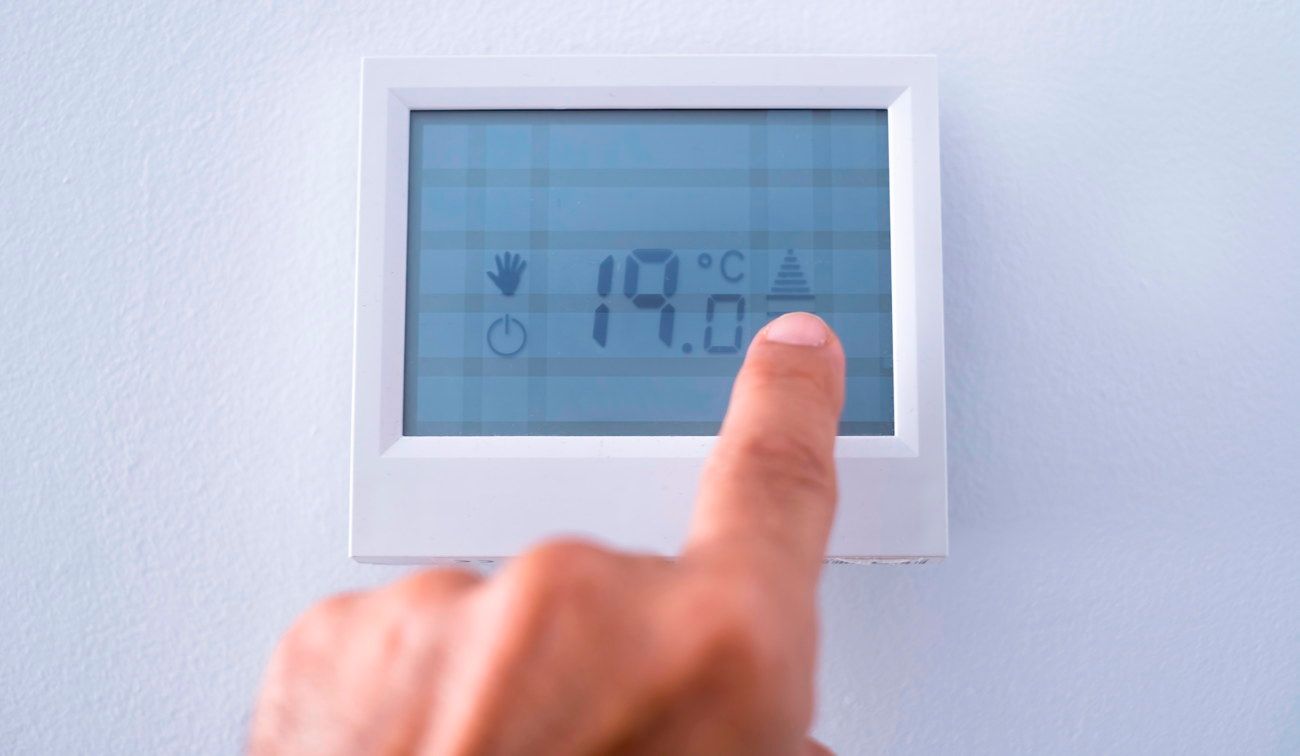
19° C ?
The recommendation to keep the temperature of a house around 19°C in winter dates back to the 1970s, during the first oil crisis, and was formulated with the aim of saving energy, which at the time came mainly from fossil sources.
For a house heated to 21°, 22° or more, each degree less could represent a saving of several hundred $€ per year in heating costs. Multiply that by a few tens of millions of homes nationwide, and you get billions in savings. At the time, the priority for governments was essentially economic, without taking into account the consequences of these choices on quality of life and on the homes themselves.
This was in the 1970s, a time when thermal insulation standards were virtually non-existent and electric heating was the exception rather than the rule. The potential gains were enormous.
Technological changes
Today's homes are better insulated and more airtight, and a number of technologies enable us to control temperature more finely according to activity, location and time of day.
As a result, heating costs are reduced at source, and the potential savings from lowering a home's temperature are proportionately much smaller. In addition, other considerations can then be taken into account, such as the effects on the health of inhabitants and buildings.
Gradually, people's habits and even recommendations are moving in the direction of increasing the recommended temperature, with a base temperature closer to 20°, in a range varying between 18° and 21°. But there's more...
Gains on other levels
Energy efficiency remains a valid concern - there's no gain in heating the outdoors - but comfort is also sought, and this perceived comfort has effects on health.
The World Health Organization (WHO) has carried out a review of research into the effects of winter house temperature, and it appears that an indoor temperature below 18° causes an increase in blood pressure, with consequences for people in poorer cardiovascular health, especially the elderly.
Another consequence of low temperatures in the home is condensation, which can lead to the appearance of mould and facilitate the growth of fungi, affecting not only the health of the inhabitants, should they develop a respiratory ailment or allergy, but also the very structure of the building: correcting problems of rot or mould often entails major work.
Small heating savings can turn into substantial health costs, loss of income due to illness and repair costs, not to mention loss of comfort.
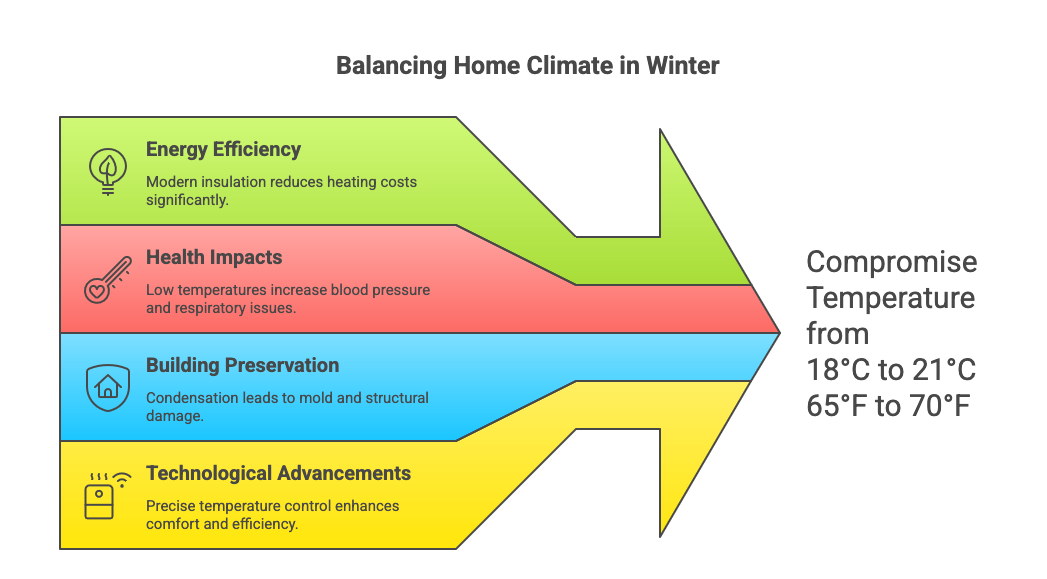
In short, improved building standards and technological developments are making a single heating standard less relevant, and encouraging the adoption of a compromise temperature between energy balance, comfort, health and building preservation, which is more likely to be around 20° C.
Some building associations recommend maintaining a temperature of 21°C in living rooms and 18°C in other rooms for at least nine hours a day on weekdays, as higher, more constant temperatures help reduce the risk of damp and mildew and their consequences.
Ilustration: Shutterstock - 2197451503
References
Report of the systematic review on the effect of indoor cold on health - World Health Organization - WHO
https://iris.who.int/server/api/core/bitstreams/1d3fc1fd-9fbb-4b9a-91ee-40a581b9a052/content
Minimum home temperature thresholds for health in winter - A systematic literature review - Public Health England
https://assets.publishing.service.gov.uk/media/5c5986f8ed915d045f3778a9/Min_temp_threshold_for_homes_in_winter.pdf
Say Goodbye to the 19°C Rule: Experts Reveal the Ideal and Environmentally Friendly Home Temperature
https://indiandefencereview.com/say-goodbye-to-the-19c-rule-experts-reveal-the-ideal-and-environmentally-friendly-home-temperature/
This is the minimum house temperature to avoid damp, mould and condensation- Gabriella Dyson
https://www.homebuilding.co.uk/advice/minimum-house-temperature