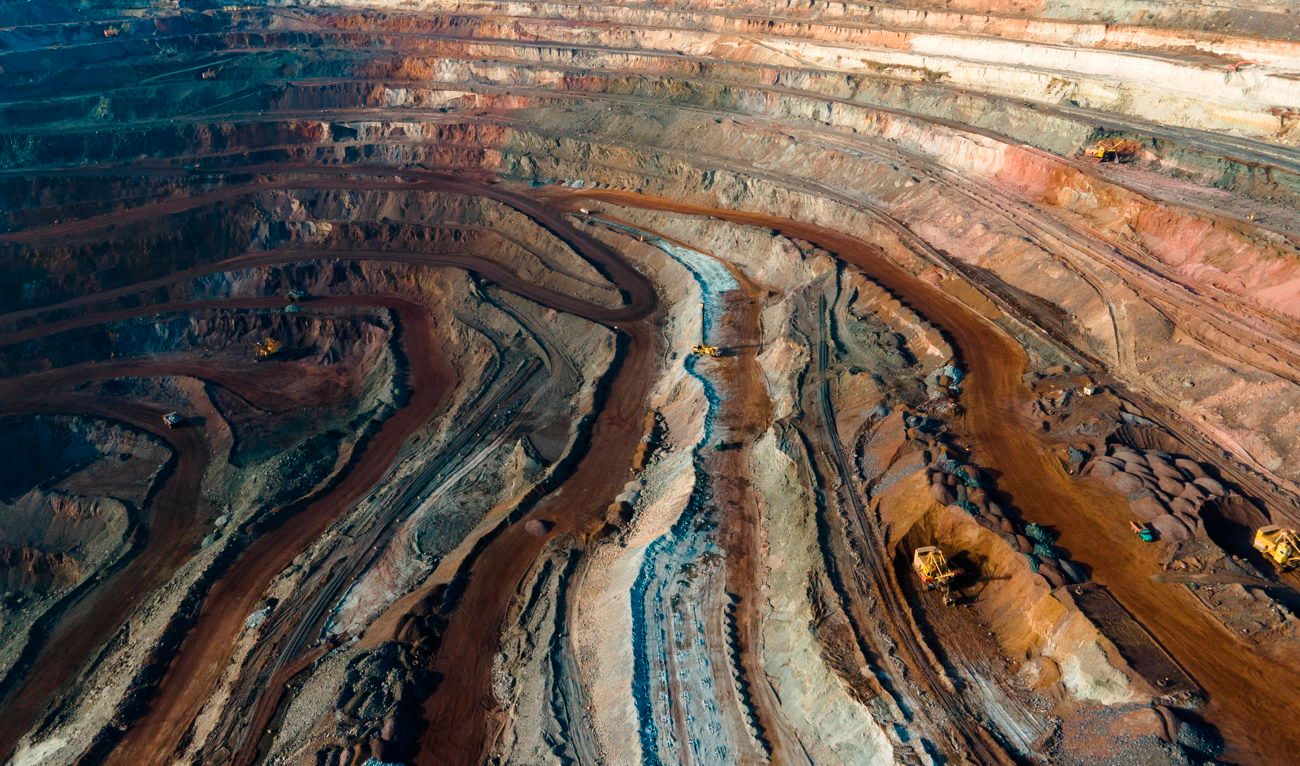
Although Kazakhstan's economic base is based primarily on oil exports (1), it is the world's leading producer of uranium and its subsoil is a veritable open-air Mendeleyev table. Chromium (Cr), copper (Cu), gold (Au), zinc (Zn), lead (Pb)...
The USSR made the country the industrial and mineral lung of the Soviet bloc, largely because of its mineral wealth. Although these metals are still essential to heavy industry, their strategic and geopolitical importance is now second only to that of rare earths. Seventeen metals with unique electromagnetic properties, without which the tech sector and world powers could kiss their global hegemony goodbye (3).
In April 2025, Kazakhstan publicly revealed that it held a colossal deposit of almost 20 million tonnes of these minerals in the Karagandy region, with average concentrations of 700 g/t. If these figures are confirmed, the country would move into the top 3 alongside China (4) - which holds almost 70% of global production and 85% of refining capacity - and Brazil. A priceless treasure for a country living beyond its means and still largely dependent on the cash economy, while its subsoil holds the potential to wean European industry off its chronic dependence on Beijing's exports.
The Eldorado of Karagandy: a breath of fresh air for Kazakhstan
" Aftertwo years of intensive drilling, which began in 2022, geologists did not submit their reports to the Ministry of Industry and Construction and the Geology Committee until 2024. But in the mining sector, this is only the first step on a very long road.
For the site to be officially recognized, it has to pass the test of international standards. Georgiy Freiman, President of the Professional Association of Independent Mining Experts(PONEN), reminded us of the golden rule at the MINEX 2025 Forum: "To be able to speak of a 'deposit', you must first precisely characterize all the substances present within the ore body", he reminded us. Proving the presence of metals is one thing; guaranteeing that they can be mined is another, far more complex matter.
The country has therefore set its sights on the KAZRC Code, a mining industry certification standard that became mandatory in Kazakhstan in January 2024 (5).
" The KAZRC Code has been drawn up in full compliance with the criteria of the global mining community, using the international reporting model of CRIRSCO[Editor's note : Committee for Mineral Reserves International Reporting Standards,
the global body that harmonizes the way mining companies report their discoveries to the public and investors]," says the report.
The infographic below breaks down the five key stages involved in labelling deposits according to CRIRSCO international standards. This is a real obstacle course that gives the deposit its real value in the eyes of the financial world, without which the value of any deposit remains purely theoretical... not to say imaginary.
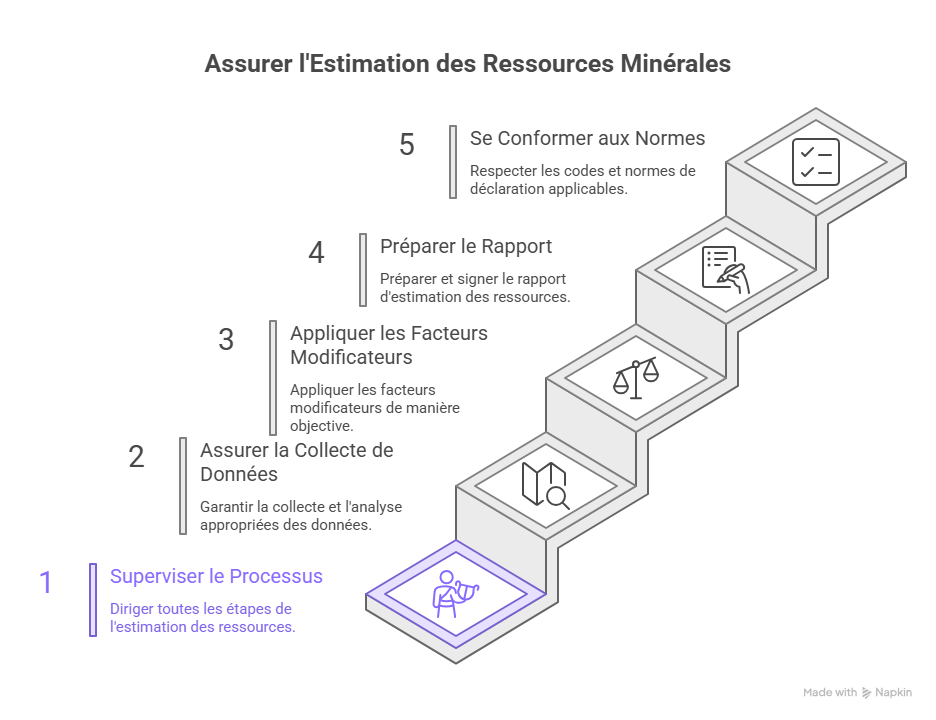
A document that clearly demonstrates the country's desire to abandon its old mining evaluation methods, inherited from the Soviet era and deemed obsolete by Western chancelleries. Without this seal of approval, no industry titan would risk betting billions on Kazakhstan's subsoil if it wasn't governed by modern standards.
Kazakhstan will have to be patient, because before the first gram of neodymium (Nd) or praseodymium (Pr) emerges from its deposits, the industrial crossroads will be long and bumpy. The Executive Chairman of the MINEX Forum, Arthur Poliakov, calmed things down a little when the discovery of the deposit was officially announced.
According to him, between feasibility studies, obtaining environmental permits and building infrastructure, " development could take up to 12 years " - a timetable that pushes full-scale extraction back to at least 2038, giving Beijing a few more years of peace.
Refining: the missing link in cutting ties with Beijing
The discovery of " New Kazakhstan " is already a huge symbolic victory for Kazakhstan, which has gone through a turbulent period since 2022 (21.3% inflation due to the Russian-Ukrainian conflict), coinciding with a fine economic recovery since the beginning of 2026. But that's only half the story, because in the mining sector, full power belongs to those who know how to refine resources. In Chile, Argentina, Bolivia, Nigeria and the Republic of Congo, there is unfortunately no shortage of examples.
This is why China still reigns supreme in the refining sector, with only 15% of rare earths passing through its borders for processing. This total stranglehold on one of the most important sectors of today's economy forms one of the most muscular arms of theMiddle Kingdom's industrial sovereignty.
If the minerals mined in Karagandy were to end up in Chinese factories for processing, Kazakhstan would be rolling out the red carpet for its adversary. The country would only be feeding its neighbor's power a little more, while remaining at the bottom of the value chain.
Unlike iron or gold, rare earths are never found in a pure state; they are closely interwoven with each other in the rock. It is necessary to separate them chemically using hundreds of acid baths (solvent extraction), in order to obtain 99.9% pure oxides.
This is why Kazakhstan is counting on its flagship: Tau-Ken Samruk, a state-owned company, subsidiary of the Samruk-Kazyna sovereign wealth fund, which is the guardian of the nation's resources. Its role is twofold: it is both the national mining operator and the obligatory partner for any foreign giant wishing to touch the Kazakh subsoil.
To turn " New Kazakhstan " into a profitable deposit, it needs to move upmarket and get help. To this end, the country intends to exchange its resources for a transfer of technology, thanks to its alliance with the Canadian group Ivanhoe Mines.
Kazakhstan will provide Karagandy with mineable land, while the Canadians will contribute their technological artillery, starting with the " Typhoon " system.
This device, considered the most powerful geophysical imaging platform in the world by Ivanhoe Electric (7). According to the company, Typhoon is capable of identifying mineralized zones at depths of over 1.5 kilometers, enabling Tau-Ken Samruk to detect the most promising mining areas - an essential step if it is ever to challenge China's monopoly.
The middle corridor: the road to independence
After extraction and refining, Kazakhstan must be able to transport these metals to international customers without depending on the goodwill of its neighbors. To deliver to the West without using Russian rails (under sanctions) or Chinese-influenced ports, the country will use the Central Corridor.
There's no better way to free itself from the bosom of Moscow or Beijing: it's a huge trade route that starts at the port of Kuryk (or Aktaou) on the Kazakh coast, crosses the Caspian Sea to Baku in Azerbaijan, before transiting through Georgia to Turkey or crossing the Black Sea to Romania.
What's more, Brussels has already earmarked over 10 billion euros of investment to modernize this corridor as part of its Global Gatewayprogram (8). The aim is to reduce the journey time to less than 15 days to bring critical metals from Karagandy directly to battery and semiconductor factories on the Old Continent.
Kazakhstan survived Soviet rule thanks to its uranium; today, it's looking for its second wind in rare earths. If the deposit is indeed formalized one day and passes certification, it will be the country's biggest economic leap since the fall of the USSR.
The biggest risk it currently faces is that China will not let its monopoly collapse like a house of cards without lifting a finger. Anything is possible in this respect: a Beijing/Moscow alliance to put pressure on the Kazakh borders, China prohibiting its engineers from collaborating with Tau-Ken Samruk, saturation of the world rare earth market to drive down the price, slowdown of rail or port projects linked to the median corridor... The Dragon never shares its pearls; Astana will have to fight to ensure that its treasure does not end up under Chinese control.
Illustration: Shutterstock - 1864125796
References
1. Kazahstan https://fr.wikipedia.org/wiki/Kazakhstan
2. Rare Earth Elements Projecthttps://www.sciencehistory.org/about/projects-initiatives/rare-earths-project
3. What are rare earths and why are they a major obsession for the world's major powers? https://www.presse-citron.net/que-sont-les-terres-rares-et-pourquoi-obsedent-elles-les-grandes-puissances/
4. 2200-year-old imperial road discovered by China https://cursus.edu/fr/35305/la-chine-decouvre-une-route-imperiale-de-2200-ans
5. KAZAKHSTAN ASSOCIATION OF PUBLIC REPORTING FOR EXPLORATION RESULTS, MINERAL RESOURCES AND MINERAL RESERVES https://kazrc.kz/wp-content/uploads/2021/08/KAZRC.pdf
6. war ecology https://cursus.edu/fr/31749/lecologie-de-guerre
7. Ivanhoe Electric https://ivanhoeelectric.com/technologies/typhoon/
8. Global Gateway Information on the deployment of the "Global Gateway" strategy, partnerships, projects and financing opportunities https://international-partnerships.ec.europa.eu/policies/global-gateway_fr