Publish at February 04 2026Updated February 05 2026
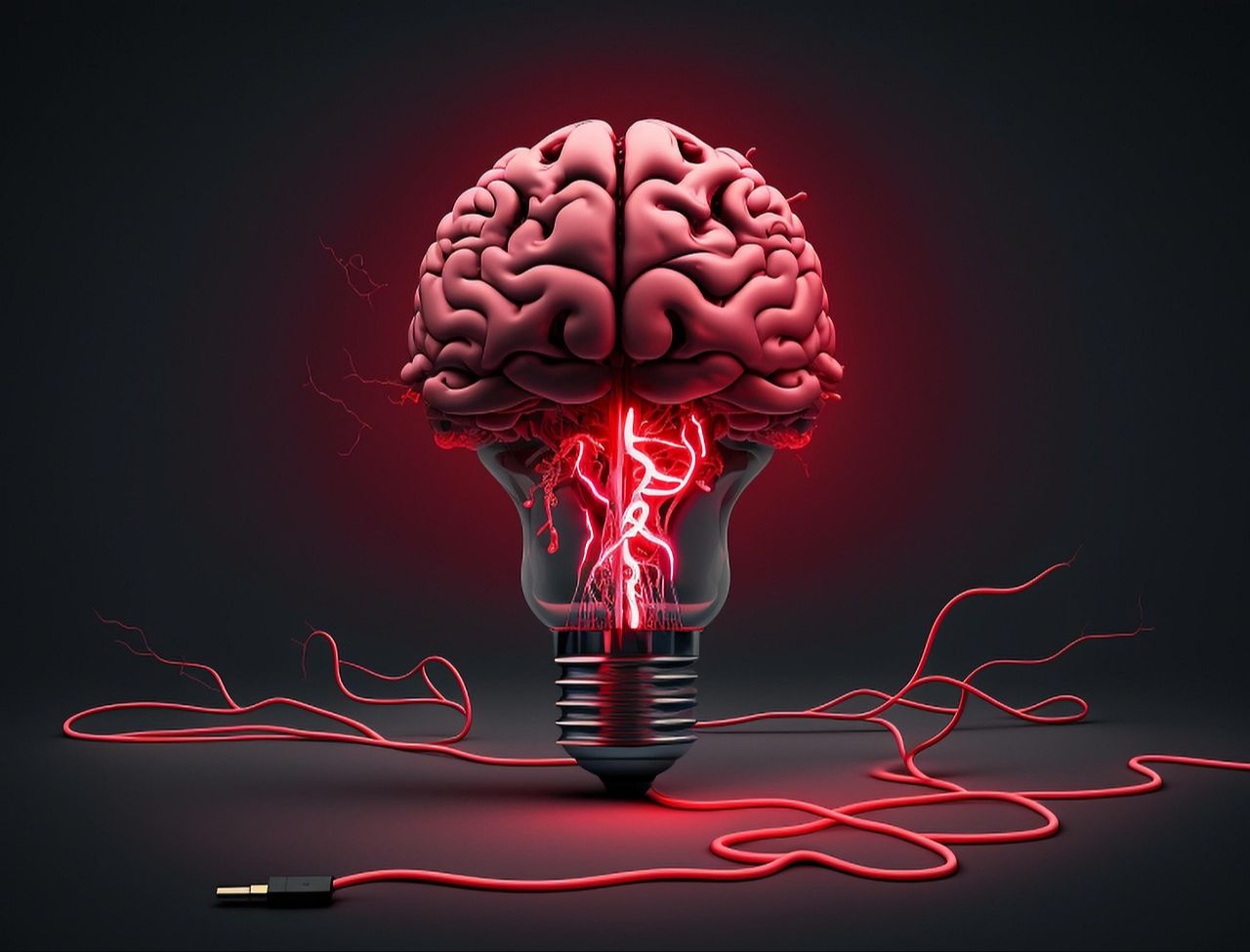
Is your brain blocking you? Here's how to hack it
5 techniques to help you get into action
Are we our own worst enemy? Those who take an interest in our brains have seen how, for a variety of reasons, the machine that sets us in motion can sabotage itself, leading people to procrastinate, stop themselves from doing things, and so on. However, it is possible to "hack" our brains so that they're at their best, as youtuber Fabien Olicard, who has a passion for neuroscience, talks about.
In this clip, he recounts five ways to get closer to your goals.
The first is the "ugly sentence". Our brains generally have two modes: creative and critical. Perfectionism is the ever-open critical function that inhibits creativity. So, the idea is to start a project by accepting that what's being achieved "sucks", so as to get into action and stop the critical mode. After all, there's usually a chance to correct, edit and revise later.
The second is self-anchoring. Sportsmen and women are very good at using actions, music and the like before going into competition. These anchors enable you to define your desired mental state. You then need to create one with a stimulus of your own, one that's easy to repeat and always the same, to build up the association in the brain.
The third is an exploitable brain bug: open tasks. Like tabs on a browser, the brain stays more focused and remembers an interrupted task more than a completed one. It may therefore be a good idea to start a project with the simplest of chores, and then leave a short period of time in which to pick up the slack. In general, the individual will eventually return to it and continue. Be careful, however, not to do this with too many projects at once.
The fourth is "cognitive batching". Basically, the brain is not the multitasking machine we think it is. In fact, it's at its best when it categorizes what needs to be done, and takes care of one at a time: for example, messages to send, essays to write, accounting, etc. Finally, beware of overloading your brain. It tires faster than we think, which explains why, at the end of the day, we often make poorer decisions. The idea is to choose three tasks in the day and carry them out, selecting the most "urgent" and prioritizing them. This way, we'll trigger a dose of dopamine from having succeeded in completing them.
Last but not least, there's a final one: self-compassion. In fact, neuroscientists have noted that self-criticism can do more damage to our brains than a real punch in the face, as it generates the stress hormone cortisol. So, gentleness will help us feel better and soothe our gray matter.
When it comes to making judgments, we need to distinguish between data derived from observation and data that has been altered, and to separate conclusions drawn from structured reflection from those that have no basis in fact.
A good course is a good teacher. It's a professional who knows the requirements of a school program or certification course, the pedagogical techniques to be favored and who knows how to demonstrate excellent interpersonal skills and flawless communication. There are plenty of good teachers out there, but the current lack of international recognition of the profession is a cause for concern. What does the OECD's TALIS survey tell us?
Thanks to this approach, your students will have discovered several words in the lexicon, enriching their vocabulary and polysemy. They'll have traveled the world, as proverbs often carry the mantle of their origins.
The school offers a relaxed environment, time, and a relative absence of distractions. Most programs have cut out the objectives and skills.
The only thing missing, according to this model, is the methodological goal of having learners acquire the knowledge and criteria for self-correction and self-reinforcement.