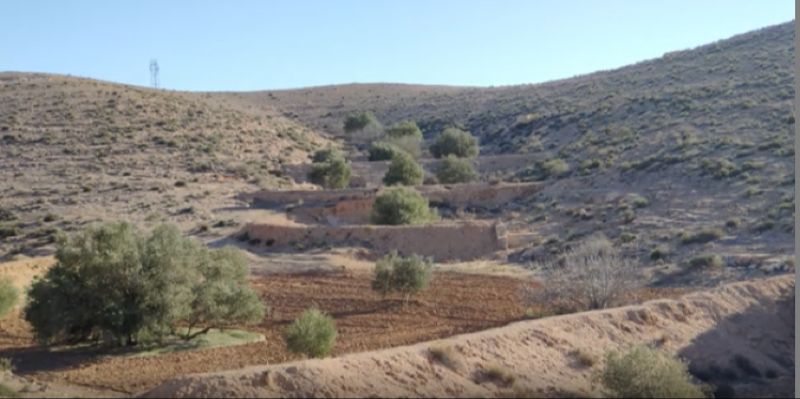
Water flows down the slopes, water disappears into the sand, water evaporates. In mountainous regions, people have always endeavoured to retain water and the sediment it carries, in order to promote cultivation.
In Switzerland, the "bisses" form a network of canals and reservoirs which, after almost being abandoned in the 1970s, are now being put to good use in two ways: their environmental function is still in use, and today they also serve a tourist function.
The Monts de Matmata, located in south-eastern Tunisia, are part of the Dahar massif. In this rather arid region, water and sediment retention infrastructures are essential for the cultivation of olive trees. These are known as jessours. As is the case everywhere else, the succession is becoming scarce and the jessours are less and less maintained.
Collaboration between Unil and the University of Tunis has made it possible not only to characterize the infrastructures, but above all their significant effects on crops and land, leading to increased awareness and a movement towards their enhancement.
Two videos are available on the article
From Valais bisses to Tunisian jessours: the ancestral know-how of water access
https://www.unil.ch/news/fr/1774596633977
References
Bisses du valais - https://www.les-bisses-du-valais.ch/fr/
Jessours in southern Tunisia - https://geoconfluences.ens-lyon.fr/informations-scientifiques/dossiers-thematiques/changement-global/articles-scientifiques/les-jessour-du-sud-tunisien
Learn more about this
news