Freesound : collaborative sound bank
From thunderous sounds to heartbeats, from looped music to sound experiments, from nature sounds to industry sounds, many sounds to listen to and use in his productions.
Publish at April 14 2026 Updated April 16 2026


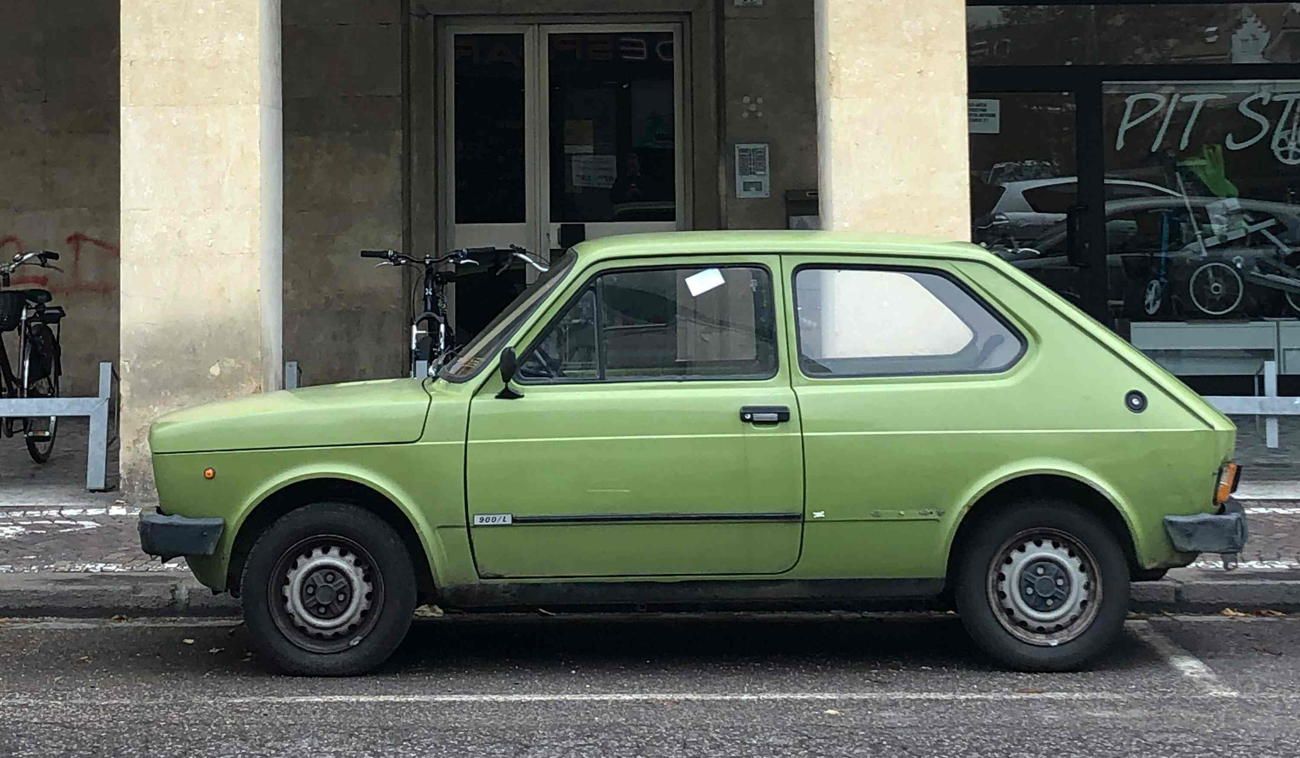
Turin, winter 1973. The fog clings to the metal sheets of the Mirafiori factory. Inside, the line is still running. Production rates are maintained. There was no sign of a shutdown. And yet, within forty-eight hours, everything comes to a standstill.
I was sent to the site. Officially, it's not a strike. The workers are there, at their posts. No slogans, no pickets. Just a rigorous application of the rules.
First clue: "They do exactly as they're told. The foreman is not kidding. Procedures are followed to the letter. Every tolerance is checked, every anomaly reported, every validation expected. No more adjustments, no more initiative.
In the field, the nature of the gestures has changed. An operator meticulously examines a part. He measures, compares, documents. The slightest variation triggers a procedure. He waits for written instructions before continuing. Behind him, the flows accumulate.
"How did you do it before?
"We made it work.
This "making things work" refers to what ergonomics literature calls real work: all the adjustments, arbitrations and regulations made by workers to make activity possible, beyond what is prescribed. In industrial organizations, this gap is structural. Prescribed work cannot anticipate every situation. It leaves room for practical, situated intelligence.
On this particular day, that intelligence is suspended.
A union representative evokes the context. Intensification of work rates, multiplication of standards, increased control. Work organization has become more rigid, seeking to reduce the scope for interpretation. Yet, as analyses of the Italian sociology of work in the 1970s, particularly those by Mirafiori, show, conflicts then shift to contesting the very organization of production and the division of labor (Trentin, 2012).
The "zeal strike" (sciopero bianco) became a singular strategy: no longer disobeying, but strictly obeying. Pushing the logic of the system to its limits.
On the management side, incomprehension dominates. Procedures designed to guarantee quality require flexible interpretation. But this flexibility is never formalized. It's based on experience, on tacit knowledge.
As Polanyi (1966) has shown, "we know more than we can say". Industrial work mobilizes embodied knowledge that is difficult to codify. Their withdrawal, even temporarily, disorganizes the whole.
In this factory, this withdrawal is voluntary. Workers stop interpreting. They just do it.
The effects are immediate. In less than two days, production collapsed. Not through lack of work, but through excessive conformity. Flows stopped circulating. Validations piled up. Interfaces between workstations became bottlenecks.
This phenomenon confirms later ergonomic analyses of the "joint regulation" of work (Reynaud, 1988). All organization is based on a compromise between formal rules and informal adjustments. When the latter disappear, rules alone are not enough to maintain activity.
As one foreman put it simply: "We realized that we were dependent on them.
What this sequence reveals is the profoundly relational and situated nature of work. Contemporary research in occupational psychology, notably that of , shows that real work involves a "power to act" that cannot be reduced to the execution of prescriptions. It involves workers' ability to transform situations, interpret rules and cooperate to maintain activity (Clot, 2008).
The work-to-rule strike suspends this power. It brings to light what is usually invisible: living work.
In the archives, conflicts in the Italian automotive industry appear as moments of social experimentation. The assembly line, emblem of prescribed work, is confronted with its own limits. As Coriat (1979) has shown, Taylorian rationalization produces productivity gains, but also tensions linked to the dispossession of workers' know-how.
The zeal strike reverses this trend: it reintroduces know-how by removing it from what is necessary but not agreed.
Forty-eight hours after the action began, management opened negotiations. The stakes go beyond wages. It concerns the organization of work, the recognition of invisible skills, and the autonomy needed to operate.
The plant restarted. But differently.
At the end of the survey, one hypothesis emerges. Prescribed work is never enough to produce. It provides a framework, an intention, a structure. But it's the real work - the work of adjustment, interpretation and cooperation - that makes the activity possible.
By following the rules to the letter, the workers didn't stop working. They stopped bridging the gap.
And this gap, now visible, brought the factory to a halt.
References
Clot, Y. (2008). Travail et pouvoir d'agir. Paris : PUF.
Coriat, B. (1979). L'atelier et le chronomètre: Essai sur le taylorisme, le fordisme et la production de masse. Paris: Christian Bourgois.
Polanyi, M. (1966). The tacit dimension. Chicago: University of Chicago Press.
Reynaud, J.-D. (1988). Les régulations dans les organisations: régulation de contrôle et régulation autonome. Revue française de sociologie, 29(1), 5-18.
Trentin, B. (2012). La cité du travail: Le fordisme et la gauche. Paris: Fayard (originally published in Italian in 1997).
Stellantis factory in Mirafiori - Wikipedia - https://fr.wikipedia.org/wiki/Usine_Stellantis_de_Mirafiori
You might also like:
Freesound : collaborative sound bank
From thunderous sounds to heartbeats, from looped music to sound experiments, from nature sounds to industry sounds, many sounds to listen to and use in his productions.
Salon LearningTech - What role can trainers play in a world invaded by AI?
The Learning Technologies trade show held in Paris at the end of January is an opportunity to discover what has changed in the role of trainers in just two or three years. Whether they're ticking boxes, educating (future) citizens to make the most of these pedagogies, being curious and experimental, or enthusiastic demiurges. Where do you fit in?
In the field? Let's go out with notebooks!
Observing without intention and without a reading grid arouses interest and curiosity, but rarely contributes to the development of learning. For centuries, scientists have been taking notes of their observations, in notebooks and now sometimes on tablets. In this article, we propose to discover how inspiring these practices can be for students, in science or in interdisciplinarity.
Oulipo: The game of constrained literature
For over 60 years, Oulipo has been offering a variety of ways of stimulating or challenging the imagination of writers, editors, poets, students and anyone else who can write, as well as those who can read. We're sure you'll find something to inspire you.
Remarkable pedagogical initiatives in adult education
AI and digital technology are much in the spotlight; several remarkable innovative pedagogical practices in recent years integrate and go beyond them....