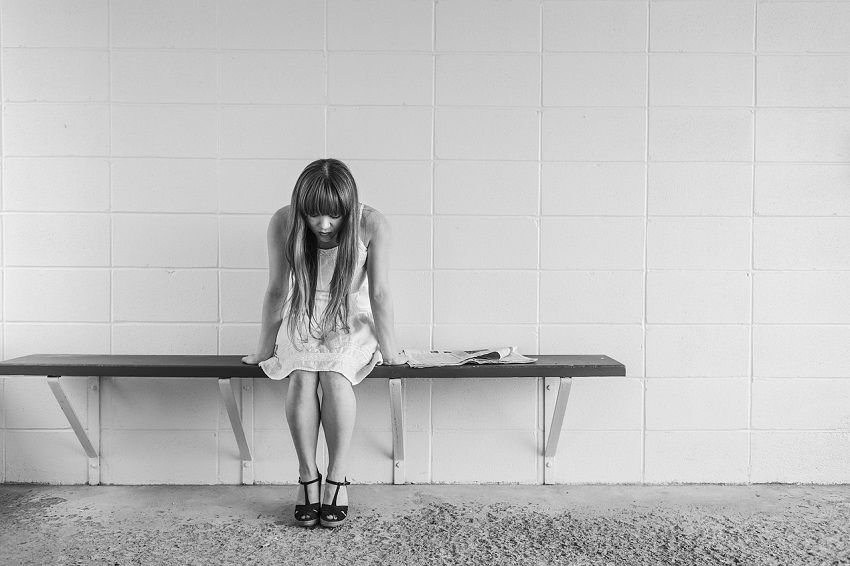
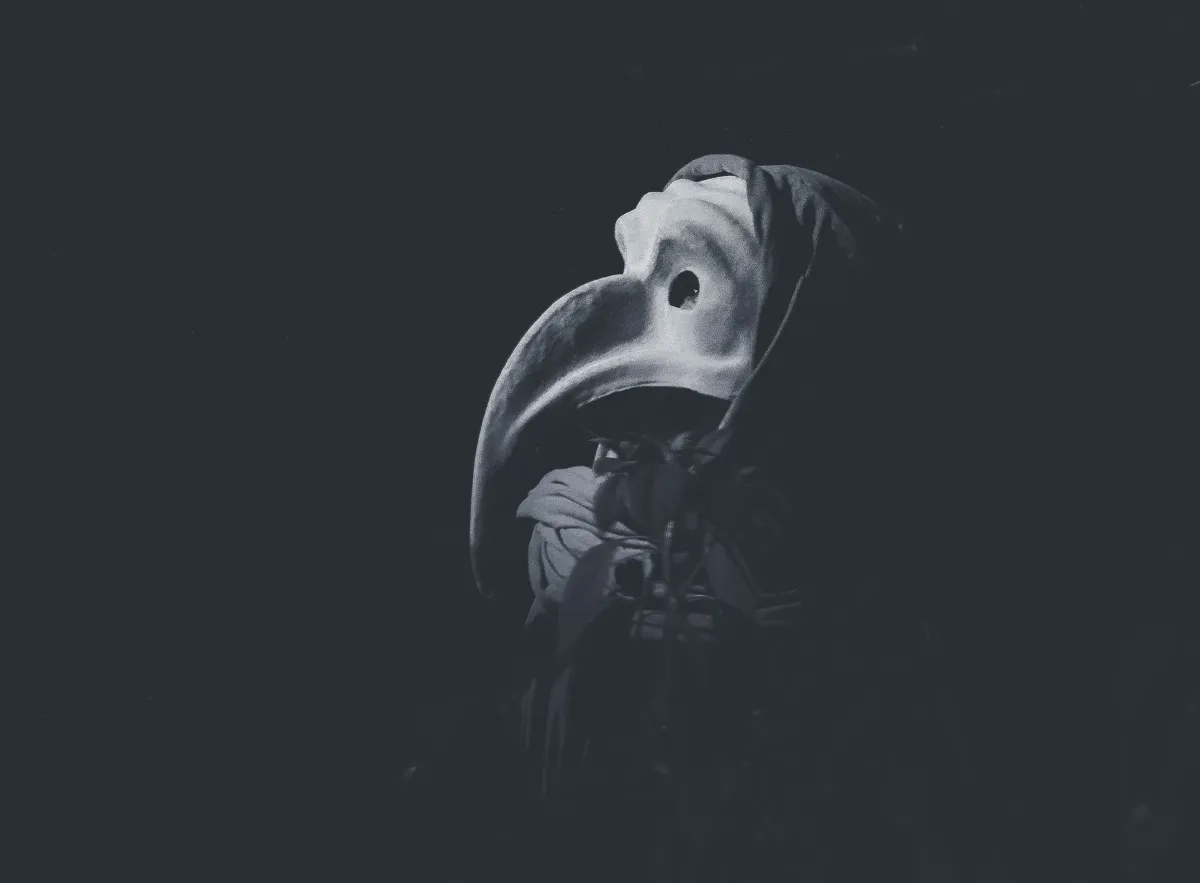
Sometimes our need for security prevents us from exploring new things, preferring to shun adventure and stay safe instead. But is this really living?
It's not necessarily true that security opposes adventure. The real question isn't whether to live an dependence or an adventure; it's how you live it, why you choose it and how you can change your choice.
What's the point of living an dependence if you become its prisoner? Can dependence be another form of adventure, provided there's always a way out?
Security: a refuge or a prison?
Sometimes, the need to feel secure is so great that it pushes aside anything that needs to be discovered, anything new. We flee the unknown simply to stay in what we already know and stay snug in our comfort zone rather than risk adventure.
So why choose dependency? Fear? Adventure implies uncertainty; for many, not knowing what's coming is more unbearable than staying in a known situation, however uncomfortable. Dependency, on the other hand, offers a predictable framework. We know what to expect, and this predictability is deeply reassuring.
Sometimes, our past serves as an explanation. Someone who has lived through chaos or suffering can recreate addictive relationships without realizing it. This is not because of a lack of strength, but because it's the only form of stability they've learned.
There's also the control trap. We sometimes choose to depend on something in order to feel that we can better manage our lives. We reduce risk and avoid the unexpected to reassure ourselves. We think we're in control, but in reality, we're just running away from reality.
Freedom can be defined as the absence of limits. Yet we often choose to attach ourselves to a routine, a person or an institution, not out of weakness, but because these bonds reassure us in an uncertain world.
Philosopher Erich Fromm touched on this theme in his work " The Fear of Freedom ". He observed that freedom can provoke great anxiety. Faced with too many choices, we sometimes prefer to give up deciding, and submit to an authority or a precise framework. This is one way of escaping the fear of having to build one's life alone. However, this does not mean that we lack courage; rather, it's a human reaction to the unknown.
Freedom and submission: can we really experience both at the same time?
Being free means taking responsibility for your own choices. This can be exhausting, even paralyzing. Dependency relieves this burden by delegating some of the decision-making to someone or something else.
If freedom frightens us, what are we really looking for? A reassuring framework so that we don't have to decide on our own? But when we want security so badly, we end up locking ourselves in without realizing it. If someone else decides for us, are we really free?
Let's take two examples.
- First, religion. It provides answers and meaning. But when we obey without thinking, we no longer really choose. And that comes down to the same thing as work.
- To employment. How many people stay in a job that suffocates them, simply because the hierarchy decides and the framework is reassuring? We forget that we have a choice when it comes to structures and what has been imposed on us. So we delegate our choices to a hierarchy or a system.
In both cases, we trade freedom for security.
Jean-Paul Sartre called this "bad faith". We pretend we have no choice, to avoid being responsible. Yet, for him, we are "condemned to be free". Even when we do nothing or obey, we still make a choice. We can assume it or deny it, but we're still responsible. So even submission is a choice. True freedom lies in understanding why we accept these bonds instead of enduring them.
We think we're choosing security. But what if dependency chose us?
Sometimes, we don't know if we've chosen a situation or if we're undergoing it. The line is blurred. The Stanford experiment demonstrates this. Students played guards and prisoners. They quickly lost themselves in their roles. The experiment became so real that it had to be stopped. The "prisoners" weren't tied up, but they acted like slaves. They were submissive simply because of the setting and the gaze of others.
It's an impressive lesson. You can lock yourself in without wanting to. You end up forgetting that you can get out or say no. The most striking dependency then is not the one you suffer, but the one you no longer see.
Dependency and adventure are not enemies: they've just been misrepresented.
It's not a question of choosing between the two. The important thing is to understand why we're going in this or that direction. The important thing is to remain aware of your decisions and retain the freedom to leave if you wish. In love, for example, when you make a commitment, you admit that you need the other person and make room for them. We also assume our own fragility by showing ourselves to be vulnerable.
We might think that this prevents us from having adventures, but the opposite can be true. A sincere relationship becomes a magnificent adventure. What transforms everything is staying by choice, not by fear. Two people can experience the same thing. One will feel trapped, the other will feel at home. It all depends on how you live your life.
Psychologist John Bowlby explains it very well. For him, needing others is not a weakness; in fact, it's quite the opposite. He formulated the " theory of attachment " as a natural need. Our sense of inner security makes all the difference. A confident person can love passionately without forgetting himself. She chooses to commit with her heart, without fear of forgetting herself. They stay because they want to, not for fear of loneliness. Her desire holds her back, not her fear of emptiness. She's simply free to love. She stays by choice.
Two people can experience the same love, and one may feel suffocated, while the other finally feels at home. The problem is not necessarily the couple itself. The difference is the freedom assumed. Everything changes when you know you're staying because you want to, not because you have to. That's how you transform a burden into a home.
Dependency as a form of adventure in its own right... provided there's a way out.
True freedom doesn't mean escaping all ties. It's about understanding why we choose them. What's the point of committing to something if you can't find meaning in it, or even get lost in it?
It's not necessarily the bond that suffocates us, but the fact that we're not aware of it and can't choose when we should.
The nature of freedom is not to be free of all dependencies, but to be aware of when and why we accept them and, if we change our mind, to be able to detach ourselves from them. Consensual, conscious dependency is also a form of adventure.
Illustration: Magnific - 122524329
References
Escape from Freedom - Erich Fromm - https://fr.wikipedia.org/wiki/La_Peur_de_la_libert%C3%A9
https://www.goodreads.com/book/show/25491.Escape_from_Freedom
Being and Nothingness - Essay in Phenomenological Ontology - Jean-Paul Sartre
https://www.philotextes.info/spip/IMG/pdf/l_etre_et_le_neant_tel_gallimard.pdf
Stanford experiment - https://fr.wikipedia.org/wiki/Exp%C3%A9rience_de_Stanford
Attachment theory - https://fr.wikipedia.org/wiki/Th%C3%A9orie_de_l Attachment
See more articles by this author