All the methods to become a learning territory. Little by little, each one discovers the other and understands that he or she is part of a restorative community, a community capable of building its future without depending on external subsidies.
Publish at May 21 2026 Updated May 21 2026


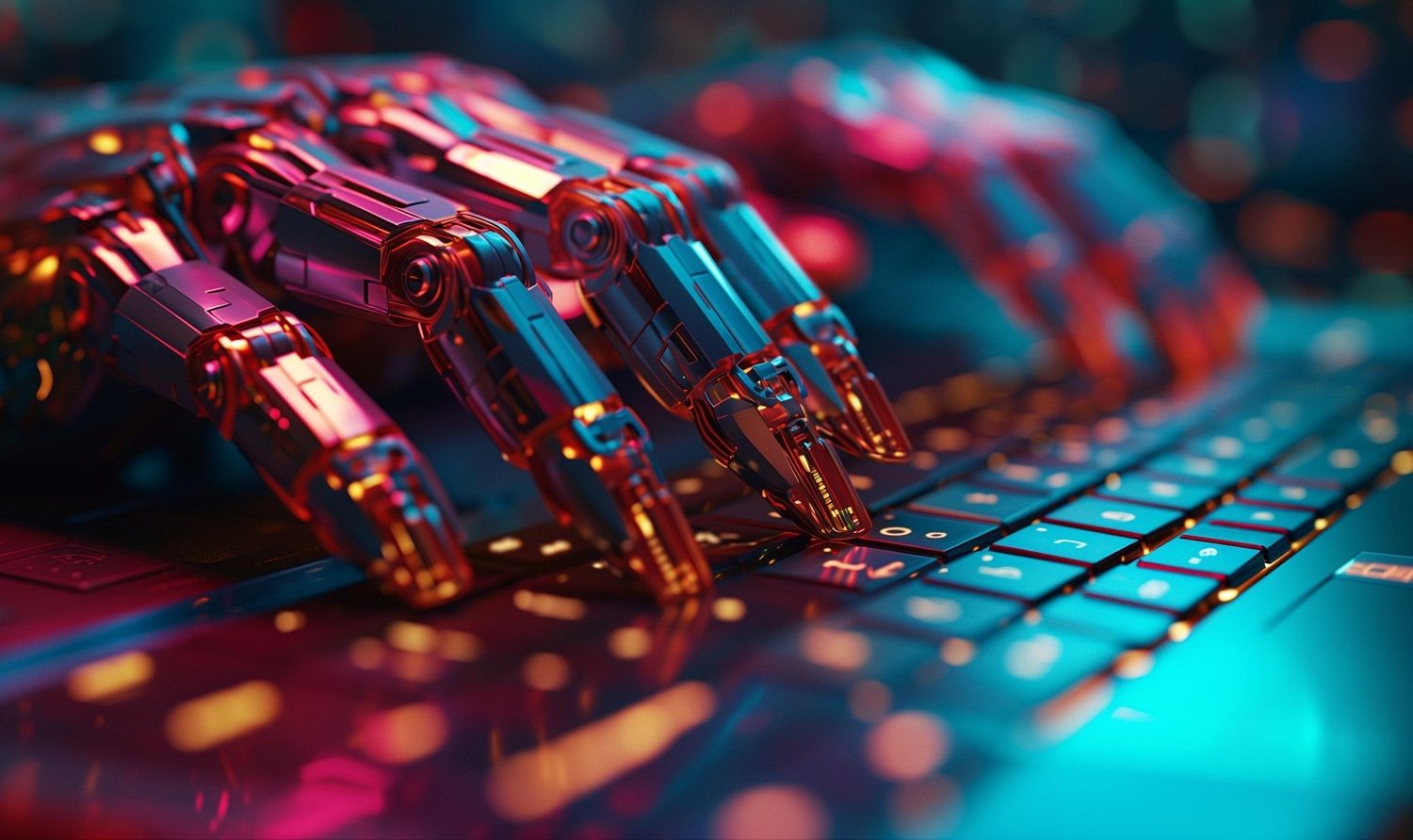
Artificial intelligence is calling into question a significant proportion of the professions and skills we need to master. Its democratization at the end of 2022 has given rise to a wide range of reactions, from excitement to concern. Who would see their profession come under the control of an algorithm? Specialists and amateur observers alike immediately posted their predictions on the Internet. Among all the available rankings, one job was systematically included: translator.
Indeed, the world didn't wait for ChatGPT to automatically translate texts and lyrics. Science-fiction stories from Star Trek to Star Wars and others already touched on the idea of universal translators to reduce the language barrier between human and extraterrestrial peoples. In reality, as early as the Second World War, the concept of tools for faster translation came to the fore, as being able to decode enemy messages gave a considerable advantage. Turing's work on deciphering Nazi codes went a long way towards helping the Allies win the war. Consequently, as the world ended one confrontation and entered another (the Cold War), experiments in machine translation took place, including one by Georgetown University and IBM in 1954, which demonstrated rudimentary transcription from Russian into English.
The machine relied on strict grammar rules and dictionaries, aided by linguists. These translations were often sketchy, literal and not very convincing. It would be more than 50 years before machine translations using statistical models appeared. The computer system had access to a huge bank of linguistic data, where it calculated the probabilities of a given lexeme being the next one or not. A model that was already more fluid, but that didn't understand long sentences or nuances very well.
It was in 2016 that artificial intelligence really came into its own in translation, creating neural comprehension networks that could grasp context and produce much more natural translations. In 2016, for example, Google's tool made it possible to translate between two languages without using English. Experts claim that, since 2020, AI has entered the LLM (large language models) phase, where they are even capable of rewriting, adapting tone and making translations more "human".
As a result, more and more companies are turning to this type of translation, since it can be carried out in a matter of seconds, at little or no cost, and in an impressive number of languages. Subtitling videos or video games has never been easier in this context, enabling small studios to offer translated versions of their products without increasing their development costs. The translation of literary works is also quicker and faster with this technology, although not always without errors.
In 2024, an article was published on the NPR website, translated (humanely here) as follows: "If AI is so good, why are there still so many job openings for translators?" The title is provocative, but it highlights a reality, noted by the author, that calls for translators in many government or legal sectors remains the same as before the advent of generative AI. While it's true that some sectors are seeing a drop in demand, others are well aware that a conversational robot isn't enough to translate, that it's not just a matter of "converting words from one language to another".
The whole notion of meaning, while greatly improved over the years, remains complex for machines. Even translation AI providers admit that, in many cases, it's preferable to have everything proofread by a professional translator to avoid misunderstandings, loss of meaning and so on. When we think of the legal field, for example, the question of machine translation becomes a delicate one. Every term, every verb and every punctuation mark leads to case law. All it would take is one transcription error to open the door to legal disputes - and this has already happened. Which explains why translators in this field will almost always be in demand.
Even in other sectors, the added value of human translation is truly to put a translated sentence into context. For example, in Mandarin, people don't own their workplace. So asking "Do you have a toilet?" in a café in Beijing or Taiwan raises eyebrows. It's the equivalent of asking them if they have a bathroom at home... Yet Google Translate still makes this error of meaning in its translation.
Hence the ever-present importance of learning to translate. Yes, artificial intelligences are advanced, but they can't grasp the subtlety of meanings, contexts and so on. So, teaching people to do this not only helps them to acquire the vocabulary of a foreign language, but also to understand its subtleties, its precise or even untranslatable locutions... unless the AI supports the translators in translating them.
In fact, many translators now use AI as a supplementary reference tool, like dictionaries, lexicons and so on. The advantage is that the algorithm can be put to different uses, and the interpreter chooses the one that best suits the situation.
Moreover, the Ordre des traducteurs, terminologues et interprètes agréés du Québec does not proscribe these uses, but warns that most free tools do not guarantee confidentiality or necessarily ensure document security. He therefore advises the general public to exercise caution and call in the professionals for work-related files, sensitive documents and other confidentiality-related uses.
Image: Jorge Franganillo from Pixabay
References:
"OTTIAQ opinion on artificial intelligence in translation." OTTIAQ. Last updated: March 13, 2025. https://ottiaq.org/articles/avis-de-lottiaq-sur-lintelligence-artificielle-en-traduction.
Boulanger, Ann Marie. "The pros and cons of machine translation and AI in legal translation." School of Continuing Education - McGill. Last updated: September 19, 2024. https://www.mcgill.ca/continuingstudies/fr/article/le-pour-et-le-contre-de-la-traduction-automatique-et-de-lia-en-traduction-juridique.
Comic, Mia. "How AI translation works (and why it's better than you think)." Lokalise. Last updated April 15, 2025. https://lokalise.com/blog/how-ai-translation-works/.
"How can AI help us translate?" France Culture. Last updated: May 16, 2025. https://www.radiofrance.fr/franceculture/podcasts/la-question-du-jour/comment-l-ia-peut-elle-nous-aider-a-traduire-4945735.
"How is AI reshaping the global translation industry - and what still needs humans?" AbroadLink. Last updated: February 2, 2026. https://altraductions.com/blog/IA-futur-industrie-traduction.
Crangasu, Adria. "How is artificial intelligence changing the translation services industry?" BLEND. Last updated December 16, 2025. https://www.getblend.com/blog/artificial-intelligence-changing-the-translation-services-industry/.
Graveleau, Séverin. "'Translating is not simply converting words from one language to another': AI redefines training and the translator's profession." Le Monde. Last updated: April 10, 2026. https://www.lemonde.fr/campus/article/2026/04/10/traduire-ce-n-est-pas-simplement-convertir-des-mots-d-une-langue-a-une-autre-l-ia-redefinit-la-formation-et-le-metier-de-traducteur_6678804_4401467.html.
Hamza-Jamann, Anissa. "Learning to translate: in the age of AI, is it still necessary to do theme and version exercises?" The Conversation. Last updated December 4, 2024. https://theconversation.com/apprendre-a-traduire-a-lere-de-lia-faut-il-encore-faire-des-exercices-de-theme-et-de-version-242169.
"Machine translation in the AI age: TM's past, present and future." Acolad. Last updated: July 2, 2025. https://www.acolad.com/fr-ca/services/traduction/machine-translation-history-ai.
"Translation in the Age of Artificial Intelligence." TRSB Inc. Last updated May 1, 2025. https://www.trsb.com/fr/blogue/la-traduction-a-lere-de-lintelligence-artificielle.
MacDonald, Keza. "'It gets more and more confused': can AI replace translators?" The Guardian. Last updated November 11, 2024. https://www.theguardian.com/books/2024/nov/11/it-gets-more-and-more-confused-can-ai-replace-translators.
Ore, Jonathan. "New AI tools promise real-time translation so you don't have to. But is that a good thing?" CBC. Last updated: June 7, 2025. https://www.cbc.ca/radio/sunday/artificial-intelligence-live-translation-languages-1.7551957.
Rosalsky, Greg. "If AI is so good, why are there still so many jobs for translators?" NPR. Last updated: June 18, 2024. https://www.npr.org/sections/planet-money/2024/06/18/g-s1-4461/if-ai-is-so-good-why-are-there-still-so-many-jobs-for-translators.
Schoening, Stephan. "Automatic translation: what it is, and how to use it effectively." Phrase. Last updated February 27, 2026. https://phrase.com/blog/posts/automated-automatic-translation/.
You might also like:
All the methods to become a learning territory. Little by little, each one discovers the other and understands that he or she is part of a restorative community, a community capable of building its future without depending on external subsidies.
AI and the music industry: what possibilities for the artistic world?
AI has become an essential tool for musical creation, but it's also putting intellectual property at risk. Here's how things stand.
Virtual reality: the machine to create empathy?
Some accuse information technology of isolating us from each other, leading to a great lack of empathy. Is it possible to work on this competence with technological means? More and more studies tend to show that virtual reality could be part of the solution.
Performing in front of an audience requires emotional competence. How do you develop it?
Open for learning: perception as an active, relational process
Ouvrir être acteur de ses sens talks about embodied cognition and the link between body and mind, or how this symbiosis helps us to move beyond the binary world we too often suffer from.