Coherent posture: a key to collective intelligence facilitation
What if phenomenology brought us back to a certain form of coherence that favours the posture of the collective intelligence facilitator?
Publish at June 04 2026 Updated June 04 2026


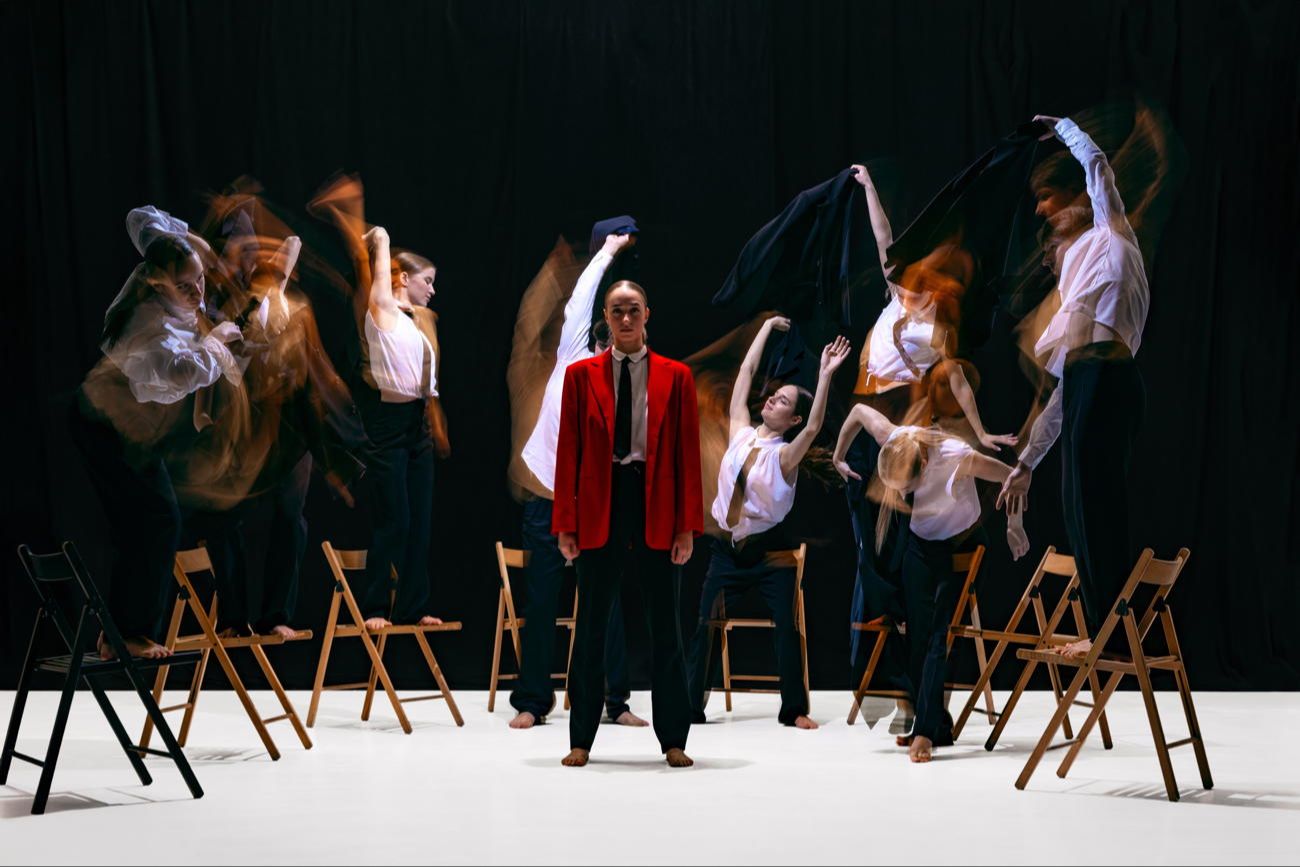
In the doxa, the trend is towards detailed planning and preparation. Many have become perfectionists, striving for perfection down to the smallest detail.
On the other hand, life constantly thwarts our planning. More and more, we have to improvise (in a negotiation, a play, a lesson...). Are we prepared for improvisation? Is it a habit to be systematized?
From the outset, for any project, the word preparation is on the agenda. Learners use it most often because they need to prepare for a presentation, a school outing, an exam etc... So there's really no room for improvisation when it comes to conveying what you've learned over the course of a school year. Already, "in planning, improvisation continues to get a bad press. When a project fails, don't we saythat we've been reduced to improvising?" ( Luc Gwiazdzinski, olivier Soubeyran, 2017). Preparation is the construction of a solid assurance that the original objective will be achieved.
In some fields, improvisation is controversial. In the musical sphere, for example, particularly in jazz, it is not always well regarded. In this vein, "for want of mastery of the work in the synthetic unity of its accomplished totality, the form eludes the improviser. From then on, improvisation would be reduced to a frivolous, irresponsible game, a 'personal psychodrama' incapable of gathering relevant meaning within a coherent form." (Christian Béthune, 2010). An exit that implicitly gives pride of place to preparation as the driving force behind musical production and presentation.
Every organization, public and private, talks about the importance of having a roadmap. Every company in the world has action plans. Teachers have detailed syllabuses prepared before the transmission of knowledge begins. In the medical world, in a training session given in 2024, David-Martin Milot, consulting physician, took up a famous quote from Réjean Landry: "Planning is applying a process that leads to deciding what to do, how to do it and how to evaluate what will be done, before doing it." This emphasizes the need for preparation.
However, too much investment in preparation can also generate anxiety. In fact, during the waiting period, certain questions are bound to fuel our thoughts: what if it doesn't work out? What if everything goes wrong?
The ability to improvise is a disposition that allows us to maintain a serene expectation of our activity, event or project. Preparing for improvisation means we can respond to almost any situation that may arise. In fact, "improvisation should be at the heart of what guides action; the obsessive demand for predictability is a sign of the planner's incompetence". ( Luc Gwiazdzinski, Olivier Soubeyran, 2017). So, more than ever, the skill of planning must be enriched by the skill of improvisation.
For a play, if you're only dealing with actors who only know how to render a text, an unforeseen situation in the middle of the play is likely to tense up the performance. However, if they're equally adept at improvisation, the chances of a successful show are increased. Very often, it's the improvised scenes that provoke the most reactions. In fact, the naturalness of improvisation gives the impression that it's part of the play, even if it's not.
In this respect, comedians are all the rage; others are even identified as improvisation specialists, because their performance gives the impression that it comes naturally, without any prior preparation. Yet it's the fruit of experience that has become second nature. In this vein, Jamel Debbouze is considered a leading figure in theatrical improvisation. He sees it as a building block for active listening, because to be able to react in a way that respects the communication situation, you need to be a good listener.
In the medical field, the famous series The Good Doctor , starring actor Freddie Highmore as Dr. Murphy, crystallizes attention. To save the life of a child in an accident, far from medical services, Dr. Murphy uses two bottles of whisky (as a disinfectant), a hose (for tubing), a knife (to make the incision) and tape to stabilize the boy and prevent respiratory distress while waiting for the emergency room. A mythical scene reminding us that improvisation is sometimes the only way out in extreme situations.
Improvisation in education is a question of openness, speaking out and building self-confidence. Promoting theatrical improvisation among children is therefore an outlet for self-expression and even liberation. In fact, "in improvisation, we feed off mistakes, falls and shortcomings to get back on our feet and move forward. When they understand that their proposals are acceptable, confidence grows, the fear of ridicule subsides (especially in teenagers) and the pleasure of sharing one's imagination takes over." (Mathieu Hainselin et al , 2017)
Several works are in favor of training teachers in the practice of theatrical improvisation. A broad review of the literature is compiled by Guillaume Azéma and Serge Leblanc ( 2022). In particular, they take up Toivanen et al ( 2011) in these terms:
"'as stimulants of creativity and sources of jubilation in education, drama and improvisation are particularly suited to the training of young teachers. They enable them to deepen their sense of interaction as well as the construction of their professional identities."
The ability to react is enhanced insofar as passivity is gradually extinguished when working with improvisation; in many unforeseen cases, you have to react quickly, even if this involves risks. But that's what's so fascinating: by doing it, you build confidence. The ability to improvise comes as a consequence of a certain number of acquired skills.
"Far be it from us to advocate the idea that improvisation can only be practised after a given level of skill has been attained; we simply believe that skill is the fuse to the spark that improvisation represents. A spark of potential strategic fireworks when competence is the fuse; a spark of a flash in the opposite case." (Sammut Sylvie, 2003).
All in all, preparation is essential, whatever the field. But being prepared to improvise is a skill to be developed and built upon for greater efficiency in our projects and activities...
illustration : iShutterstock - 2707209003
Sources
Luc Gwiazdzinski, Olivier Soubeyran, (2017), "Improvisation in moving worlds"
https:// shs.hal.science/halshs-01710516v1/document
Béthune, Christian (2010), "De l'improvisation" , Nouvelle revue de l'esthétique.
https://shs.cairn.info/article/NRE_005_0153
Mathieu Hainselin, Magali Quillico, Gustave Parking, (2017), "l'improvisation théâtrale: une pédagogie de l'expérimentation", les cahiers pédagogiques.
https:// hal.science/hal-01460766/document
David martin-Millot ( 2024), "planning in public health".
https://santemonteregie.net/dspu/TrousseAccueil/PP_Formation-condensee-Planification.pdf
Guillaume Azéma and Serge Leblanc ( 2022), "Training teachers through and/or with improvisation".
https://journals.openedition.org/activites/7254
Sammut, Sylvie, (2003), "l'accompagnement de la jeune entreprise." Revue française de gestion
L'accompagnement de la jeune entreprise | Cairn.info
Jamel Debbouze and theatrical improvisation: "It gives you self-confidence".
https:// www.youtube.com/shorts/Uu9-ZJkWN4o
Good doctor season 1 - https://www.youtube.com/watch?v=VNfWb6B0qq0
You might also like:
Coherent posture: a key to collective intelligence facilitation
What if phenomenology brought us back to a certain form of coherence that favours the posture of the collective intelligence facilitator?
Preparing for the future, or seeing what we believe
Seeing what you believe means convincing yourself that what you want to see does exist, to ensure internal and external coherence. Seeing what you believe also means looking beneath the surface, being sensitive to weak signals and details, to finally discover, in the literal sense of the word, another picture. But when the unexpected happens, it takes belief by storm and reason with it.
Staying in a Toxic Relationship: When Suffering Becomes Part of Who You Are
Staying in a toxic relationship isn't a sign of weakness but rather the result of three deep-seated mechanisms. Understanding these mechanisms isn't enough to make you leave, but it's often the first step on a journey that takes time.
Games and learning: science fiction as a field for play and education
In this article, we take a look at 8 science fiction films from the perspective of the games of the future, and the learning paths that are taking shape tomorrow. Humans learn by playing. We'll learn differently from different games.