“A good traveler has neither set plans nor a destination.” – Lao Tzu
To get “somewhere else,” distance is rarely the main obstacle. Since it’s necessarily a less familiar place, the challenge is usually figuring out how to survive or adapt there for the duration of the experience— the stay, the expedition, or the event—and simply to immerse oneself in it, as in a good “escapist” novel, fully immersed rather than merely as a spectator.
In Lao Tzu’s time, travelers moved on foot, had time to change with the landscape, and adapt as they passed through different places. Today, we can change countries, climates, languages, diets, social environments, and even seasons in a matter of hours. In this context, preparation takes on as much importance as the anticipated sense of being in a foreign land is great, at the risk of losing control; thus, Lao Tzu’s maxim deserves to be reinterpreted.
Lao Tzu had seen business travelers, emissaries, pilgrims, and people who came to consult him—all travelers with a destination and a plan, who saw what they had come to see. They were not open to unexpected opportunities, pressed by their deadlines and objectives. He thus concluded that the plan and the destination did not make the journey but rather limited its possibilities.
Elsewhere: an elusive place
When we lose our bearings, we either seek new ones or let ourselves drift until new connections are formed. None of our usual habits are of any use. The traveler returns to the common foundations of humanity: moving around, drinking, eating, sleeping, finding shelter, and socializing in one way or another. From these foundations, they can have new experiences: meals and places different from what they know, and human relationships built on different grounds.
In an age when “elsewhere” appears on our screens at will, a true “elsewhere” eludes the creeping digitalization. A tourist knows what they’re looking for. In a place filled with tourists and Instagrammers, you experience tourists and Instagrammers—which can feel like an exotic “elsewhere,” but that doesn’t necessarily make it a very interesting setting; interactions there are inevitably limited and standardized. They are at a destination, with a plan.
Moreover, “elsewhere” is an elusive place that fades with familiarity, with mapping, and through everything that fixes our interactions. “Elsewhere” would be a place of potential connections and openness. Here, then, are the clues to finding this elusive place, which may even be very close to home—where one has no routines, where one can meet strangers and/or engage in unusual activities. But is that all there is to “elsewhere”?
The Same Human Race
For many people, their distinctiveness systematically triggers a “prejudiced” response. They may travel to the other side of the world, yet they will not be immune to everyday racism, deep-seated sexism, or other unpleasant forms of social anxiety that they experience where they live; no sense of being in a different world when it comes to the human race. The only “elsewheres” left to them are isolated natural spaces or places that are culturally protected in one way or another from such behaviors.
A place characterized by openness and hospitality—on the part of both the traveler and the hosts—allows for an authentic experience; otherwise, the traveler encounters only what is on the itinerary. A tourist in North Korea knows what to expect; one assumes that the status of “foreigner” is the label that is hardest to transcend.
The traveler may be viewed as a customer, a tourist, an invader, a nomad, a vacationer, or simply someone to get to know—someone with whom to interact and who, by their very presence, enriches the moment and the place. Human interactions aren’t limited to material things and money—those are only part of the picture.
Places and Atmospheres
Here are a few tips for truly arriving “elsewhere.”
Since being open to the experience is a basic requirement, disconnecting from the digital world that consumes us is a good place to start. Either the place has no cell service, or you leave your cell phone in your bag or at home. The second option is the easiest, and it’s amazing how much it leads us to connect… with others.
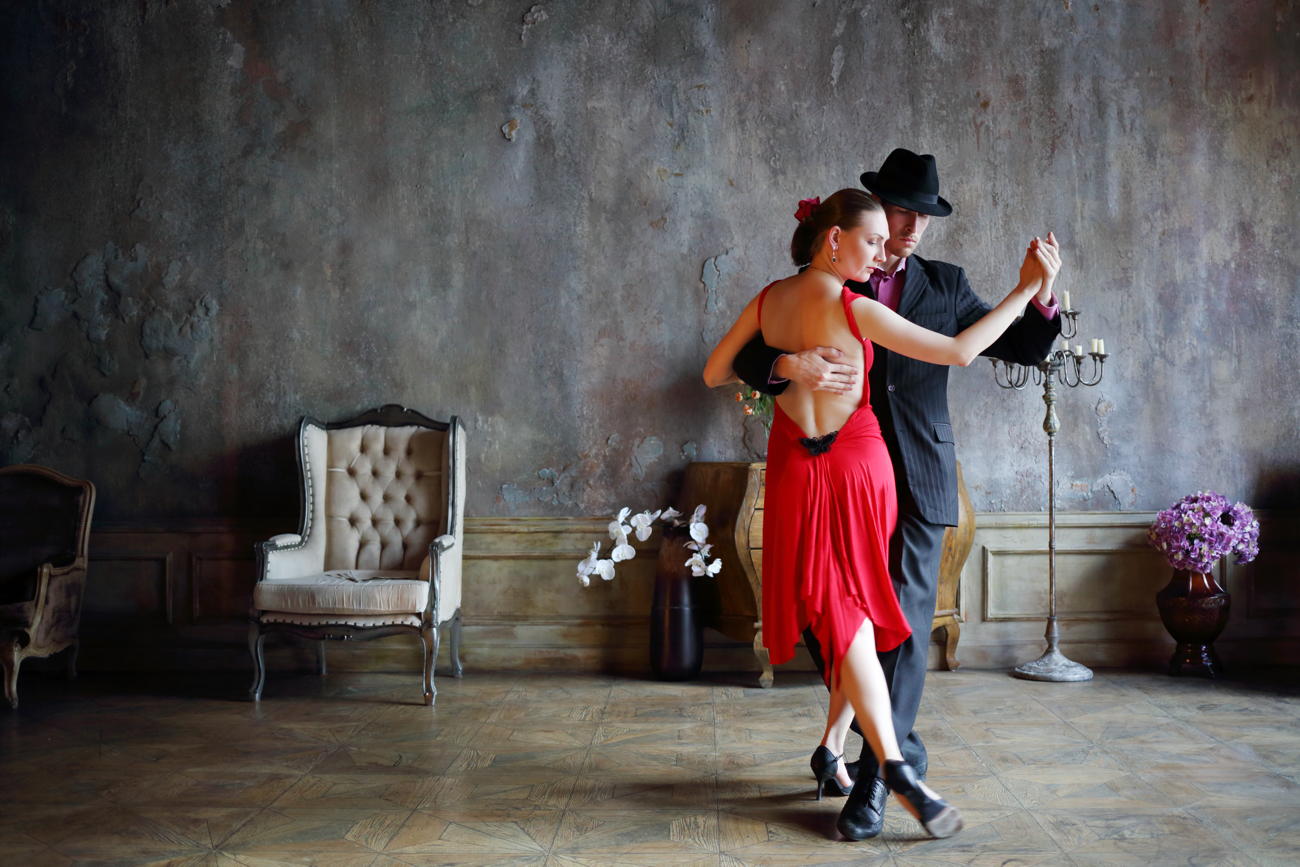
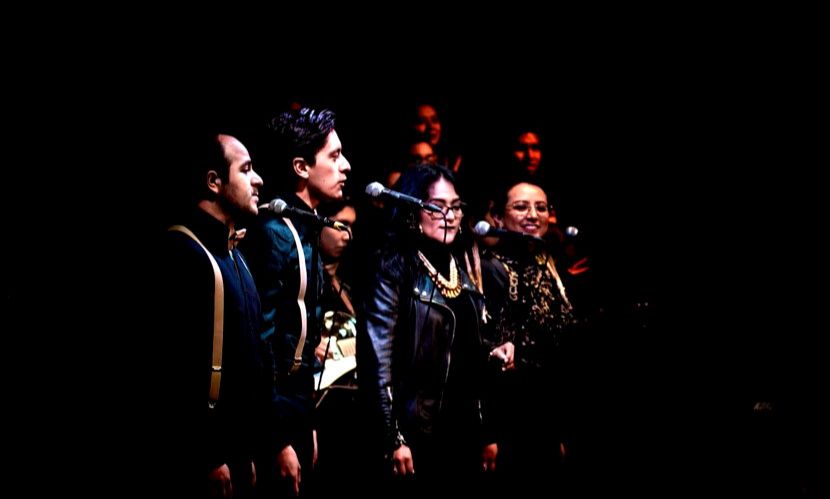
Next, “elsewhere” is devoid of certain habits; it’s a place or atmosphere that’s foreign to us in one way or another—in other words, we don’t know it well. It could be an exotic cuisine, strange music, a dance, a form of art, a sport, a practice we know little about, or a neighborhood or region right next door.
Sometimes it’s simply a way of getting around that takes us down new paths to discover another reality—even our own—as we pursue a passion that grows through experiences and encounters. The idea isn’t so much to go far as it is to go somewhere else.
A Touch of Imagination
Before we discover a new place, it’s shrouded in a good deal of imagination. A French person forms a certain idea of Quebec; a Cameroonian imagines France or America based on snippets and images. We form an idea of a nature park or an activity based on advertising—which is far from objective—before we actually experience it. Doing otherwise would prevent any kind of preparation. Knowing that Spanish is spoken in Argentina helps you prepare, but you don’t know if you’ll understand the accent.
In a way, the “elsewhere” will take it upon itself to separate the imaginary from reality—and even to reverse them; reality sometimes goes beyond imagination. But moving beyond the role of a tourist requires finding a balance between the foreign place and one’s personal expectations, stepping outside the itinerary, and achieving a form of exchange that takes into account the region, the places, and the people.
To ultimately become a true traveler—open-minded and receptive.
Illustration: Shutterstock - 482996470
References
Can the Tourist Escape Their Condition? - Étienne Faugier, Associate Professor, Lumière Lyon 2 University, and Axel Martiche, Deputy Director of the Pilat Regional Nature Park
https://popsciences.universite-lyon.fr/le_mag/le-touriste-peut-il-echapper-a-sa-condition/
Non-Places - Marc Augé - An Introduction to an Anthropology of Supermodernity
https://www.seuil.com/ouvrage/non-lieux-marc-auge/9782020125260
https://www.leslibraires.ca/livres/non-lieux-marc-auge-9782020125260.html?a=1302
The Charms of a Change of Scenery - Collections
https://revuecollections.com/volume-7/les-charmes-du-depaysement/
A Geographer’s Change of Scenery - Violaine Jolivet - ÉchoGéo
https://journals.openedition.org/echogeo/14292
"Typology" of the Adventure Novel: The Question of a Change of Scenery - Matthieu Letourneux
https://www.unilim.fr/ebooks/1686
See more articles by this author