AI in music: a denaturing of art?
AI in the music industry is revolutionizing work, but weakening the artist.
Publish at July 22 2026 Updated July 22 2026


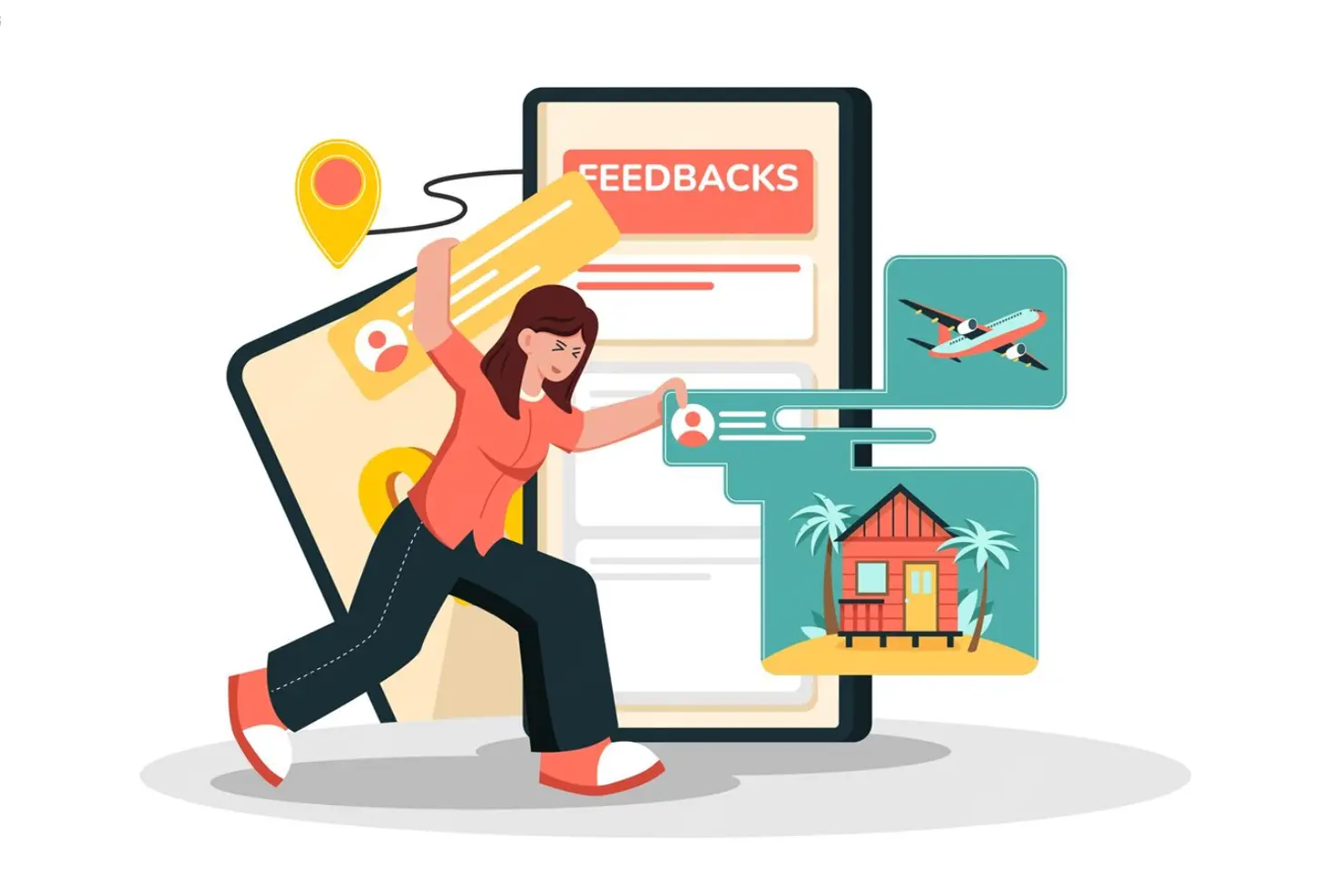
You open an app, type in the name of a city, and within minutes you already know which restaurant to choose, which viewpoint to photograph, and which beach to avoid. Even before you set foot there, your trip is half-planned by the thousands of people who’ve been there before.
This reliance on reviews and photos shared online profoundly changes not just what we’ll visit, but what we’ll experience. It gradually narrows the range of places considered worth visiting and keeps everything that’s never been captured in a photo in the shadows.
Sociologist John Urry explains this in *The Tourist Gaze 3.0* ( Sage Publications, 2011, with Jonas Larsen): the desire to see a place is formed before arrival, through images already seen and stories already read. We don’t set out with a blank slate; we set out with a mental list of what’s worth seeing, and that list closely resembles that of the traveler who came before us.
On review platforms, the mechanism is simple: the most-photographed places attract the most visitors; visits generate new photos; and new photos attract new travelers. Places not included in this circuit have no chance of making it onto the list on their own merits: no one searches for them, the algorithm doesn’t display them, and no one finds them.
A team of researchers tracked 122 tourists in Turin, comparing the neighborhoods they passed through, the photos taken during their stay, and those ultimately posted online. Daniel Paül i Agustí reports inthe *International Journal of Tourism Cities* (vol. 10, no. 3, 2024) that the published images cover only a portion of the places actually visited. The next traveler plans based on these images, not on the entire trip.
Planning a trip is useful: checking schedules, familiarizing yourself with a neighborhood, and finding out if a site is accessible. The problem arises when planning takes over everything, leaving nothing to chance.
You look up a recommended spot, but the restaurant is closed, the beach is inaccessible, or the museum is sold out. What do you do? Someone who’s never had to improvise while traveling finds themselves stuck. The app doesn’t have a Plan B, and neither do you, because you’ve never had to come up with one.
This ability to react to the unexpected must be cultivated; it requires that you’ve already practiced it, that you’ve already made a decision on the spot without a safety net. When everything is decided in advance, this ability gradually fades, and the slightest disruption to the schedule becomes a source of disorientation.
Micol Mieli observed the behavior of tourists equipped with smartphones during their trips, in a study published in the journal *Current Issues in Tourism* (vol. 27, no. 6, 2024 .pdf). Her finding: constant access to information while traveling reduces the room left for unplanned discoveries. We look things up, we check, we optimize. There’s no longer really any room for surprise, and our ability to navigate without prior information is reduced accordingly.
The world is far from having been exhausted by online reviews. Places that are well worth seeing exist just about everywhere, often just a few kilometers from destinations overrun with visitors. It’s just that no one has talked about them on a large scale yet.
Precisely because we’ve never heard of them, these places offer something that heavily documented destinations can no longer provide: the chance to form your own opinion. You arrive without preconceived notions, without expectations set in advance by hundreds of comments. The place reveals itself little by little, and this gradual revelation is a major part of what makes a travel memory lasting.
Jangwook Kwon and Hoon Lee tracked 225 Korean tourists before and after their trips and published their findings in *Tourism Management* (vol. 76, 2020). Those who experienced unexpected discoveries during their trip remained more satisfied with their lives for nearly a month after returning—longer than those whose trip went exactly as planned.
Places we didn’t know existed before arriving often leave a deeper impression than those we’d been looking forward to for months.
What travel reveals here applies to many other areas as well. We check reviews of a restaurant, but we also check summaries of a book before opening it, feedback from other students before choosing a program, and course grades before enrolling. The principle is the same: we let others decide for us what’s worth our attention.
By constantly filtering our experiences through the opinions of others, we eventually stop forming our own opinions. We arrive somewhere already knowing what we’re supposed to think of it. We read a book having already read what others have said about it. Direct experience—the kind that takes shape without an intermediary—is becoming increasingly rare.
The undocumented journey highlights this ability to discover something without having been guided toward it—to find oneself face-to-face with a place, a text, or an idea, without anyone having already decided whether it was worth the trip. It’s an experience that opinions, by definition, cannot produce.
John Urry and Jonas Larsen, *The Tourist Gaze 3.0*, Sage Publications, 2011,
https://books.google.ae/books?id=Q1BdBAAAQBAJ&printsec=frontcover&hl=fr#v=onepage&q&f=false
Daniel Paül i Agustí, “Instagram public and private images as an element for the spatial monitoring of tourist behavior in cities,” International Journal of Tourism Cities, vol. 10, no. 3, 2024, https://www.emerald.com/ijtc/article-media/1218705/pdfviewer/9493861
Micol Mieli, “Planned serendipity: exploring tourists’ on-site information behavior,” Current Issues in Tourism, vol. 27, no. 6, 2024, https://forskning.ruc.dk/files/100678975/Planned_serendipity_exploring_tourists_on-site_information_behaviour.pdf
Jangwook Kwon and Hoon Lee, “Why Travel Prolongs Happiness: Longitudinal Analysis Using a Latent Growth Model,” Tourism Management, vol. 76, 2020, https://www.sciencedirect.com/science/article/abs/pii/S0261517719301347
You might also like:
AI in music: a denaturing of art?
AI in the music industry is revolutionizing work, but weakening the artist.
Urban governance for learning cities
The ways in which cities' administrative structures are governed and implemented define the primary DNA of living cells of urban learning. When the administration governing the city is itself a learner, then it transmits learning beyond the administrative sphere.
Enchanting objects in a changing world
Intelligent objects have personal and social effects on many levels, and pedagogy is no exception. What can we teach that AI can't?
From personal branding to the pressures of being an influencer
The need to stand out from the crowd and the difficulties of doing so make some people increasingly in need of recognition. How to wean yourself off dopamine and the pressure of social networking.
What does a "program for the future" mean?
A significant proportion of media observers tend to claim that the current school model is outdated. The question is how to renew the curriculum. For some, the solution lies in more technological skills, while others call for the transmission of know-how that is genuinely useful for the future.