Every journey begins in the imagination. We picture ourselves in the landscapes ahead, the people we’ll meet, and the new experiences—preferably unexpected ones. According to studies, “we set out to escape the banality of everyday life, to trade our dreams for memories, and to turn our longings for other places into adventures to recount.” (Revue Sciences humaines).
For Jean-Didier Urbain, an anthropologist and semiologist: “Travel is a proposal for an alternative way of life.” Traveling offers a unique opportunity for renewal and personal transformation. For him, it is a laboratory for personal experiences, an inner adventure that provides a space conducive to self-reflection, because coming face-to-face with unfamiliar or unsettling situations forces us to confront ourselves. Travel, then, is as much an inner journey as it is a geographical one.
From there, it’s only a short step to realizing that it isn’t necessarily necessary to go to the other side of the world to travel. Our inner world is far vaster than those who haven’t truly tried to explore it can imagine. Our imagination—a capacity that is, in principle, purely human—is potentially limitless, and our discovery of ourselves, some argue, is the true journey of our lives.
“The greatest traveler is not the one who has circled the globe ten times, but the one who has made a single journey within themselves.” Gandhi
Setting Out
“The 21st century will be spiritual or it will not be at all,” said André Malraux. For the philosopher Marc Halévy, “in a very concrete sense, ‘spirituality’ means: giving meaning and value to who we are, what we do, and what we become.” It is therefore not just a matter of living one’s life but of questioning it. Far beyond religious practice alone, spirituality can encompass a wide variety of ways to connect with oneself, with what matters to oneself, and with the world in which one lives.
Rather than speaking of spirituality, some people refer to the feeling—or even the conviction—of being “connected,” and this can be achieved through contemplative practices as well as artistic pursuits, ranging from simply being fully present with life itself to intense personal growth. In this regard, imagination and creativity can prove to be powerful tools for exploration.
The paths to self-discovery are therefore many and varied, whether one chooses to embark on them alone or with others. Writing, crafting, contemplating nature, meditation, or singing… there are countless entry points, depending on each person’s inclinations, to chart a unique path and embark on an inner journey.
“Walker, this path is made of your footprints, and nothing more; walker, there is no path—the path is made by walking. As you walk, the path is made, and looking back, you see the trail you’ll never tread again. Walker, there is no path, only wake on the sea.” Antonio Machado
Discovering Oneself Through Reading
The concept of an inner journey is very much present when we talk about literature.
“I still remember that winter night when, curled up under my comforter, I crossed the Sahara Desert with Théodore Monod. The icy wind seemed to whistle at my door, but in my mind, I felt the warm sand beneath my feet and the infinite stars above my head. Reading, that open door to the imagination, has the power to transport us far beyond physical limits and offer us a true literary escape.” (Presselivre).
Reading allows us to transcend space and time, to meet people we would never encounter in real life, to explore countries, cultures, and eras, and to feel alive through the stories of lives other than our own. Reading—particularly reading novels—also helps us develop our empathy and understanding of others by deepening our knowledge of human nature. By resonating within us through the emotions we experience, reading further helps us to better understand ourselves.
According to Lorenzo Soccavo, a literary researcher specializing in the future of books,
“books function on this planet like mirrors reflecting our imaginations. These resonances are dynamic; there is a constant back-and-forth between reality and this reconstruction through our imaginary projections.”
He coined the term “fictionaute,” which refers to what we project of ourselves into the world of fiction and its characters when we read a novel. “Each of us, by immersing ourselves in a story, travels to the realm of fiction and thus becomes a fictionaute.”
To fully realize his vision, this researcher created the concept of BiblioSphère, a prototype of a futuristic hyper-library exploring the possibilities of future libraries in immersive 3D virtual worlds featuring avatars. It is a sphere in cyberspace, accessible to internet users worldwide within an open-source metaverse. A unique world, then, in which one can travel virtually.
Projecting Ourselves Through Imagination
Find inspiration
“Travel is necessary only for those with limited imaginations.” Colette (Belles saisons).
“I think the greatest travelers are the greatest dreamers. And I don’t believe we need to cross the globe to indulge in daydreaming. To travel and/or dream, all it takes is a book, a thought, a scene, a glance… and a little imagination.” Mitchka
A simple photo, a piece of music, a scent… can take us very far—not only into memories but also into unknown worlds conjured by our imagination. Some travel books published today feature only photos without any commentary, leaving us free to create our own narrative to accompany them.
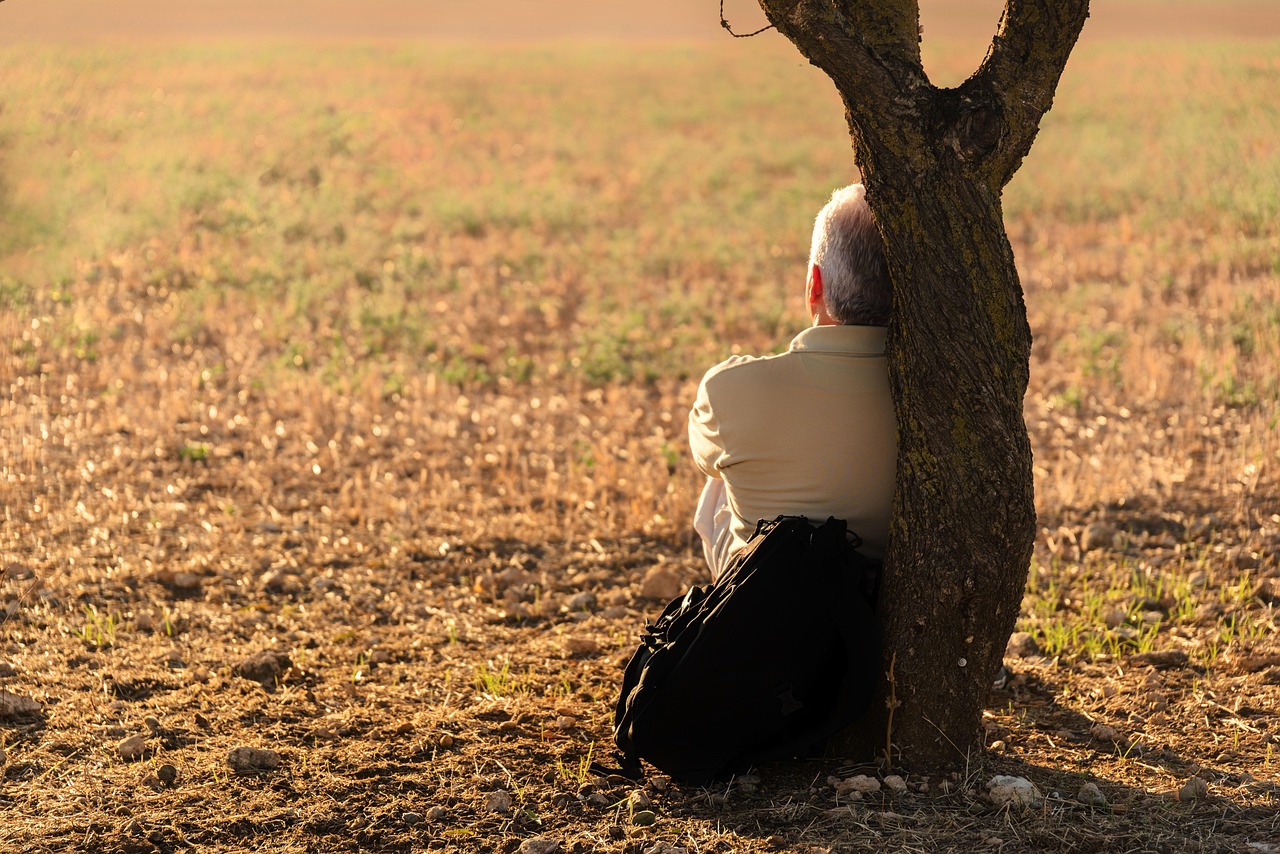
The journey, then, lies within us. Wherever we are, we carry it inside us and can unfold it in every dimension—both spatial and temporal—with the only limits being those we choose to impose.
Letting Ourselves Dream
Waking dreams are another form of journey through the imagination. Those who practice daydreaming naturally enter an altered state of consciousness, somewhere between daydreaming and nighttime dreaming. In short, it’s a dream in which one is not asleep. This form of dreaming is used in psychotherapy and personal development to access subconscious truths.
Israeli psychologist Eli Somer has defined compulsive daydreaming as a disorder that, in some people, can last several hours and occur several times a day, transporting the dreamer to a parallel world more alluring than reality. The psychologist acknowledges, however, that this behavior is neither schizophrenia nor psychosis, and that those who engage in it are fully aware that it is a daydream. Other researchers, particularly neuroscientists, dispute the idea that daydreaming can be classified as pathological, since no negative effects have been observed in the dreamer’s life.
This might bring a smile to the faces of certain writers who live permanently in the worlds they put down on paper.
Sylvia Baron Supervielle, a translator who knew Marguerite Yourcenar very well, said that she “had the impression that (the writer) had another room in the back of her mind where the writing never stopped. “She was writing all the time, even when you didn’t see her doing it.” Isn’t this just as much a form of waking dream, which some psychologists might therefore describe as “compulsive”?
Gérard de Nerval thus opened his posthumous novel *Aurélia* with this sentence: “Dreaming is a second life.” This idea was later taken up by many writers, such as Antoine Blondin in *Un singe en hiver*, or the Surrealists like André Breton, who believed that dreams and reality could merge into a “surreality.”
Marcel Proust, referring to Nerval, viewed dreams not as a break from reality but as an extension of it. Other more recent writers, such as Patrick Modiano, Jean-Marie Le Clézio, and Haruki Murakami, explicitly use dreams as a source of inspiration and treat them as genuine lived experiences.
Writing
Writers in particular are indeed known for living in their own worlds and needing solitude to devote themselves to their art, which sometimes makes them difficult to get along with. There are different ways to write a novel. Some plan it out entirely in advance, create character and plot outlines, research settings and historical periods, and follow formulas to build suspense and keep the reader on the edge of their seat, and so on. Others “dream up” their novel and let themselves be carried away, without restraint, by what their imagination tells them—to the point of discovering the story’s ending at the same time as their characters. Writing, like another form of travel.
“I never feel the need to travel […]. For me, the time machine is a road map. [...] I travel on the map and let my imagination run wild. It’s much more beautiful than reality.” Jean Giono (Noé).
The writer Jean Giono was nicknamed “The Immobile Traveler.” He practically never left Manosque, where he was born and died. That didn’t stop him from taking his readers on journeys throughout Provence and all the way to Italy—a place he did eventually visit, but only after writing some of his famous novels set there, such as *The Hussar on the Roof*.
Grounding Oneself and Mindfulness of the Moment
Laure Devillairs, a French philosopher and author of *La splendeur du monde*, defines “still travel” as the art of doing nothing and contemplating:
“Most of the time, we go through our days and activities one after another; we endure them rather than truly living them. Contemplation, on the other hand, means giving one’s full attention to people and things; it means allowing them to exist and making room for them. It also means taking one’s own place in the world, with determination and with pleasure as well: I am here, and the world is here before me.”
Ariane Mnouchkine, the founding director of the Théâtre du Soleil, recounts her “still journey” in a Buddhist sanctuary in Kathmandu, Nepal. “Twenty or thirty times a day, I walked around the stupa (…) I traveled more without moving in Bodnath than if I had covered 150 kilometers in the region. We think we’re looking, but often we’re too weighed down by ourselves or by what we want to ‘get’ out of a trip. There, I wasn’t “on assignment,” as I sometimes am when I’m looking for material for my work. I was observing people’s movements; I was looking for their gazes.”
Whether Buddhist or secular—such as the MBSR (Mindfulness-Based Stress Reduction) program developed by American physician Jon Kabat-Zinn—meditation aims to train one’s capacity for attention in order to be more present to oneself and the world. Its long-term effects also include calming emotions, reducing reactivity, and thereby alleviating stress.
The primary goal is, in fact, to achieve mental calm (Samatha or Chiné) and to help one focus on what is essential. It gradually leads one to accept things as they are and to leave anger and resentment behind (after first recognizing and accepting them as well). In short, it is a journey toward wisdom and peace—first with oneself, and then with the rest of the world.
“Wisdom is an art of living, of serenely enjoying life in every dimension of our being. It is a lifelong journey, but for me, it is the most beautiful one there is.” Frédéric Lenoir.
In the anthology *L’invention du voyage* (Le Passeur, 2016), Marie-Edith Laval—a speech therapist and sophrologist, practitioner of the Kabat-Zinn method, and passionate traveler and hiker—states:
“Meditation bears a striking resemblance to the call of the open road: leaving your home port behind, setting sail from the shores of habit and certainty, blazing trails into the unknown, embarking on a radical journey in search of a genuine and sincere connection with life. Yes, meditating is like setting out on a journey… with curiosity as your guide, openness as your teacher, trust as your companion, and an adventurous heart.”
Liberation Through Song
For a number of years now, more intuitive forms of singing—less academic than those traditionally taught in music schools and conservatories—have been offered in the West by practitioners from diverse backgrounds, who draw their approach from ancient teachings originating in the East or Latin America. These approaches to singing go by various names—“spontaneous,” “intuitive,” “shamanic,” or simply “vocal exploration” or “vocal improvisation.” I
It is, in fact, an exploration of one’s own voice, free from judgment or constraint of any kind, and without any specific vocal technique. It is, in reality, a mindful, meditative practice—a journey within oneself through sound. It is a grounding in the present, based on intense listening to what is being experienced in the moment. This journey can be shared or not and can be experienced in a group or individually. It requires no specific training, except for learning to let go.
“(Spontaneous singing is) a journey that wants nothing, expects nothing, seeks nothing, and finds fulfillment in letting go (…) The source of spontaneous singing is hidden at the heart of the present moment (…) The day you stop looking for it, it is the source that finds you.” Christophe Boyer, voice awakener and song guide
In spontaneous singing, there is nothing at stake except connecting with yourself. It is a path of transformation and liberation. It is an invitation to adventure and wonder. Like any traveler eager to discover and be surprised, it is a practice that requires curiosity and an open mind.
The criteria usually used to judge singing (in tune or out of tune, harmonious or dissonant, lyrical or contemporary, resonant or fragile, etc.) are irrelevant here. The voice that expresses itself is necessarily true and beautiful as long as the person is connected to their true self and does not censor themselves. The sound may sometimes fade or swell, stumble over obstacles, lose its breath and find it again, visit silences, climb to the heights or explore the depths, become a growl or touch the celestial… and all of this during the same exploration.
Emotions may surface, and you may find yourself experiencing tears, a surge of joy, or a burst of anger or despair. All of this is part of the journey. We set out without luggage or a compass, and we don’t know in advance where the path will lead or where it will end; but if we don’t let fear hold back the voice’s natural movement, we’ll emerge renewed and lighter, because the magic of vibration also lies in shaking up—and sometimes even dissolving—the resistance we encounter along the way, to set the flow of life free.
Coming Together
Whatever path he has chosen—from literary escapism to the vibrations of song, via pure contemplation—the stationary traveler does not return unchanged. Enriched by all these inner journeys, he casts a fresh gaze upon the world around him.
This journey, then, is not measured in kilometers traveled but in the depths of the inner self explored. Whether they take the rich paths of reading, the silences of meditation, the boldness of waking dreams, or the vibrations of spontaneous song, the inner traveler realizes that their mind and body hold infinite territories just waiting to be explored.
For educators, this inner odyssey serves as an invitation to broaden the scope of learning. Beyond the mere transfer of knowledge, cultivating the imagination, encouraging a love of reading and writing, or introducing students to mindfulness are all ways to open up a vast and precious space for learners to develop themselves, understand themselves, and achieve autonomy. Enabling each person to explore themselves from within is to offer the finest of compasses: one that gives meaning to knowledge and helps them confidently chart their own path in the world.
Sources
Baudelaire, Segalen, Michaux: Inner Journeys. “L’idée de voyage” Series 2/4. July 2025. Radio France Podcast. https://www.radiofrance.fr/franceculture/podcasts/avec-philosophie/baudelaire-segalen-michaux-les-voyages-interieurs-5803890
Boyer, Christophe. The Tao of Spontaneous Singing. Published by Lulu.com, 2017
Eskinazi, Benjamin. Frédéric Lenoir: An Inner Journey. Feb. 2019. On Revuedeslibraires.ca:
Escape Through Reading: Traveling Without Leaving Your Chair. On Presselivre, the impact of literature on society:
A Guide to Traveling Without Moving. March 2023. On linflux.com:
Guitton, Maryline. Beyond Spontaneous Singing. Nov. 2024.
The Importance of Imagination in Human Progress. May 2026. On Lasujets.com:
Lhérété, Héloïse. The Imaginary World of Travel. Special issue of the journal Sciences Humaines, July 2012.
Mitchka. “Travel Is Necessary Only for Those with Limited Imagination (?)”. Dec. 2016.
Phélip, Olivia. “Terres de Fiction” Lorenzo Soccavo: “We Are the Gardeners of the Texts We Read.” Feb. 2024. On Viabooks.fr:
Pierron, Jean-Philippe. *The Powers of the Imagination*. An Essay on the Ethical Function of the Imagination. Ed. du Cerf, 2012
Rieder, Caroline. “Dreaming Too Much Could Become an Illness.” Sept. 2026. https://www.24heures.ch/trop-rever-pourrait-devenir-une-maladie-517434971052
Soccavo, Lorenzo. The Future of Books (blog)
See more articles by this author