The apparent distance that remains to be bridged for distance learning is less and less often physical, but more and more often economic and social.
If more than half the world's population is unable to afford courses or the equipment to access them, or lacks the prerequisites of written language and methodology to study, we can only observe the distance, the gulf, that separates people and education.
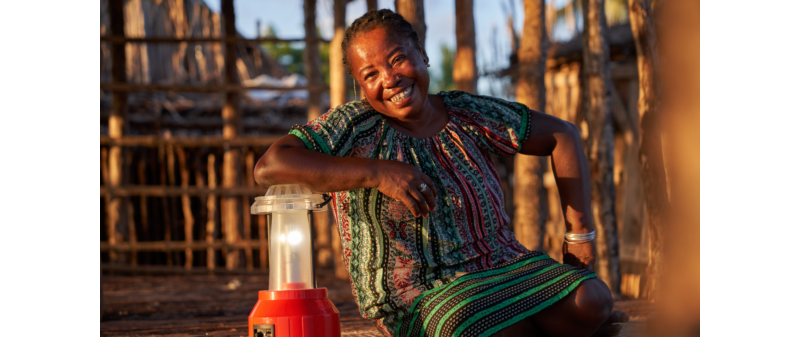
The thousands of rural young people who populate the world's countryside are frequently considered unreachable by education, even distance learning.
The reality is this: when someone wants to work in a village, the formal education system discourages them from doing so. The mentality is that returning to the countryside offers no prospects, staying in the city is a success.
Distance learning, on the other hand, sees no economic potential.
Where do we start?
Sanjit Bunker Roy, an Indian living in Rajasthan, chose to work in the countryside rather than in the city, and at grassroots level rather than in the upper echelons of administration.
He is the founder of the Barefoot Colleges, which are trying their luck in the countryside all over Rajasthan and now in 13 of India's 26 states. These colleges have already trained two generations of villagers who initially had no school qualifications.
"The basic idea is to use local knowledge before resorting to outside expertise" "A sense of ownership is very important to the success of any project, and this sense only comes when services are paid for by and for the individuals themselves."
The corollary of this idea is that technologies that are too expensive won't find their place, and activities that aren't viable in the long term won't even get started!
"We can encourage private initiative without commercializing education. Let's give more responsibility, space and freedom to people of good will," he adds. As it currently operates, the public system alone cannot meet the challenge of rural education. It stifles creativity and discourages initiative. Its teachers have to stick to prescribed methods and discourse."
Given that the majority of young people never go to school in the morning because they have to work at home, it's a good idea to steer them towards vocational training at an early age, so that they can acquire new skills while continuing to help their parents.
Someone knows something? He can teach it to others. Someone can't go to school in the morning or during the day? They can come in the evening. We give priority to training young people in technologies that are useful to the whole community.
Does this give you any ideas for distance learning?
Some ideas for distance learning:
- Practical content that can be used in the community;
- Courses that can be taken under local supervision in the evenings;
- Training of local resources to provide supervision;
- Simple, tried-and-tested technologies: LED lighting, radio, fax, telephone and, eventually, printer and e-mail to download documents or send exam results.
See anything else?
For more information on barefoot colleges: BarefootCollege.org
See more articles by this author