Training enters a silent revolution
The crisis of work is linked to the crisis of training. How can we readjust the organization of training to find the balance between work and the reproduction of skills that training is supposed to produce?
Publish at February 07 2012 Updated March 19 2026


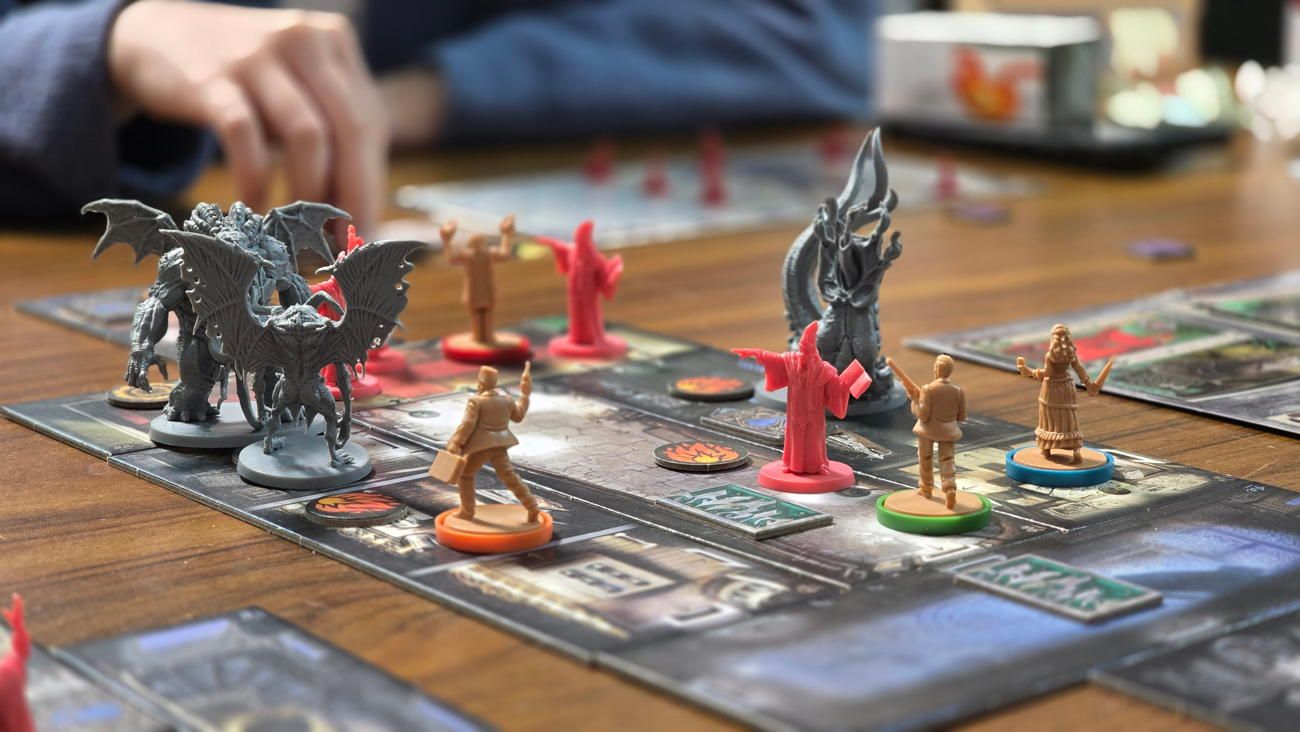
Playing games, whether serious or not, is a great deal of fun, but adding increasingly high stakes to any game - from poker to soccer, from Monopoly to music or the stock market - gradually removes the fun and replaces it with professionalism. The game then becomes truly "serious".
The "seriousness" of the game is essentially linked to the importance of the stakes: if you have to succeed at all costs, you're no longer really having fun, even if you continue to play or practice. But however serious it may be, a game remains a game if it meets the following conditions.
A game has :
If a game lacks any of these conditions, it's not a game.
The easiest way to do this is to eliminate the possibility of winning or losing, "so as not to inculcate a culture of competition", for example. But it's just as easy to eliminate this rule as it is to impose it on yourself, even alone. The mere addition of a stopwatch or a score means that by the second game, there's a record to beat, a possibility of doing better or not. A single goal (more beautiful, more disgusting, further, etc.) decided by a player is enough to create a game. Children are very good at this.
Another way to make a game disappear is to make it too predictable and insignificant. As players get better at playing, games acquire this flaw more or less quickly. Anyone who can solve a Rubik's cube in three minutes will be familiar with this phenomenon. Too much unpredictability also makes the game unplayable: if players' actions have an unforeseen or random effect, or the rules change inconsistently, there's no point in forcing yourself, and it's better to leave it to chance.
If you win all the time or lose all the time, the game is no longer a game, since the possibility of winning or losing is known in advance. Serious" games with only one level, or with an opponent so dominant that it's impossible to win, are of little interest. You can get past all the conditions this way.
Then there's the over-complicated game, with so many rules that nobody can really play. Confusion, deadlocks, exceptions, unforeseen possibilities, bugs... the game is a mess. It's not "too serious", it's just "too complicated". A game that's too simple, like an "educational" course that's impossible to miss, doesn't deserve to be called a game. What a bore.
The qualities of good games have to do with creativity: the greatest players and teams deploy their art in creations that thwart their opponents' strategy and astonish the audience. Those who succeed only through strength or technique never reach the aura of creators who win with style.
Games that offer the most possibilities for coherent action are the most appreciated. Pacman's genius was to turn the chaser into a pursuer for a few seconds, a novelty that ensured its success.
Children can play the same game for hours without tiring of it. But what adults forget or fail to notice is that children don't play the same game for very long: they change the rules almost constantly. Each rule is regularly negotiated to make the game more interesting, advantageous or fair. In this way, the possibility of winning or losing is kept at a high level, and everyone can exercise their creativity in the search for new or better solutions.
Applied to serious games, the best ones have flexible rules that can be adapted to different objectives, goals, levels, players and player mixes. Those that allow players to use their skills and creativity, such as Dungeons & Dragons, are appreciated over time, while those that balance forces through a handicap system become the most instructive.
In fact, "too serious" is more a synonym for "too boring". We may not laugh much when fortunes or a title are at stake, we're stressed to the max, but we're not bored. It's very serious, but not boring.
If we're presented with a game with rich, adaptable rules, a relevant territory, challenging objectives and opportunities to win that encourage us to develop, then we can put all the stakes in the world, we won't succeed in making it too serious. Only a game that's boring or no longer a game can become "too serious".
If someone tells you that your game is "too serious", please understand what they mean: either they can't handle the stress of the stakes, or the game is simply boring.
_____________________________________
____________________________________
You might also like:
Training enters a silent revolution
The crisis of work is linked to the crisis of training. How can we readjust the organization of training to find the balance between work and the reproduction of skills that training is supposed to produce?
Seeding rather than passing on
The living world supports the learning environment, and the challenge is to succeed in promoting a learning-friendly culture, rather than pouring knowledge from an old container into a younger one.
Collective creativity, the driving force behind team performance
The benefits of collective creativity through art thinking, design thinking or collective intelligence.
The start of a training session allows the trainer to establish the basis of the group's functioning and to create an atmosphere conducive to learning. The trainer makes a first impression and takes the temperature of the group. But how can this important moment be transposed into a distance learning course? What activities and digital tools can be used? How to break the ice?
Listening is not only good for managers and salespeople, it is also good for learning, building a new world and repairing damaged histories