Between effort and lack of effort, there's a whole list of parameters to consider before judging others.
Publish at May 26 2014 Updated October 05 2023


In the beginning, there was biology, medicine, botany, agronomy... all related to our survival in terms of health or food. From there came specializations such as biochemistry, microbiology, genetics and ecology, sciences that have led us to increasingly advanced intervention capabilities.
The concept of hybridization has long been known: mixing the qualities of two beings to obtain one that possesses them all. We also know that the result most often resembles a compromise. Thus we mix computer science with biology, biochemistry with nanotechnology, genetics with synthetic chemistry, ecology with statistics and many other more or less obvious mixes.
Recently, there have been major advances in bioinformatics and synthetic biology, the ultimate goal being to make an artificial cell work, born of inanimate matter and, why not, immortal. Dr Frankenstein was trying to mix parts of different people with electricity... the story comes to life.
Increasingly intensive research into longevity is beginning to yield astonishing results, such as the "resetting" of the gene counter, leading to the massive production of stem cells and tissue regeneration! We're beginning to see what form the fountain of youth will take.
All these discoveries influence research priorities, available capital, imagination, political demands (GMOs, nanodangers...), employment, ethics and many other areas. They have social as well as individual effects.
On the educational front, we can see that the speed of discovery is outstripping the speed of training, and that definitive certainties in the biological sciences are becoming increasingly rare. As with IT, we are witnessing a fragmentation of advanced training, extreme specialization and, finally, the development of community training, the only way to keep up with the pace of research and development.
This acceleration of discoveries is not unique to the biosciences - they are the most spectacular field, but one that illustrates the phenomenon at work in all the sciences. This acceleration calls for a systematic transformation of our socially isolated modes of teaching into teaching practices that are integrated with the practices and environment where this knowledge is applied and developed, and thus eventually complete one's training with a valuable diploma. Not everyone will be a professor or researcher, but everyone will have to rub shoulders with the various subjects, if only as a consumer, poet or technician.
This trend towards openness is well understood by teachers, and can be observed just about everywhere, except that it is structurally hampered by ministries submerged in centralized administration, and by outdated values and "public education laws".
If we keep opening up, we'll eventually get a draught.
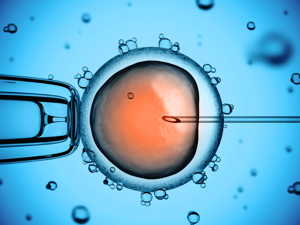
Photo: artificial insemination - koya979 - ShutterStock
References
Bioengineering: scientists have designed "augmented" DNA - René - Gizmodo - May 2014
http://www.gizmodo.fr/2014/05/16/bio-ingenierie-scientifiques-concu-adn-augmente.html
A semi-synthetic organism with an expanded genetic alphabet - Nature - May 2014
http://www.nature.com/nature/journal/v509/n7500/full/nature13314.html
Induced pluripotent cells (IPS) - Mathilde Girard - Inserm - February 2013
http://www.inserm.fr/thematiques/immunologie-hematologie-pneumologie/dossiers-d-information/les-cellules-pluripotentes-induites-ips
Biochips: applications and future - Véronique Anton Leberre - May 2013 - Techniques de l'ingénieur
http://www.techniques-ingenieur.fr/base-documentaire/mesures-analyses-th1/analyse-des-macromolecules-biologiques-42380210/biopuces-applications-et-devenir-bio7150/
Bioscience apprentices - Facebook group - https://www.facebook.com/apprentisbiosciences
You might also like:
Between effort and lack of effort, there's a whole list of parameters to consider before judging others.
The use of metaphors in science
Metaphor has helped millions of people understand advanced scientific concepts. It's a tool that's proven its effectiveness - we just need to keep using it intelligently.
Continuity and discontinuity in our relationship to the world
Mundiation is the human ability to create one's own world. How does this affect the way we learn?
Effects of team size on learning
Analysis of studies on team size shows effects on creativity, cognition and motivation to learn
Of all a teacher's tasks, assessment is probably one of the most complex. The extent of the chore can become more complex, depending on the type of work involved. How can artificial intelligence support teachers in this task?