Animals have over 400 million years of history and learning that can teach us about ourselves
Publish at May 27 2014 Updated May 21 2026


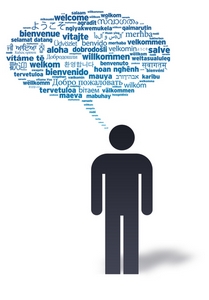
In Tunisia, the mother tongue is dialectal Arabic, followed by classical Arabic, then French, English and one other optional language. Classical Arabic is the official language of the State, French is used in scientific studies and events, English is gaining ground and other languages are carving out the audience they can. There's something in it for everyone, as long as customs are in harmony and languages cohabit and interpenetrate harmoniously.
Dialectal Arabic comes in a number of variants or patois that can be understood by all, but one language has survived since the dawn of time: Berber, the language of the first natives of North Africa, known as Amazighe or Kabyle or Tamazighe, depending on the country or region.
It survives in certain tribes, regions or families, and its speakers claim its continuity, its recognition and its teaching, to the point of sometimes making it an essential question of identity, with peaks of exacerbation bordering on conflict with the official language. The Association Tunisienne de Culture Amazighe (Tunisian Association for Amazigh Culture), for example, strives to prove that recognizing difference is enriching, and that the Arabic language will not suffer as a result.
The European Charter for Regional or Minority Languages recognizes regional or minority languages as an expression of cultural richness, and legislates to safeguard them. Elsewhere, this is done either in the same way, or not at all, or with a great deal of laxity. Think of ethnic groups exhausted by genocide or colonization, scattered around the world or confined to reserves, with only oral traditions - alive and well, of course - but no longer benefiting from the social transmission structures of yesteryear. However... with today's audio-visual and Internet possibilities (podcasts, mobile applications, etc.), there's plenty of room for change.
In North America, Latin America, Oceania, Australia, New Zealand, Bolivia, Brazil, Canada, Paraguay, Peru and the USA, minority languages are dying out. According to the Endangered Languages Project, there are some 6,500 endangered languages in the world ,at least half of which are threatened with extinction in the next 50 to 100 years. Indigenous languages remain under-represented in digital spaces, from the Internet to downloadable software and social media such as Facebook.
Global Voices publishes a review of indigenous language learning apps based on Rachael Petersen's original article iDecolonize: Indigenpus language-learning mobile apps. No fewer than 10 leading apps are presented: name, type (dictionary, interactive courses or games, etc.), language and location, description of how the app works, assessment of its strengths and weaknesses. Additional, equally useful applications are also listed.
You'll be amazed at the tenacity with which these endangered areas of identity are being safeguarded, and the creativity with which native speakers of the same language and all those who want to get closer to them are being brought together. In the end, there's something for everyone, provided the will is there. It's not just a question of political or institutional will, because these days, mobile applications are the province of users' creativity, and we can give ourselves the means to enhance all languages and bring cultures into dialogue.
References
Global Native Networks. Accessed May 27, 2014.
https://fr.globalvoices.org/.
Global Voices. "iDecolonize: A review of native language learning apps - Global Voices en Français." Accessed May 27, 2014.
Article to be found here https://globalnativenetworks.wordpress.com/2013/06/18/idecolonize-indigenous-language-learning-mobile-apps/.
Council of Europe - Treaty Office. "Council of Europe - ETS no. 148 - European Charter for Regional or Minority Languages." Accessed May 27, 2014.
http://conventions.coe.int/treaty/fr/Treaties/Html/148.htm.
IRMC Notebook. "First steps in an Amazigh 'renaissance' in Tunisia. Between pan-Amazigh pressure, local realities and Islamist government." Accessed May 27, 2014.
http://irmc.hypotheses.org/646.
Nawaat. "Interview with the Association Tunisienne de Culture Amazighe | Tunisia." Accessed May 27, 2014.
http://nawaat.org/portail/2012/02/27/interview-avec-association-tunisienne-de-culture-amazigh/
Photo credit: Bildagentur Zoonar - Shutterstock.com
You might also like:
Animals have over 400 million years of history and learning that can teach us about ourselves
From LMS to LXP: learners at the center
Are training platforms, or LMSs, still adapted to our learning styles? We can doubt it. They don't handle inconsistency, informality, and the need for speed. Perhaps it's time to look at LXPs, or learning experience platforms: more social, dedicated to micro-learning, rich in content libraries, they also seduce with their ergonomics and modern look. But do they have all the answers?
Each library needs to define its own identity, with reference to the area in which it is located and the needs and expectations of local residents.
When AI reinitializes the world of e-learning
Just as the printing press transformed access to knowledge, AI is redefining the way we learn, teach and interact with knowledge. Here are a few examples of how AI is creating disruptions in the world of education, whether for individuals (teachers or learners), practices or systems.
Resistance to change": a criticized concept
It is conventional to condemn "resistance to change". Project managers spend a lot of effort trying to reduce, circumvent or erode it. And yet, some authors show us that this rather simplistic concept fails to capture the diversity of attitudes to change.