Hindering degree mills: a strategy of discouragement. Recommendations.
The recognition of the quality of higher education at the international level is at stake.
Publish at June 02 2014 Updated November 11 2023


Looking at thestate of press freedom around the world, we realize just how risky journalistic curiosity is. Those with things to hide and those who favor the status quo around their privileges are neither interested in the truth nor in seeing people informed.
Yet journalism is not far removed from education. Researchers such as Thomas Piketty and Léo-Paul Lauzon do not hesitate to shake the economic plum tree. Others challenge us on various subjects and make us aware of the importance of academic freedom.
Who hears of contradictory research in pharmacology, health or even from researchers in state laboratories? In Canada, the current Prime Minister has silenced all federally-funded research centers. The tar sands? The state of the Great Lakes? Go through the Access to Information Commission. Universities can rest assured that we also fund a lot of their research.
But it's not just research: sex education, religion, politics, art, economics and history are all good subjects to pique students' curiosity. But who would have the idea of letting young people ask questions or even investigate these subjects themselves without exposing themselves to parents, their administration or the tabloids that feed off Facebook? All it takes is one overzealous student to derail the whole thing.
So we walk on eggshells, students, teachers and administrators alike. We want to encourage curiosity, but not just any old way.
The curious person gathers information - that's the essence of the activity. What does he do with this information? He puts it together and evaluates it. After a while, he learns to distrust certain sources and to trust others instead.
You don't have to worry so much about the value of the information you find on the Internet, but rather pay attention to the confrontation, discussion and exchange surrounding what you've obtained. A curious person is trying to understand something. If these sources are coherent, they'll figure it out. If they don't, our fears about the quality of the information won't change a thing.
The best we can do is help her develop her critical judgment (see "Développer son esprit critique" - Eduscol).
Curious people find all sorts of things, some of which are already known, some of which are surprising and some of which are tricky. Edward Snowden knows a thing or two about this. While all truth is good to know, the way in which it is communicated is important. The stranger the information is obtained, the more difficult it becomes to manipulate. Information is linked to a context, and taking it to another level of interpretation can literally transform its meaning or impact. Defamation is a different matter. The reputation of people and institutions is a sensitive issue, and both the value of the information and the way in which it was obtained are important.
A deductive discovery or masterpiece deserves wide distribution, as does a child's achievement, but at his or her own level. I know young adults who would love to get rid of writings and drawings on the Internet that well-meaning parents have distributed on a large scale.
The other lesson to be taught is that of responsibility for what you publish (see "Publishing onthe web").
Those who disseminate take risks and pass them on to those around them. Is it worth the risk? Are students aware of the impact? It's up to us to teach them and show them examples, both positive and negative.
References
Reporters sans frontières - http://fr.rsf.org/
Developing critical thinking skills - Eduscol
http://eduscol.education.fr/internet-responsable/se-documenter-publier/se-documenter-sinformer/developper-son-esprit-critique.html
Publishing on the web - Guide to Internet rights
http://www.droitsurinternet.ca/section.php?section=87
You might also like:
Hindering degree mills: a strategy of discouragement. Recommendations.
The recognition of the quality of higher education at the international level is at stake.
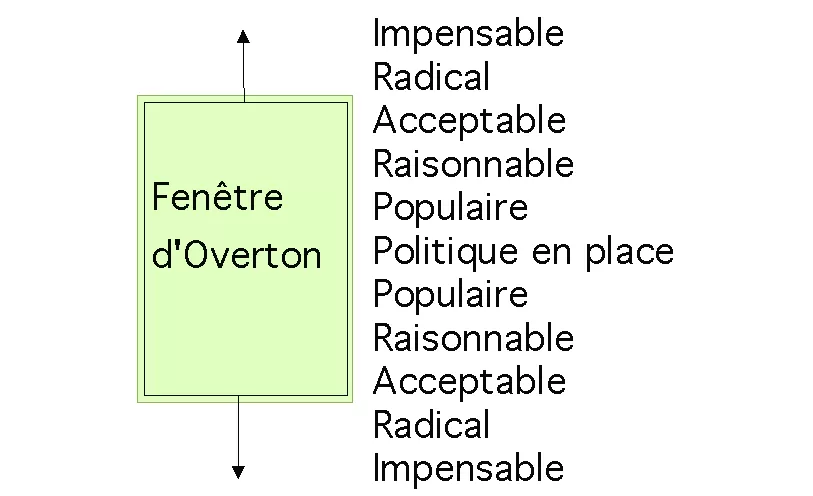
The Overton window in education
The same technique used to make the unacceptable acceptable can be reversed to restore balance.
Virtual reality, a new way for storytelling
Virtual reality offers the chance to immerse oneself in different real or fictional places. This technology will have many uses in the future, but storytelling could be one of the approaches that will change the most with it. From short stories to hard-hitting journalistic documentaries, more and more stories will benefit from 360-degree immersion, especially with the democratization of cameras.
The transformation of the educational ecosystem: by competencies
If we think we're going to fund education on the same criteria as in the past, such as class attendance or age of individuals, the formula will only generate frustration.
Increase the value of your badges
How do you award meaningful badges? This professional site demonstrates it brilliantly.
Many institutions restrict the use of badges to a simple assessment. They can represent much more than compliance with a standard or proof of passing an exam: they speak to an individual's worth.