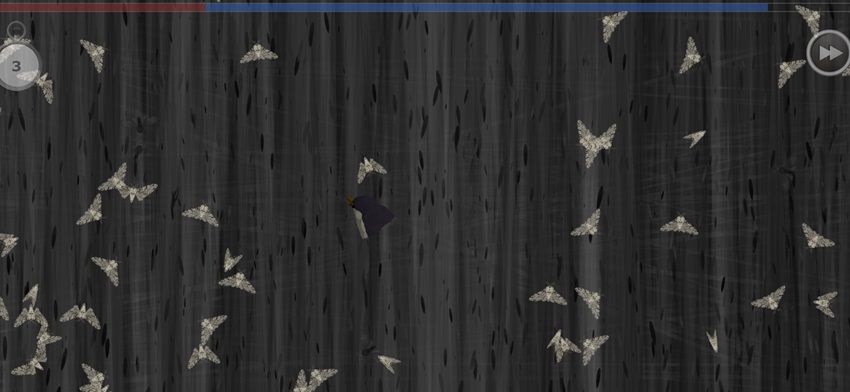
"Phalenes! understanding natural selection through play
A serious game designed to demonstrate natural selection and its effects on a moth population.
Publish at November 29 2021 Updated December 09 2021


Video games are among the most consumed forms of entertainment in the world. Even the audiovisual industry can no longer compete with the appeal of electronic games. In fact, they have become inspirations for feature films and television series. But this source of entertainment is not without consequences for the planet.
In fact, the entire console market (and in part computers) requires mining rare earths, assembling and distributing to the four corners of the world these items designed to play. Yet the last generation (PS5 and XBox Series X/S) has been criticized for not having the same technological gap as it once did. This push for near-photorealistic graphics is costing studios more money for sales that aren't that impressive. A race for useless and energetically costly technology as they demand more power-hungry TVs.
So, many are hoping for increased longevities for consoles, a renewed taste for old ones that can be traded in or at least recycled. Also, the Nintendo firm, chasing less after realistic graphics, its current console (the Switch) requires less electricity.
Time: 5min33
Illustration : Francesco Ungaro from Pexels
Learn more about this resource
You might also like:
"Phalenes! understanding natural selection through play
A serious game designed to demonstrate natural selection and its effects on a moth population.
A multiplayer game designed for people with disabilities
Video games designed for people with disabilities are already a rare resource. An experience that allows multiple players is even rarer. Yet this latest creation from "Ludociels for All" challenges players to light up an entire maze by walking balls of light.
Tests of vigilance and attention
Measuring attention remains a concern in many settings. Some work tasks are not very error tolerant. Here are a series of sample tests to measure attention in children and adults.
Develop your musical ear through play with Meludia
To a layman, music is just a tune performed by a musician. Yet, if he were to play Meludia, he would learn all the rudiments and terms associated with musical practice.
A series of games that require an ear.
Reflecting on agroecology through play
There's nothing simple about being a farmer. You have to plan your activities throughout the year, make sure you have the right machinery, maintain it and so on. All with a view to ecology. A serious French game seeks to teach agroecology.