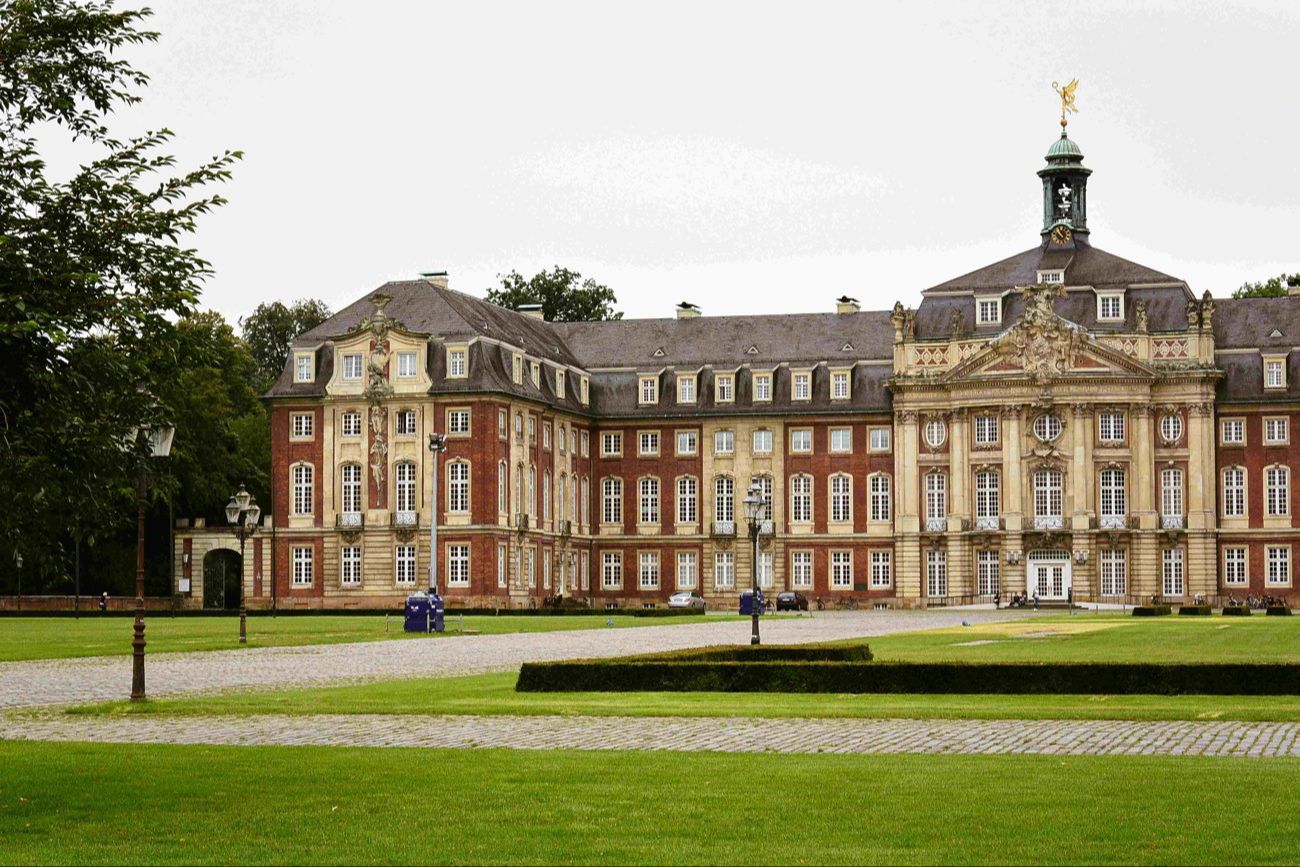
Beyond appearances, the pedagogical effects of the architectural quality of institutions
What are the conditions required for architecture to play a truly educational role?
Publish at November 29 2022 Updated November 29 2022



Conferences and gatherings of e-learning professionals online training, such as the Learrning show held in Rennes in October 2022, are full of new developments. Everywhere, there is talk of innovations that will make digital training more more fluid, more adapted to the learners, and easier to manage as well.
The technical innovations, such as
technical innovations, such as the variations of the metaverse, virtual reality devices
and those based on artificial intelligence, arouse curiosity and promise us all
and promise us all a bright future. But pedagogical innovation,
new models of scripting, courses that increase the autonomy and security of learners
and security for learners, are just as exciting and even more promising.
This intellectual and technical ebullience should not obscure the fact that for many users, the
forget that for many users, e-learning is mostly an unpleasant experience, a
an unpleasant experience, an acceptable solution in an emergency context but one that
This intellectual and technical excitement should not make us forget that for many users, e-learning is above all an unpleasant experience, a solution that is acceptable in an emergency context but that must be forgotten as soon as things are back to normal.
Distance learning compared to face-to-face learning would be like dehydrated food that you
dehydrated food that a mountain climber or a solitary sailor is forced to swallow, when
navigator, when faced with a real meal.
It must be said that many users of online training have had only limited It must be said that many users of online training have only had endless virtual classes to get their teeth into, or rather under the mouse, during the various confinements linked to the Covid 19 Covid 19 pandemic. No interactive modules, no 3D simulations, no virtual reality episodes no virtual reality episodes, no carefully prepared webinars, no video animations videos... The urgency justified everything. Including mediocrity, since we were not in a not in a "normal" situation.
The situation and its consequences
are perfectly described in
this article, which clearly identifies the path to be taken to return the
the place it fully deserves: contrary to a belief that is still too widespread, it is not
still too widespread, there is no such thing as online training on one side and in-person
training on one side and face-to-face training on the other. We mobilize different modalities, different
tools and training media depending on the circumstances, the desired
and the constraints of each. These elements can be combined,
but not interchangeable: we do not prepare 7 hours of face-to-face training like 7 hours
of distance learning.
Online training can be a beneficial learning experience. Some employees, not necessarily those employees, and not necessarily those who were the most favourable to it, have during the Covid crisis. One French company cited in this Cereq study, thus mentions the case of salespeople who trained during their periods of technical unemployment:
""[...] we wanted to make technical unemployment a positive moment for our salespeople, who took advantage of it to who took advantage of it to train themselves; the training they took was on cross-functional skills, and some business-specific training, of course. of course, they were the first to use our catalog with all the digital the digital offer available to them.
And it reacted well, they adhered, [...] while they have a vision of training that is often very corporatist, they like to get together and be in face-to-face training; making them do They like to get together and do face-to-face training; having them do digital training was not at all natural for them, but in the end, it worked out very well"
But in many cases, the damage is done: distance training will never be as kind as in-person training. in person. It is indeed to this version of distance learning that refers to the students' unions student unions who criticize the decision of the president of the University to close the premises for 2 more weeks during the winter, and thus to distribute online courses:
"We know the consequences of distance learning: breach of equality during the examination period exam period, degradation of study and working conditions, and isolation of students and students and staff in a critical and precarious situation. "
While almost all countries with sufficient infrastructure have sufficient infrastructure have moved to online training during the confines of the year 2020, some seemed better prepared than others. In Quebec, the 130,000 teachers also had to move to distance learning. They were accompanied by They were accompanied by Teluq, which offered them basic training in distance education. 6 teachers and course designers from TELUQ describe this production experience and its lessons in an article fascinating. The article actually ends with an observation that totally aligns with the phenomenon we mentioned above. Indeed, this training is asynchronous, free, and continuously accessible even today. Yet, many teachers thought that if they missed a module, they would not be able to take it later. not be able to take it later...
"This is a sign that ADF is in many minds training synchronous virtual classroom training. While some may be turning to training courses that correspond more closely to their representations, "I teach at a distance" therefore, for many, it is a great opportunity to go beyond this vision and to move beyond this vision and evolve their practices."
Like the
commercials mentioned above, Quebec teachers have had the opportunity to experience
to get a taste of another kind of online training: asynchronous, mediated
scripted. And they liked it. Why not offer this to everyone, and
Why not offer this to all, and thus increase the voluntary clientele for distance learning?
Such a choice is based on financial, organizational
and political decisions. For it would involve a shift from a logic of constraint to a
logic of transition, that is, of desired change, as the two authors of
vividly by the two authors of this
reflective article devoted to "the transition from 'face-to-face training' to
distance education" at the university in the era of
COVID-19." They also explain that any transition involves
consultation, a willingness to take a step out of one's comfort zone.
What needs to be done, so that more commit to the path of transition? This question joins another, even more burning one, both literally and burning question, both literally and figuratively. How difficult is change? difficult. How we like to wait until we no longer have time to think before committing to it. to think about it. At the risk of missing out on the real solutions?
Illustration: olly18, Deposit photo.
Is digital the future of vocational training?
Anne-Claire Prevost, HR Culture, October 2021.
https://culture-rh.com/digital-learning-formation-professionnelle/
In 2020, the health crisis brings training in
company. Claudine Romani, Cereq, July 2021.
https://www.cereq.fr/en-2020-la-crise-sanitaire-met-larret-la-formation-en-entreprise
University shuts down two weeks in winter as a cost-saving measure,
angry student unions. Guillaume Kremp and Pierre France, Rue 89
Strasbourg, September 2022.
https://www.rue89strasbourg.com/universite-fermeture-hiver-economie-245741
Emergency creation of quality distance education
to train... in distance learning: quite a challenge! Cathia
Papi, Caroline Brassard, Patrick Plante, Isabelle Savard, Gustavo Angulo
Mendoza and Serge Gérin-Lajoie, International Journal of Technologies in University
University Pedagogy, Volume 18, Number 1, 2021.
Erudit https://www.erudit.org/fr/revues/ritpu/2021-v18-n1-ritpu06306/1080765ar/
From the transition of "face-to-face training to distance
distance" at the university in the time of COVID-19. Jean Bernatchez, Marie
Alexandre, International Journal of Technology in University Education, Volume
18, Issue 1, 2021.
Scholar https://www.erudit.org/en/journals/ritpu/2021-v18-n1-ritpu06306/1080766ar/
You might also like:
Beyond appearances, the pedagogical effects of the architectural quality of institutions
What are the conditions required for architecture to play a truly educational role?
The urban exodus: how to understand the repopulation of the countryside?
There are many wonderful reasons for living in the countryside, but are we ready to adapt to its many constraints?
The pedagogy of autonomy - a positive pedagogy
The foundations of autonomy teaching and its paradoxes: teaching how to discover!
Will they send their children to this school?
Today, the proportion of new students remains relatively stable but the needs are diversifying. Politically, the movement is towards inclusion. National education is happening at the local level, where schools are located. Educational needs and practices are changing so rapidly that school organization and design are on the agenda.