The future of student personal data
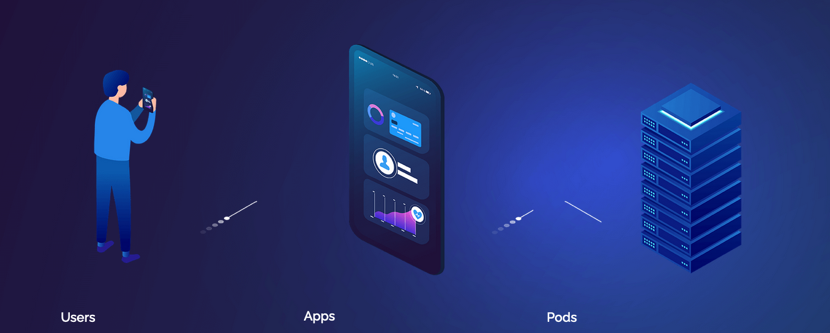
For colleges and universities, this open approach to managing student data is a real relief in terms of responsibility for data security.
Publish at December 14 2022 Updated December 14 2022


The owners of web-spanning spiders like Google, Baidu, Apple, Meta, SalesForce and others, are developing new ways to monetize the data we deposit there blithely.
The data they accumulate has immense potential value and its use leads to significant effects on the organization and social fabric. How will this development eventually become part of society? ChatGPT is just one manifestation of the potential for social transformation that these innovations induce.
Artificial intelligences (A.I.) raise questions of principle around cultural appropriation. For example, artists are finding that their work is being used as direct inspiration for algorithms (in the Van Gogh or Andy Warhol style?) and they don't see how they will be able to continue to profit from their work if applications are able to systematically copy them.
What's the difference between a person monopolizing the Maori or Haida style and an artificial intelligence doing the same thing? They can just as easily imitate a literary or cinematic style. Sooner or later it will have to be determined in what context a style can be imitated without its creators benefiting or having a say.
It will not be long before an A.I. will be able to carry out philosophical, political, economic, or other syntheses and from there determine what practices or principles are most effective and in what context. By relating principles and effects on a time scale and frequency of occurrence inaccessible to a human mind.
Knowledge developed by humanity can be considered a commons, and just because an organization has the means to concentrate and analyze it does not mean it ceases to be a commons. Of course, development, acquisition and operating costs exist in the services offered and must be covered, but the profits from them must go largely to those at the source of the data and their qualification.
When we talk about peoples, nations, cultural, scientific or natural heritage, we can always identify a source responsible for the creation, preservation, maintenance or transmission until today. Humanity and the planet being, for now, the ultimate attribution link.
To win at Jeopardy in 2011, Watson had accumulated over 200 million pages of content. He wasn't allowed to go online during the game, but more importantly, he had developed an algorithm that allowed him to estimate the likelihood that a conclusion drawn from the available information was correct. We are talking about a technology that is already several years old. Today's algorithms are much more sophisticated.
To develop ChatGPT, Google had access not only to the content of the internet, Wikipedia included, but also to that of Google Scholar (academic and scientific publications) and to virtually all the data at its disposal. If we ask the question of the source of its data to the A.I. it answers in a sibylline way only using data learned during its training, prior to 2022, while appreciating our comments to improve the algorithm in the future, but that the computer program itself is static.
Eventually the processing of new information will be done at a high frequency and not bridled as currently; then this kind of service will be at the basis of any search for knowledge. To consider doing without it in learning activities would be like refusing to go to the library but also not using a calculator or only walking.
A person who only walks is probably fitter than one who uses transportation, a person who calculates with a pencil has better mental math skills than one who can't even add anymore, that a person who takes the time to read books develops linear thinking skills more than one connected to Instagram, but in all cases we'll find that the potential for action and accomplishment of people who use the tools at their disposal is higher than those who don't. The computer code debugging capabilities of ChatGPT or the translation capabilities of DeepL are just examples of the benefits of using such tools.
Getting answers to one's questions without having to search, without delay, and without verification necessarily impacts how we think. One develops one's ability to ask questions, verify, test, and make connections at a different scale and intensity. Where the notion of the common good becomes important is in access to knowledge. If these are private, filtered, or censored, the common good is far from assured.
Determining which knowledge remains in the public domain becomes a function of social arbitration that, for the moment, generally remains the responsibility of corporations and is balanced primarily by criteria of profitability, social acceptability, and sometimes national laws.
The public good around knowledge goes beyond that of rights over content and extends to that of its accessibility and the service itself. If Google or any other information collector decides to charge by the query asked or to display advertising "contextualized" to the query, the question of the public good will arise with all its acuteness: individuals, ethnicities, nations, humanity and the planet will demand their du.
Illustration: Harvest by Ring, L.A. - 1885
National Gallery of Denmark, Denmark - CC0.
https://www.europeana.eu/item/2020903/DEP289
References
Connected School - Martine Rioux - Attention: The Artificial Intelligence That's Changing Education Has Arrived, and You Need to Pay Attention Today
https://ecolebranchee.com/attention-lintelligence-artificielle-qui-change-leducation-est-arrivee-et-vous-devez-vous-y-interesser-aujourdhui/
Tech Republic - Jo Best - IBM Watson: The inside story of how the Jeopardy-winning supercomputer was born, and what it wants to do next
https://www.techrepublic.com/article/ibm-watson-the-inside-story-of-how-the-jeopardy-winning-supercomputer-was-born-and-what-it-wants-to-do-next/
Watson - IBM - https://www.ibm.com/watson
ChatGPT - https://chat.openai.com
Deep Art Effect - https://www.deeparteffects.com/
01.net - Geoffroy Ondet - 5 things to try with ChatGPT, the AI that talks to you (almost) naturally
https://www.01net.com/actualites/5-choses-a-essayer-avec-chatgpt-lia-qui-discute-avec-vous-presque-naturellement.html
DeepL - https://www.deepl.com/translator
You might also like:
The future of student personal data
For colleges and universities, this open approach to managing student data is a real relief in terms of responsibility for data security.
The near civilization of Japanese robots
It's all about making robots more friendly, and also making us more open to their presence; the enterprise of robotic inculturation has begun, and is spreading across the board. Asimo is well known, but what can we say about Geminoid F, a real human avatar, Pepper, who goes to a real high school, Aiko Chihira, who knows sign language, Hanako, a typical patient for a dentist, Tipron, the home projector robot and even Hal, who offers human-robot hybridization...
Three challenges of AI in education in sub-Saharan Africa
If there is one area that could benefit from the development of AI technologies in Africa, it is education
Artificial Intelligence in a frenzy - Try more than hundreds of public applications
Biology, human sciences, physics, chemistry, politics, from the infinitely small to the infinitely large, it becomes possible for us to find and create relationships that are beyond human capacities, either in terms of time of realization, capacity of observation, memorization or simply of persistence of attention. Here are some recent applications of A.I., to make us dream or worry.
Virtual or real, bring robotics to the classroom and beyond!
Robotics enables the direct integration of several disciplines: programming and computing, industrial design and 3D printing techniques, mechanics and electronics. The practical educational benefits of robotics can keep you busy for years. Many robotic projects touch on social, environmental, scientific or artistic fields. Everything you need to get started.