Materials that obey their designer: microstructural design
A new world is opening up for the manufacture of physical products
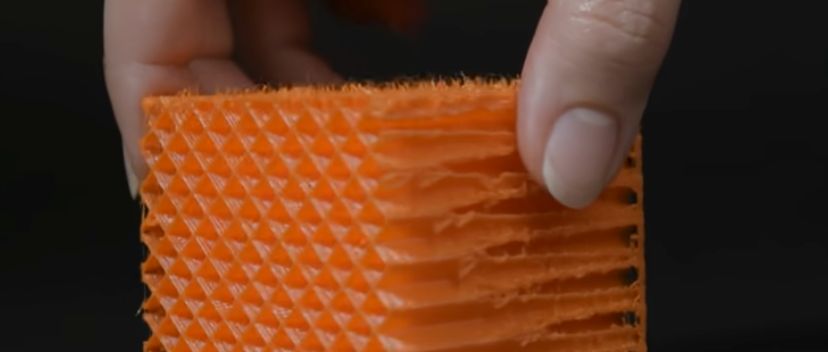
The MuFFin project (Procedural Microstructures and stochastics for functional manufacturing) led by Jonàs Martínez, researcher of the MFX project-team at the Inria Nancy - Grand Est Center opens new perspectives in the development of 3D printed products.
Materials have known properties of strength, weight, resilience, etc., but all of them can be modulated by their structure. For example, most metals like iron or aluminum appear rigid to us, but we can make steel wool or aluminum foil out of them, which splits their properties into products that can be used differently. We can do the same with plastics, alloys and even woody compounds. The structure of their shape or assembly modifies their behavior.
"(...) we can design structures with mechanical characteristics not found in traditional materials (such as steel, wood, concrete, etc.) by computer and produce them in additive manufacturing. The field of application is then very wide, interesting both research and industry."
Jonàs Martínez
Martínez's work has led to an innovative material concept, a novel software brick, a
3D printing process and the ability for roboticists to
create turnkey materials.
By simply orienting material structures, directional and steerable properties can be obtained.
Data modeled in graphs (which can be multi-dimensional) allow the detection of relationships that are practically invisible in other forms and, above all, with much less computational and energy resources.
The results of Frank Valencia and his team already show that social networks can be designed differently, by adjusting the algorithms according to the biases that will impact the flow of influence and thus produce different results, with less polarization.
The biases that algorithms can develop are known and numerous. While everyone recognizes the need for regulation, the challenge of drafting enforceable and effective regulations is on the table. The Regalia pilot project is trying to devise ways.