The question of the environment and biodiversity frequently comes up. This is because the issues are becoming more and more present in people's lives. Anyone with an interest in environmental news sees major events to consider: droughts, floods, heatwaves, Siberian cold, desertification, species extinction and so on. The picture seems alarmist at times, but let's not forget the thousands of local and national initiatives that are trying to preserve ecosystems.
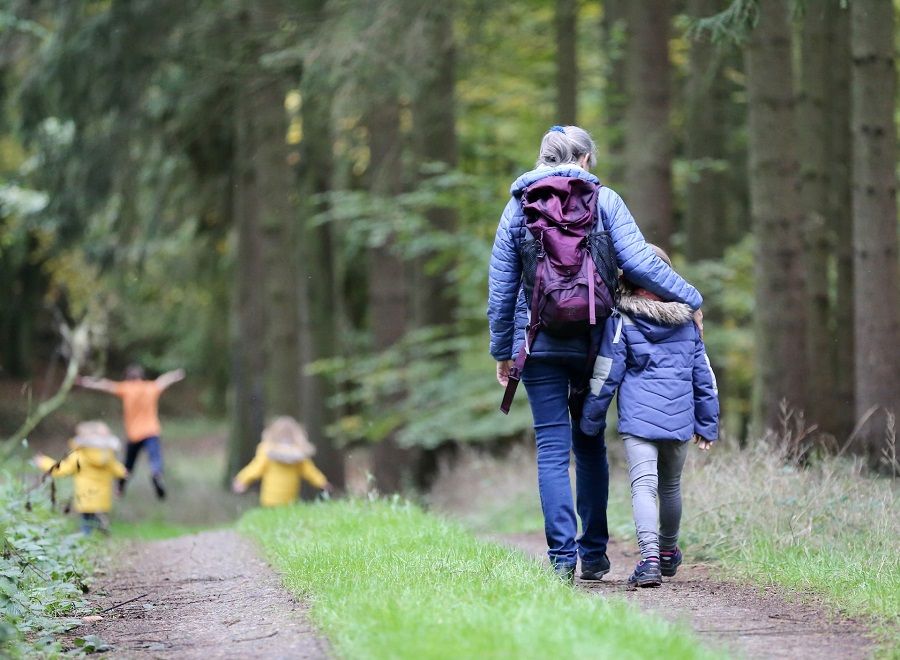
Alongside protection projects, it seems necessary to inculcate the importance of environmental preservation in the younger generations. They hear about it from early childhood without it necessarily being concrete for them. UNESCO reiterated this in 2022: education and awareness-raising are key to ensuring that children and teenagers around the world grasp what's at stake. At COP 15 in Montreal, these issues of preserving natural diversity were discussed. A huge part of the strategy involves exploring the surrounding natural environments.
Meaningful walks
It seems very easy to talk to students about the various global environmental challenges. Yet even showing them videos about the plastic continent, the loss of arable land or the risk of flooding on some of the world's islands can remain an abstract concept. The screen or text creates a psychological barrier. On the other hand, it becomes much more concrete when you go for a walk and see, like this photograph taken by my colleague Denys Lamontagne, of roots stripped bare by rising waters:
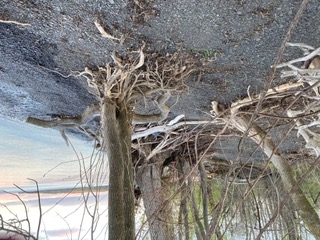
These plants therefore find themselves vulnerable to phenomena that partly originate from human activities. Moreover, localities increasingly understand the importance of showing local ecosystems to younger people. The Quebec Municipal Biodiversity Fund serves exactly this type of initiative. The idea is to help preserve species of flora and fauna, but also to introduce them to young and adult citizens. Awareness-raising projects fall directly within the prerogatives of this fund. Other organizations less closely linked to town halls, such as the Sud-de-l'Estuaire ZIP committee, organize projects to educate and raise awareness of invasive exotic species.
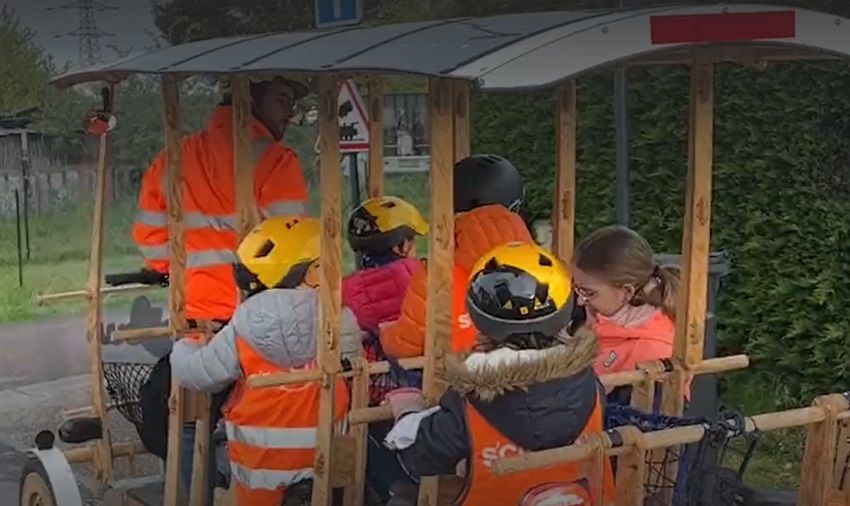
On the French side, the Hirondelle association aims to raise biodiversity awareness among all audiences in the Pay-de-Retz area. Nature outings are among the tools of choice for showing citizens the beauty and fragility of the living environments that surround them. In addition to these outings, activities are offered in schools, among others, to raise awareness.
Local learning territories
The school world doesn't live in a vacuum. It is inevitably touched in one way or another by notions of environmental preservation. The academic world has hundreds of researchers who can testify to the effects of human activities on biodiversity. Their union to fight against the decline of species is therefore not far-fetched.
On the primary and secondary school side, many establishments are embarking on small or large-scale concrete actions linking ecosystems and learners. The Condorcet school in the town of Auch has interested students not only in permaculture with the vegetable garden, but also in counting bird species, bats, hedgehogs and snakes. This life and earth sciences club could inspire more than one with its preservation of a pond on the school grounds, the making of nest boxes and shelters for insects, etc.
This pedagogy in the heart of nature is facilitated with the ATE (educational terrestrial areas), which are spaces chosen locally in order to carry out environmental education and sustainable development activities. The concept was born in 2012 in the Marquesas Islands in French Polynesia, where pupils wanted to protect a bay in front of their school. Incidentally, these educational zones can also be marine, as in the case of the Marquesas (AME). This thus becomes a territory for observation and experimentation co-managed with schoolchildren. The latter participate in their own way to improve the protection of this territory and its biodiversity. All this while acting democratically and taking advantage of this space to learn about life and earth sciences and acquire other outdoor skills.
Photo: Juliane Liebermann / Unsplash
References:
Agir Pour La Biodiversité Au Collège. Accessed May 27, 2023. https://biodiversiteblog.wordpress.com/.
"Aire Terrestre Éducative." FRENE. Last updated: June 27, 2022. https://frene.org/biodiversite/aire-terrestre-educative/.
Association Hirondelle. Last update: January 10, 2023. https://www.associationhirondelle.fr/.
"Ecole Condorcet, Des Initiatives En Faveur De La Biodiversité Locale." Official website of the city of Auch. Last update: June 21, 2022. https://www.mairie-auch.fr/index.php/a-la-une/archives-des-actus/2106-condorcet-initiatives-biodiversite-locale.
"Implantation D'un Projet De Sensibilisation Et D'éducation Au Parc Nature du Lac Beattie." Fondation De La Faune. Last updated: October 27, 2022. https://fondationdelafaune.qc.ca/nouvelles/implantation-dun-projet-de-sensibilisation-et-deducation-au-parc-nature-du-lac-beattie/.
"COP 15 Renews Commitment To Nature / Culture Program." UNESCO. Last updated: December 11, 2022. https://www.unesco.org/fr/articles/la-cop-15-renouvelle-son-engagement-en-faveur-du-programme-nature-culture.
"Les Aires Terrestres éducatives, Des Lopins Où Poussent Les éco-citoyens De Demain." ECHOSCIENCES - Bourgogne-Franche-Comté. Last update: January 3, 2023. https://www.echosciences-bfc.fr/communautes/biodiversite-en-bourgogne-franche-comte/articles/les-aires-terrestres-educatives-des-lopins-ou-poussent-les-eco-citoyens-de-demain.
"Les Aires éducatives." Office Français De La Biodiversité. Accessed May 27, 2023. https://www.ofb.gouv.fr/aires-educatives.
"Lutte Contre Les Espèces Exotiques Envahissantes." Comité ZIP Du Sud-de-l'Estuaire. Last update: August 11, 2022. https://www.zipsud.org/lutte-contre-les-especes-exotiques-envahissantes/.
"Education And Awareness." UNESCO. Last updated: October 7, 2022. https://www.unesco.org/fr/biodiversity/education.
See more articles by this author