Elude: a serious game for understanding depression
An original approach to depression. The game's metaphor is well conceived, a little dark and informative about a problem that affects millions of people.
Publish at December 06 2023 Updated December 06 2023



We have a very special relationship with our emotions. On the one hand, we are often embarrassed to be emotional in public; we feel obliged to be rational in a world of performance. On the other hand, many of us share our emotions in an almost narcissistic way on our social networks. Our relationship with this very human part of ourselves is not new.
For a long time, emotions were called passions because they were perceived as something passive passing through the individual. It took the philosopher Spinoza, among others, to challenge this view, seeing emotions instead as motors leading to action, whether for good or ill.
In 2022, the intellectual Ilaria Gaspari published her "Petit manuel philosophique à l'intention des grands émotifs" (Little philosophical handbook for the emotionally inclined), an almost abecedarian approach to the various human affects and what they mean. First, she differentiates between emotion and sentiment. The latter is the act of reliving an emotion, of reflecting on it.
So, from happiness to anger, everything can be explained as a part of us that expresses itself. Jealousy, for example, is the realization that we are replaceable both professionally and personally. By deciphering our emotions, we'll be able to live with them better, and let ourselves be hurt less by certain situations.
Running time: 34 minutes
Learn more about this resource
You might also like:
Elude: a serious game for understanding depression
An original approach to depression. The game's metaphor is well conceived, a little dark and informative about a problem that affects millions of people.
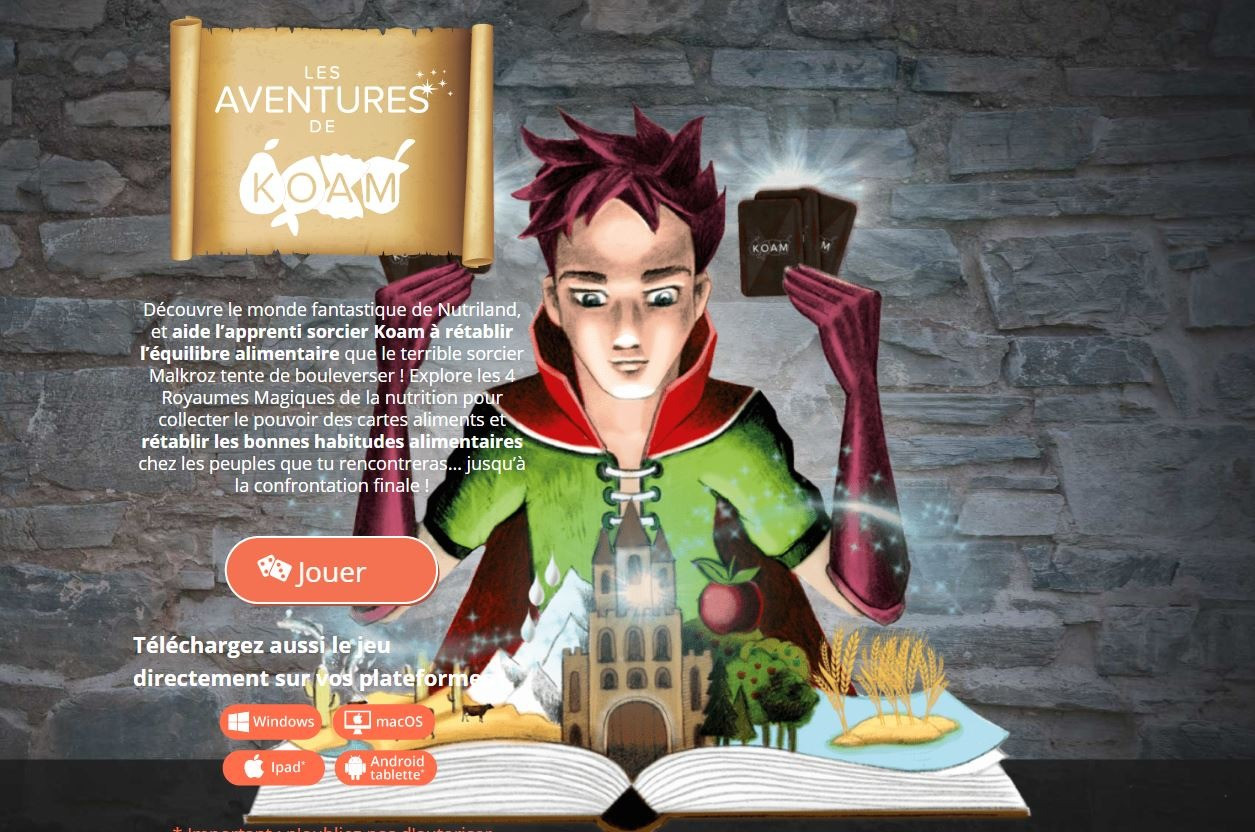
Koam, playing with balanced nutrition
A veritable showcase for public health, Koam was developed by Nutrikeo, a consulting firm specializing in nutritional strategies. Supported by BPI France, the Nouvelle Aquitaine region and Europe, Koam is the result of two years' work by a team of leading specialists in nutrition, childhood, pedagogy, sociology, digital and behavioral theory.
The sharing economy has led to small changes in various economic sectors such as transportation, housing, etc. This approach has changed the relationship of citizens for different services, now cheaper and offered by their fellow citizens. However, who actually benefits from this new economy? The people or the companies in question? A U.S. newsgame shows how the life of Uber drivers isn't as lucrative as one might think.
The Englishes MOOC course was developed by an artist and is designed for anyone interested in the (English) language. It explores the history of English, its pronunciation, and its relationship to the art world.
A serious game on social engagement
Many serious games address the topic of sustainable development. Yet before such solutions were proposed, innovative people had to go against the social grain and fight to improve their environment. A humorous adventure game, hosted by the National Film Board, teaches children the attitudes they need to adopt to make a difference.