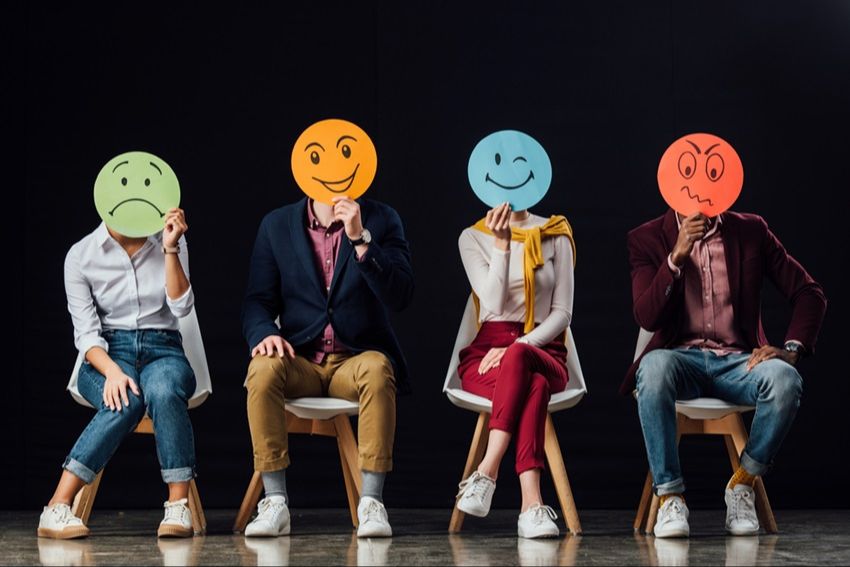
Some people are able to see their world fall apart without being too badly affected, while others lose their nerve at the slightest disagreement or the first obstacle. The intensity of an emotion depends as much on the person as on the event and the way it is presented; it's the perception that counts.
Remaining in control, despite our repertoire of emotions, requires us to distance ourselves between what we feel and what we choose to do. This ability is developed through a combination of skill and experience. Taming your dragons is obviously easier when you're young.
If emotion suggests attacking the opponent, rationality suggests other approaches that take into account broader interests. If fear suggests fleeing, the rational can still choose the best path and not give in to panic. If empathy suggests going all the way, the rational may also suggest a little mistrust. Trust is not naivety, and enjoyer exists.
Tolerance to annoyance tends to diminish among our contemporaries, who are exposed to affinity algorithms such as "you might like this" and give in to the alarmist tone of the media, whose algorithms are based on our "reactions". In this dynamic we may be exposed to more stimuli than ever before, so are we simply in a period of adaptation? The return of apartheids, ghettos and walls is not necessarily a good sign, and is based on heightened emotions of fear and selfishness. How can we foster social interaction and trust?
Managing the emotions of people who only want to be around people who think like they do is like educating deaf and blind people, hence the vital role of schools in educating people about diversity and tolerance, and also in developing thick skin. In real life, the roughness of our relationships is the norm.
The management of emotions is a major area of intervention in schools, and a confrontation of ideas can be beneficial. This dossier offers just such an opportunity.
Denys Lamontagne - [email protected]
Illustration: STYLEPICS - DepositPhotos