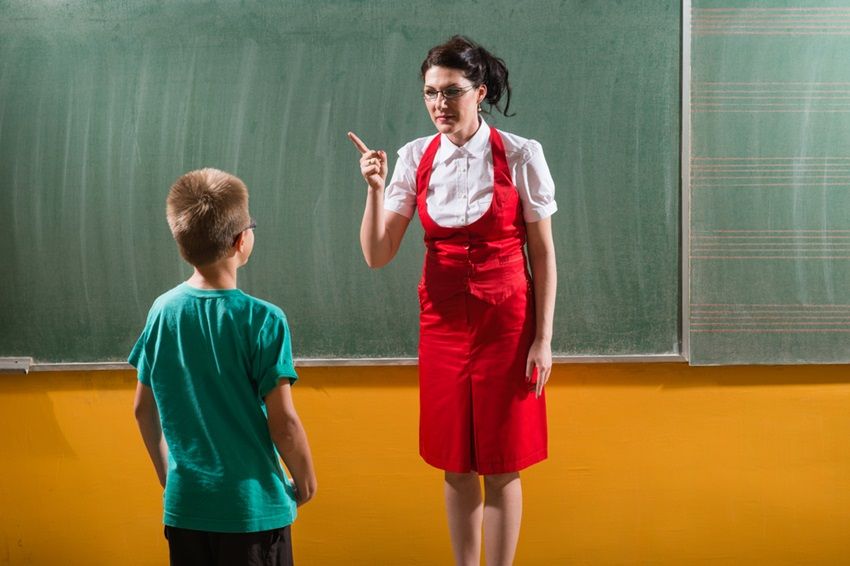
Approaches to instruction are constantly changing. A few years ago, the harshest punishments were applied to recalcitrant learners or those who didn't try hard enough. Considered violent, caning, fieldwork, kicking and so on have given way, in some contexts, to other approaches considered more flexible (copying, letters of apology, extra homework): are they really effective compared to the former? Is it possible to do without them?
Some punishments and sanctions at school
Anyone who attended primary or secondary school before the 2000s, or even during the first decade of the 2000s in certain countries, particularly in Africa, can see that punishments and sanctions at school are no longer the same. They have been "humanized". During my time in primary and even secondary school, I was subjected to or witnessed the most severe punishments, as were many of my fellow pupils. We weren't particularly recalcitrant, but whatever the reason (lateness, exercise not done or done badly, chattering, forgetting a tool, etc.) the punishments were applied at the whim of the teacher and the sanctions taken by the administration. Let's take a look back at some of these punishments, which have given way to new, more flexible ones.
- Corporal punishment: beating up a pupil was normal. In my CM2 class, the teacher or matrix proceeded by hitting the back, the buttocks and worse, the "swing". In this case, the largest and often oldest pupils in the class would hold the punished pupil by the arms and feet, and the teacher and another pupil chosen by the teacher would award the blows, which could number in the hundreds. After this punishment, you might not be able to sit down, or even fall ill.
- Kneeling : students could remain on their knees for minutes or even hours. Some who arrived late had to move on their knees from the courtyard to the classrooms.
- Planting cabbages: Particularly difficult, the punished pupil points his finger at the ground, holds one leg up and lowers his head. After a minute, you feel dizzy but you don't have to put your foot down, despite the fact that your tears are flowing and you're struggling to hold on. This could last for minutes.
- Standing: Standing for hours on end to the point of swollen feet.
- Manual labor : manual labor meant cleaning an entire room by yourself, cleaning the manager's office or simply doing field work.
When they weren't physical, they were moral or mental: giving a pupil zero in a lesson, excluding him or her from classes for a period of time, and so on.
With the adoption of the Convention on the Rights of the Child in 1989, and the efforts of the UN, UNESCO, Unicef and other human rights organizations, many extreme punishments have gradually disappeared, to be replaced by so-called educational punishments: copying a lesson several times, writing a sentence in several verbal tenses, letters of apology, gardening, not taking part in a play activity, no longer playing a role in the classroom, summoning parents, spending time in the colleague's room, depriving the child of the right to speak for a while, etc.
In France, the Bulletin officiel de l'Éducation nationale ( official bulletin of the national education system) discusses prohibited sanctions and punishments, as well as those to be encouraged. Prohibited punishments are mainly those that harm a pupil's physical or moral integrity. It goes back over the sanctions to be applied, which are not exhaustive:
- a report in the correspondence book or on a document signed by the parents;
- oral or written public apology: the aim is to make the pupil truly aware of the breach of the rule;
- extra homework (with or without deductions), which must be corrected by the person who assigned it. Extra homework done on school premises must be written under supervision;
- detentions for unfinished homework or exercises.
Can we do without punishments at school?
The recommended flexible punishments reflect a school that aims to be less stressful for students, since punishment is said to be a source of stress. Paradoxically, however, one of the countries with the best education is Singapore, one of the champions of school pressure. In addition to more practical sessions and brain simulation from an early age (6 months), Singaporean students have to do tutoring, as a documentary broadcast on Arte in 2018 states:
"as tutoring becomes commonplace, schools raise the level and the standard becomes higher and higher. Impossible for families, then, to let their child escape tutoring - for a fee, of course - which constitutes a highly lucrative business for a whole network of private schools."
When the system doesn't generate pressure, it's the players (parents and teachers) who do.
It's not uncommon to hear parents, and even some young people who have studied in the punitive contexts described above, claim that the rigor (in punishment) of teachers has kept them on the right track. Many parents believe that the whip should make a comeback at school. In their view, the more lenient measures do not have the same effect, and they believe that the drop in pupil performance is due to the ban on corporal punishment and other harsh measures. But we mustn't lose sight of their consequences, which can be irreversible: death, dropping out of school, and so on. Despite these consequences, corporal punishment and other punishments are making a comeback in schools.
In 2010, in Mali, corporal punishment was banned by a decree setting out the school's internal regulations. Despite this, Sidi Y Wagué points out that opinions differ. While the authorities prohibit it for human rights reasons, some parents allow their children to be beaten for bad behavior. Some teachers who have to control classes of over 70 pupils (normal class size), and in some cases 100 to 200 pupils, feel that corporal punishment is the only way to keep the class together.
The effectiveness of punishment is limited to establishing order in order to facilitate learning. It has no educational purpose as such.
In an article on what he calls "homologated" punishments in junior high schools, Alain Garcia takes a similar view, asserting that punishment reflects a "norm that is not very educational".
Punishing at school while avoiding punishment
In view of the above, we can conclude that punishments and sanctions cannot disappear from the school ecosystem, at least not for the time being. The challenge is to find punishments that do not harm the pupil's physical or moral well-being. The only way they can be effective is if they keep the class on track and encourage learning. It is therefore up to teachers to apply the punishments recommended by the authorities to protect themselves: avoid punishing and then being punished.
Punishments must also be age- and context-appropriate. A valid punishment in one case could prove ineffective in another. Asking a student who has difficulty forming words to write a sentence could prove unproductive.
Photo : fotokostic / DepositPhotos
References
Dubarry, Hélène, 2011, "Tarbes. Une mère condamnée pour violence aggravée sur son enfant", https://www.ladepeche.fr/article/2011/08/09/1143330-une-mere-violente-condamnee.html#:~:text=Planter%20des%20choux&text=Les%20punitions%20de%20retour%20de,%2C%20endant%20une%20demi%2Dheure.
Wagué Sidi, 2018, "Châtiment corporel à l'école : Les avis divergent", http://news.abamako.com/h/200717.html
Garcia, Alain 2013, "Des retenues au collège: pour qui et pourquoi?", Déviance et Société, (Vol. 37), pages 155 to 179.
BO du Ministère de l'éducation et de la jeunesse, "Application de la règle, mesures de prévention et sanctions" , https://www.education.gouv.fr/bo/14/Hebdo22/MENE1406107C.htm?cid_bo=79279
See more articles by this author