Symbiosis: a gift of the living to really learn together?
What symbiosis teaches us about generative learning from the encounter between humans and their environment.
Publish at June 12 2024 Updated June 12 2024


"The audacity of hope. This is the best of the American spirit; the audacity to believe, despite all indications to the contrary, that we could restore a sense of community to a nation torn apart; the audacity to believe that despite personal setbacks, the loss of a job, a sick family member or a family mired in poverty, we had some control over, and therefore some responsibility for, our own destiny."
Barack Obama
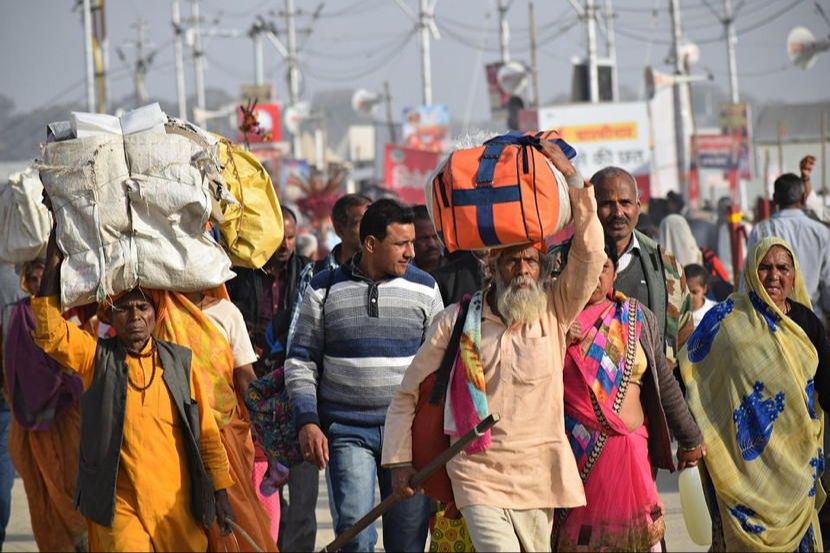
Every tribe has its own rhythms, dances and music. But what about the new tribes?
French sociologistMichel Maffesoli explores contemporary social dynamics through concepts such as neo-tribalism and cyclical time. He highlights the importance of everyday emotions, rituals and aesthetics in shaping community ties. According to Maffesoli, modern social groups are formed around shared affinities rather than fixed attributes such as geography or family. This approach offers a fresh perspective on social interaction and community cohesion in postmodern societies.
Learning communities take a multiplicity of forms throughout history (Cristol, 2017), and it's all about rediscovering the meaning and power of communities. Hugo Paul does just that.
Hugo Paul , a 26-year-old engineer from Lille, France, launched the "Into the Tribes" project after a number of associative commitments.
Hugo visits communities of indigenous peoples, migrant communities, a school in the forest(Alma Forest School ) and religious communities. Communities have superpowers of collective transformation (e.g. the civil rights community), and of profound inner transformation. When you feel that you're in the right place with the right people in a community, something can click, and the world can be transformed in its turn.
The need to cooperate is immense in our society, and communities are one way of reclaiming the art of community. To do this, Hugo traveled 30,000 kilometers to meet 50 experts in 20 communities. He adopted Make sense 's definition of communities: "a community is a group of people who share a common vision or common circumstances to act together".
Hugo Paul decided to immerse himself in learning communities across Europe and explore approaches to ecological and social transition. He shares his learnings to inspire and guide others. His first experience was a month-long retreat at Lérins Abbey, where he discovered the power of long-term commitment (several centuries) and the importance of balancing openness and community protection. Hugo Paul learned several key lessons during his immersion in this community. Hugo also highlighted the value of daily practices and rituals in strengthening community ties, while emphasizing the effect of social dynamics on ecological and social transition.
The sound of the forest
At Alma Forest Schhol Hugo observes the importance of caring for, and cultivating, the different scales of his community. In a community, the logic is fractal, with each community participating in another, larger community. It's essential to offer space to sub-communities and nurture them on 3 key dimensions of belonging:
These three pillars are nurtured at different levels of the community. The "personal projects" enable employees to feed a logbook and progress in their personal exploration. During "beach day", everyone learns to connect with the living world by listening to world music. Everyone learns to move from the individual to the small group. It's a powerful moment to develop the sense of learning or "egregore" that characterizes the feeling of unity.
The Abbey of Lérins is located on the islands of Saint Honorat near Cannes. 20 Cistercian monks live by the motto "ora et labor" (prayer and work) according to the rules of Saint Benedict. The working day is punctuated by chanting and prayers from 4:30 am to 9 pm. The work consists of maintaining a 12th-century monastery and producing agricultural produce for a living.
But it also means living together, a community united by the same values. The monks can seem cut off from the world, even though they are involved in Erasmus projects. Observation reveals that the community must have borders in order to build bridges. It's a question of identifying borders to better cross them. Borders are specific to the living world.
Pablo Servigné and Gauthier Chapelle have studied what makes living beings cooperate. They conclude that borders are important, for example, the membrane for the cell or the skin on the scale of mammals or terrestrial rocks. It is important to have entry and exit processes for community members to control adaptation phases, as each movement disrupts human bonds. The abbey also encourages us to distinguish between places where belonging is cultivated (the cloister, reserved spaces) and open spaces for cooperation with the outside world.
The Sami are one of Europe's last indigenous peoples. They live in northern Europe, in a territory sometimes referred to as Lapland. For 12,000 years, they have tried to pass on a way of life and a culture based on reindeer herding and fishing. The Sami pose the question "What is the link between heritage and modernity? What to do with the tensions that run through their communities. The 100,000 Sami have many things to teach us, such as political tools and the traditional Sami song (the Joik). The Joik embodies a place, a person or a moment. It consecrates mental images and reinforces learning. Sounds make us feel what it's like to be with someone. The tradition of Duodji or Sami handicrafts is another way of transmitting and reconnecting with traditions.
But being Sami is above all about following the reindeer through the seasons and raising them, and gathering around a campfire is a key moment. The environment created by fire produces powerful bonds of transmission. Fire is an immemorial means of gathering and human transmission. Seeing in the dark, scaring off wild animals and cooking food are the primary effects of fire, but fire also stirs the imagination. Fire generates effects on communities. Fire is inclusive: we stand in a circle and see each other. Everyone is positioned equidistant from each other, which implies a sharing of power. The campfire also produces a convivial effect, a spell cast by the flames. Fire liberates and strengthens bonds. The question is, what is the flame that animates me when I animate?
Illustration: Tagwaran - DepositPhotos
References
Cristol, D. (2017). Learning communities: learning together Savoirs 2017/1 (N° 43), pages 10 to 55
You might also like:
Symbiosis: a gift of the living to really learn together?
What symbiosis teaches us about generative learning from the encounter between humans and their environment.
The urban exodus: how to understand the repopulation of the countryside?
There are many wonderful reasons for living in the countryside, but are we ready to adapt to its many constraints?
Between effort and lack of effort, there's a whole list of parameters to consider before judging others.
Fragility is not weakness, it offers beyond our strengths an unsuspected resource to act and learn
Time inconsistency at the heart of our bad choices
We're supposedly the most intelligent beings on the planet. Yet anyone who has studied human behavior realizes that we are very easily manipulated. Specialists in psychology and economics know that we tend to choose what creates short-term pleasure, ignoring the repercussions.