How to increase the creation, adaptation and use of open educational resources
This paper shares ideas, stimulates and encourages greater production and use of OER on the African continent as well as in the global South.
Publish at September 17 2025 Updated September 18 2025


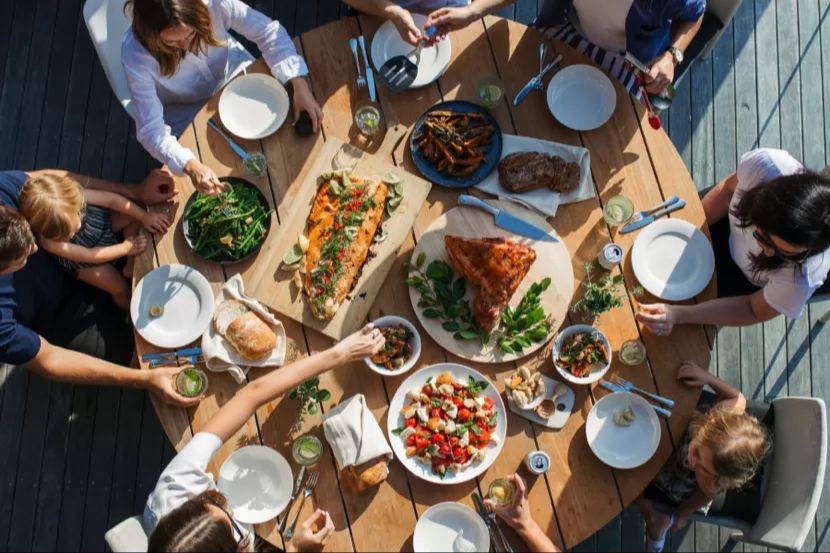
To say that "the meal makes the group" no longer exhausts the reality: from now on, it's the ability of a table to accommodate differences - religious convictions, ethical commitments, allergies and intolerances - that holds the community together. We no longer share a menu, we share a moment: we eat side by side without eating the same thing, sometimes even at a distance, linked by screens. Commensality doesn't disappear, but it changes form.
The social sciences have shown the symbolic power of "making meals" (Fischler, 2011), while work on digital mediation describes a digital commensality that recreates presence and belonging outside of co-presence (Spence et al., 2019; Alhasan et al., 2022).
This is precisely where professional training comes into play: welcome breakfasts, progress lunches and graduation banquets can no longer be standardized; they must be orchestrated.
The figures paint a clear picture: in France, regimes limiting or excluding animal products are on the increase.
These epidemiological data are complemented by the rise of connected commensality: visiorepas, coffee-calls and interactive devices produce measurable presence and social bonding effects, useful for hybrid training cohorts (Spence et al., 2019; Alhasan et al., 2022).
The hyper-segmentation of offers makes these recompositions visible. On carrefour.fr, the "Yogurts and white cheeses" category recently displayed 1,127 searchable references, revealing the breadth of solutions on offer (Carrefour, 2025). This is not anecdotal: back in 2009, the yoghurt section of a French hypermarket was already averaging 281 references (Deluzarche, 2010).
Far from diluting commensality, this abundance builds the material infrastructure of coexistence: everyone can compose a plate in line with their beliefs, preferences and medical constraints, while remaining at the same table.
The gluten-free market, which is growing steadily, illustrates this trivialization of the "without", beyond just celiac patients (Mordor Intelligence, 2025).
The challenge is not to add up the options, but to guarantee safe paths: exhaustive labeling, traceability of allergens, separation of flows for gluten and nuts, and systematic availability of vegetarian and vegan alternatives. In this context, the meal remains a vector of mutual recognition and trust, as attested by the sociological literature on the relational thickness of the table (Fischler, 2011).
Three scenes punctuate training:
In terms of performance, the effects of "eating together" have been documented: a field study conducted over 15 months in more than 50 barracks associates the frequency of shared meals with better team performance (Kniffin et al., 2015).
In a promotion of 100 people, the probability of having one or more learners concerned by a clinically relevant allergy or celiac disease is real in view of the prevalences recalled above (Lyons et al., 2019; King et al., 2020). Commensal quality then becomes an organizational skill: it relies on legible service design, anti-contamination protocols, anticipation of religious and ethical regimes and, at a distance, on digital commensality devices that extend cohesion beyond the classroom (Spence et al., 2019; Alhasan et al., 2022).
The training meal is no longer a test of culinary conformity; it's a laboratory of civility where we learn to cohabit different standards. Research shows that the effect of the table on the cohesion and effectiveness of collectives remains significant in the face-to-face setting (Kniffin et al., 2015), and that its digital avatars can consolidate belonging when distance imposes itself (Spence et al., 2019).
In fifty years' time, the training table could combine nutritional personalization and augmented commensality. Nutrigenomics and microbiota analysis will probably enable real-time generation of individualized menus compatible with the day's cognitive objectives and allergen profiles, while smart labeling protocols - readable by personal sensors - will instantly secure choices.
Educational kitchens will rely on precision fermentation and cultured proteins to offer resource-efficient gastronomic equivalents, and immersive interfaces will synchronize shared meals between physical rooms and virtual spaces. The essential thing, however, will remain the same: socializing at the table. Today, as in the future, the strength of a promotion will be measured by its ability to organize meals where inclusion is not a concession, but the condition for bonding.
References
Alhasan, K., Ceccaldi, E., Covaci, A., Mancini, M., Altarriba Bertran, F., Huisman, G., Lemke, M., & Ang, C. S. (2022). The playful potential of digital commensality: Learning from spontaneous playful remote dining practices. Proceedings of the ACM on Human-Computer Interaction, 6(CHI PLAY), Article 254.
Carrefour (2025). Yogurts and fromage frais: online category. https://www. carrefour.fr/r/cremerie/yaourts-fromages-blancs
Deluzarche, C. (2010). 8th, yogurts: +72 references in ten years. Journal du Net. https://www. journaldunet.com/economie/distribution/1065303-le-nombre-de-produits-en-hypermarche/1065313-yaourts
Fischler, C. (2011). Commensality, society and culture. Social Science Information, 50(3-4), 528-548.
IFOP. (2021). Végétariens et flexitariens en France: enquête référente auprès de 15 000 Français. https://www. ifop.com/publication/vegetariens-et-flexitariens-en-france-une-enquete-referente-realisee-aupres-de-15-000-francais/
King, J. A., Jeong, J., Underwood, F. E., Quan, J., Panaccione, N., Windsor, J. W., Coward, S., deBruyn, J., Ronksley, P. E., Shaheen, A.-A., Quan, H., Godley, J., van Zanten, S. V., Lebwohl, B., Ng, S. C., Ludvigsson, J. F., & Kaplan, G. G. (2020). Incidence of celiac disease is increasing over time: A systematic review and meta-analysis. American Journal of Gastroenterology, 115(4), 507-525.
Kniffin, K. M., Wansink, B., Devine, C. M., & Sobal, J. (2015). Eating together at the firehouse: How workplace commensality relates to the performance of firefighters. Human Performance, 28(4), 281-306.
Lyons, S. A., Burney, P. G. J., Ballmer-Weber, B. K., Fernández-Rivas, M., Barreales, L., Clausen, M., Dubakiene, R., Fernández-Pérez, C., Fritsche, P., Jedrzejczak-Czechowicz, M., Kowalski, M. L., Kralimarkova, T., Kummeling, I., Mustakov, T. B., Lebens, A. F. M., van Os-Medendorp, H., Papadopoulos, N. G., Popov, T. A., ... Le, T.-M. (2019). Food allergy in adults: Substantial variation in prevalence and causative foods across Europe. Journal of Allergy and Clinical Immunology: In Practice, 7(6), 1920-1928.e11.
McWilliam, V., Koplin, J., Lodge, C., Tang, M., Dharmage, S., & Allen, K. (2015). The prevalence of tree nut allergy: A systematic review. Current Allergy and Asthma Reports, 15, 54.
Misselwitz, B., Butter, M., Verbeke, K., & Fox, M. R. (2019). Update on lactose malabsorption and intolerance: Pathogenesis, diagnosis and clinical management. Gut, 68(11), 2080-2091.
Mordor Intelligence. (2025). France gluten-free food & beverage market-Trends & forecasts (2025-2030). https://www. mordorintelligence.com/industry-reports/france-gluten-free-foods-beverages-market-industry
ProVeg / Smart Protein (2024). Evolving appetites: An in-depth look at attitudes towards plant-based eating-France.
Spence, C., Mancini, M., & Huisman, G. (2019). Digital commensality: Eating and drinking in the company of technology. Frontiers in Psychology, 10, 2252. https://doi. org/10.3389/fpsyg.2019.02252
Spolidoro, G. C. I., Lisik, D., Nyassi, S., Ioannidou, A., Ali, M. M., Amera, Y. T., Rovner, G., Khaleva, E., Venter, C., van Ree, R., Worm, M., Vlieg-Boerstra, B., Sheikh, A., Muraro, A., Roberts, G., & Nwaru, B. I. (2023). Prevalence of tree nut allergy in Europe: A systematic review and meta-analysis. Allergy. https://doi. org/10.1111/all.15905
Van Gennep, A. (2019). Rites of passage (reference ed. of the 1909 work). Paris : Picard.
You might also like:
How to increase the creation, adaptation and use of open educational resources
This paper shares ideas, stimulates and encourages greater production and use of OER on the African continent as well as in the global South.
When will there be universally recognized teaching methods?
Abacus, a universal tool but not taught in our schools. Today, the people who prepare school programs choose segments of knowledge to be taught according to a single method in most cases. But is this reasonable in the face of the plurality of students? Wouldn't it be richer to collect the different methods and make them available to teachers as a universal dictionary of teaching?
Does web-specific writing really exist?
When it comes to writing for the web, journalism courses often teach the rudiments of a writing style that will attract and, above all, retain readers. But is there really such a thing as writing specifically for the web?
From the relationship with knowledge to the desire to learn together
Mediation was first thought of as transmission, relationship to knowledge, learning and, finally, the desire to learn together.