Global digital independence, including education
It is not so much a question of being able to do without it as of organizing oneself so as not to lack it or suffocate in its excess.
Publish at October 08 2025 Updated October 09 2025


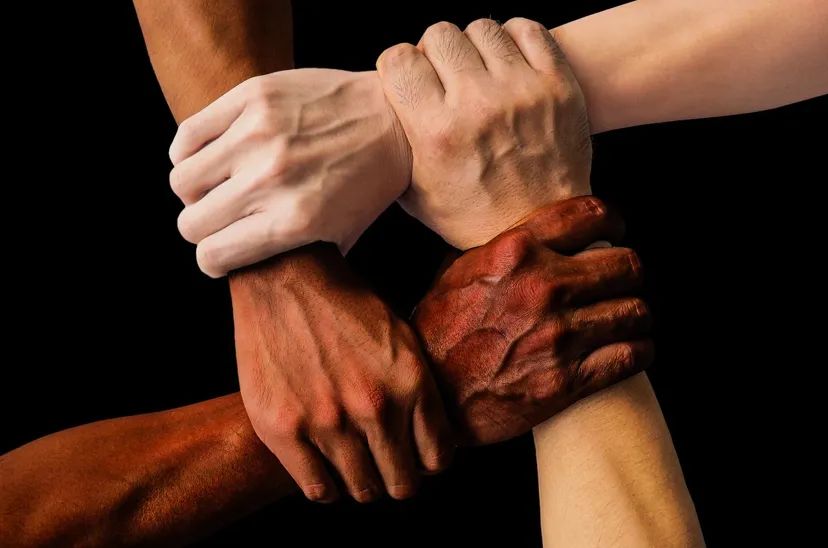
It's more interesting to form your own opinion of a person by getting to know them, than to use the experience of others to claim to know them. We've all done it at some point in our lives: hastily judged individuals on the basis of their social background, the color of their skin, and so on.
Verified or not, we all have our own ideas about everything and anything. Except that the ease with which we judge others without any real basis tends to influence them. Most of the time, it's only the negative that comes out. It's a shame! Whether at school, at work or on public transport, an inappropriate look, word or gesture can undermine morale. These preconceived ideas that sometimes lead us to authoritatively assert our knowledge of a people are a delusion. It's a set of cognitive biases which, instead of bringing us closer together, divide us - we call them prejudices.
A prejudice, according to the Robert dictionary, is a belief, a preconceived opinion often imposed by the environment or the times; it's a bias. This mechanism, it seems, is unconscious, a legacy of evolution. At a time when the survival instinct prevailed in the face of hostility, the brain had to act as quickly as possible. As a result, this legacy leads us to take easy shortcuts, resulting in damage that is sometimes difficult to repair.
Confidence in one's abilities, self-esteem and social assertiveness in relationships with others are the three keys to understanding self-confidence. Acquired for some, a perpetual quest for others, to evolve in a society as demanding as ours, you need to have an ounce of self-confidence. How does it work?
According to Frédéric Franget, self-confidence means knowing one's strengths and weaknesses. It also means, in line with the theme of this article, being able to accept constructive criticism and relativize criticism that isn't constructive. Easier said than done, isn't it! It's a process littered with pitfalls, with the ultimate aim of building character in the face of adversity.
This may be linked to past experiences, positive or otherwise, but what matters most is the attitude we adopt towards these experiences. It can be the result of the prejudices that society tends to pin on us, which ruin an individual's self-esteem and make them doubt their abilities, leading to permanent inaction out of fear of failure and self-censorship. These barriers that students tend to develop are sometimes the result of the organization of a school system based on cognitive biases that appear to be sometimes decisive for school orientation and career choice.
It's true that love for oneself can be developed on one's own, but it's important to evolve in an environment that's conducive to it. The Pygmalion effect teaches us that the more a teacher believes in his or her pupils' abilities, the more likely it is that this belief will become a reality.
As Quentin Condi reveals in his Master's thesis, "a positive, caring classroom climate can foster student motivation, engagement in learning, self-esteem and academic success". Consequently, the living space plays a major role in how we perceive ourselves and how we project ourselves in society. As a result, the internalization of too much negativity affects us and plunges us into inertia, influencing our ability to assert ourselves and, above all, our mental equilibrium.
It's easier to produce value when we're in our own skin and in harmony with the work environment, in the broadest sense of the word. When we're not, our inability to take the initiative makes itself felt and prevents us from taking action. In the workplace, unconscious cognitive biases exist because, in one way or another, they are part and parcel of every individual, having been molded into them from the cradle.
So we understand that these thoughts are educational, cultural and even a matter of social conditioning. Except that they destroy relationships between colleagues. A Deloitte survey revealed that 68% of employees who had witnessed or been victims of prejudice, stereotyping and judgment had noticed a negative effect on their productivity. You can imagine the cost to a company's bottom line.
What's more, prejudices not only play a part in exchanges between employees, they also influence the recruiter's decision, who will tend to choose candidates who correspond to specific models or who share his or her attributes. As a result, there is no diversity within the company, let alone equity. And when it comes to promotion, these prejudices mow down many a career.
With this in mind, we need to create a friendly climate within organizations, so that everyone can flourish. Measures can be taken to this end, such as the organization of training courses focusing on the negative effects of prejudice in the workplace, and the implementation of non-discriminatory corporate policies.
Discrimination is the consequence of prejudice. It acts as an element of distinction based on social origin, race, gender, etc., helping to establish a system of segregation of people or a group of people from a larger whole, to whom preferential treatment is applied over others who deserve nothing at all.
This subject is not new under the sun; inequality seems inseparable from human history. It starts to get annoying when it affects fundamental human rights such as the right to dignity and several others set out in the Universal Declaration of Human Rights and the Convention on the Elimination of All Forms of Discrimination against Women, among others, which constitute frameworks for the protection of human rights in the broadest sense of the term, with a view to guaranteeing that much-sought-after social cohesion.
To achieve this, it is important to develop a healthy attitude towards difference, for example:
Illustration: Truthseecker08 Pixabay.com
References
Barivelo Jacquot, Daupiard Vladimir, "The Pygmalion effect", online https://ien-colombes1.ac-versailles.fr/IMG/pdf/effet_pygmalion.pdf
BOUCHOUL Sabine, "Ces comportements qui détruisent petit à pas l'amour et l'estime de soi", online https://www.tf1info.fr/sante/ces-comportements-qui-detruisent-petit-a-petit-l-amour-et-l-estime-de-soi-2369446.html
Condi Quentin, 2024, "La gestion du climat de classe pour favoriser l'engagement dans les activités et les performances scolaires" MASTER MEEF mention 1er degré Métiers de l'enseignement, de l'éducation et de la formation, online https://dumas.ccsd.cnrs.fr/dumas-04341905/document
Fondation la main à la pâte, 2019, "The impact of stereotypes on school performance" https://synapses-lamap.org/2019/05/06/livre-neurosciences-education-chapitre-5-limpact-des-stereotypes-sur-les-performances-scolaires/
GIRIER D., LAMOURI J., PULIDO B., "Biais inconscients et recrutement", online https://rqedi.com/wp-content/uploads/2022/03/Feuillet-BiaisInconscientsetRecrut_FinaleWEB.pdf
Handicap international , humanité et inclusion, "Stereotypes, cognitive biases and discrimination", online https://www.hi.org/sn_uploads/document/Fiche-technique-3_Stereotypes-biais-cognitifs-et-discrimination.pdf
Métamorphose, "Confiance en soi, comment croire en vous? with Dr Frédéric Fanget", online https://www.youtube.com/watch?v=k69ihoedrbU
Vantage Circle, 2024, "Biais inconscients au travail : Quels sont les exemples de préjugés cachés en milieu professionnel ?", online https://www.vantagecircle.com/fr/blog/biais-inconscients-au-travail/
You might also like:
Global digital independence, including education
It is not so much a question of being able to do without it as of organizing oneself so as not to lack it or suffocate in its excess.
When supplier AI responds to customer AI
What are the consequences of using A.I. in the customer-supplier relationship in public tenders? What does it take to convince a customer?
Decentralization and citizenship, the power of communities and academies
Will decentralization and local empowerment extend to education? While the principles of equality of opportunity have long guided education policies, valuing differences and the individual is a strategic key to the emerging new education.
Reform of training and the nursing profession in France
Nursing training and the nursing profession in France are being reinvented, with university education, nursing science and digital health all on the agenda. An ambitious reform to shape the nurse of tomorrow, a reflective professional with a developed critical and scientific mind, well-versed in new technologies and a key player in a fast-changing healthcare system.
Relations between think tanks and universities
Many think tanks call on university researchers to study and put forward ideas. These may even influence politicians' decisions. However, while some laboratories are objective, many are partisan and act more or less ethically depending on the case. A situation that raises many questions.