75% of teenagers and young adults check their devices every 15 minutes or even more often. If they can't, they become anxious, and anxiety is known to inhibit learning... Mastering concentration is an educational priority.
Publish at January 14 2026 Updated January 14 2026


Like rocks, our bodies are subject to gravity, and like machines, we need energy (1). Physically, we're as concrete as a piece of wood, but we're also relational beings. We have both subjective (intellectual and emotional) and objective relationships with matter, through our senses: touch, sight, hearing, taste, smell and a few other perceptions.
Our relationships with objects range from the complete absence of relationship to the permanent, totally integrated relationship that is virtually impossible to sever, such as those we have with the air we breathe and the water we drink.
Between the two extremes of the spectrum lies the environment in which we are immersed, and the choices we accumulate along the way. We may or may not attach importance to things like the quality of the air or food, to objects like clothes or a car, or to the appearance of our body or the decoration of our living room.
What we give importance to then takes on a symbolic charge that displays who we are in the eyes of others. We can choose to be discreet or ostentatious, but even this choice carries significance. Sometimes poverty or necessity imposes relationships to things that end up being seen as blemishes or stigmas that will influence our future behavior and judgments.
We are all sensitive to symbols and appearances, and knowing how to read and interpret them beyond first impressions has many advantages. Some salespeople have developed an art of qualifying customers from the very first contact (2). Adolescents are prime targets for brands because their judgement is not based on much experience (3); schools have a primary role to play in developing critical thinking skills in the face of marketing and influence strategies associated with objects. (4)
We've had complex cultural relationships with objects such as clothing and housing for millennia, but it was only with the industrial revolution that the number of objects we own multiplied and new relationships were created with, for example, means of transport, furniture, weapons, medicines or electronic devices.
Consider that virtually every human being on earth wears a set of clothes, has access to several means of transport, is equipped with several household accessories, has access to sophisticated medicines and owns several electronic devices; for example, 70% of the world's population has access to a cell phone (5), not to mention televisions, computers, consoles and so on.
Where once wearing silk clothes was enough to assert status, today it's a set of symbols you have to accumulate before you can even pretend. Access to financial credit dilutes the symbolism of the objects associated with their possession. Affirmation of status has moved to another level.
A society's status can be gauged by its relationship with its waste. The presence of huge dumps and landfill sites clearly symbolizes the type of "consumer" relationship our society has with objects. With a global production of 1.2 kg of waste per capita per day, we are not in a circular economy, nor are we moving towards one(6). Organic, plastic, electronic, mining and construction waste all require different kinds of attention.
Inevitably, this irresponsible relationship with "used" or obsolete things leads to congestion and resource depletion, and is destined to disappear along with the social organization that supports it. We can consider CO2 emissions or wastewater production in the same way: a degraded and collectively untenable relationship.
Better objects and tools enable us to do more things, more efficiently, more easily and just as creatively. Having access to things gives us the power to produce more, to control more, to radiate more and, in the absence of safeguards, to indulge in all kinds of excesses.
Some objects, like cell phones or weapons, give more power than others to those who own or produce them. Why did we adopt cell phones so quickly? Why is so much of the national budget (nearly $3,000 billion a year) spent on armaments? (7) Our relationship with things shows our capabilities, our needs, our fears. The way we use them also shows our maturity and wisdom, or lack of them.
The subject of our relationship with weapons is particularly edifying. We can decide to limit it radically, or to strictly control it, because the power that a weapon confers on its bearer does not sit well with the impulsiveness of human reactions or the hubris of rulers.
The "Melian Dialogue" (8), which led to the destruction of the people of Melos by Athens, clearly shows how the exercise of power and strategic considerations have nothing to do with human values.
History repeats itself every time the power of things exceeds our ability to foresee all their medium-term effects; so we naturally prefer to keep power within certain limits, particularly that of others, which must not exceed our own and that of our allies.
Money is not a thing, but a symbol, based on the things that money can buy. Those who have a lot of it inevitably have more power than others. Do they know how to use it better? We don't know, we only know that they know how to obtain and accumulate it (9).
All our discoveries and progress are based on material objects. For example, the mastery of electricity could not have come before the mastery of metal. The properties of objects are constantly being enhanced, until they become intelligent objects. New materials with new properties are bound to have new effects. How do objects that have become sensitive and "intelligent" affect our relationships and possibilities?
Much of the dismay and anxiety about an unpredictable future stems from this uncertainty about the future relationships brought about by the introduction of these new materials, objects and underlying techniques. We won't be taking a drone to work, but we may be eating GMOs without knowing it, and there's certainly plastic in our bodies. We've understood that too many cell phones affect our social relations and that restricting them in schools is beneficial, but what about outside?
It's hard to find serenity in such an unpredictable context. We haven't yet reached the point of digital or social disruption (10), but the accumulation of disruptions is affecting both behavior and mentalities, and on an unprecedented scale.
Science is demonstrating its virtually infinite possibilities, and we will continue to teach science and technology, if only to maintain and operate what we have built. We also need to learn how to make better use of the products of science, and to better understand the complexity of interrelationships in the real world. Finally, given the excesses of human emotionalism, the development of analytical skills and regulatory behaviours is becoming a priority in education in a rapidly changing world. (4)
Intelligent objects have personal and social effects on many levels, and pedagogy is no exception. Teaching content when A.I. can do it better than we can isn't as promising as teaching what A.I. can't do: practice, judgment, regulation and questioning.
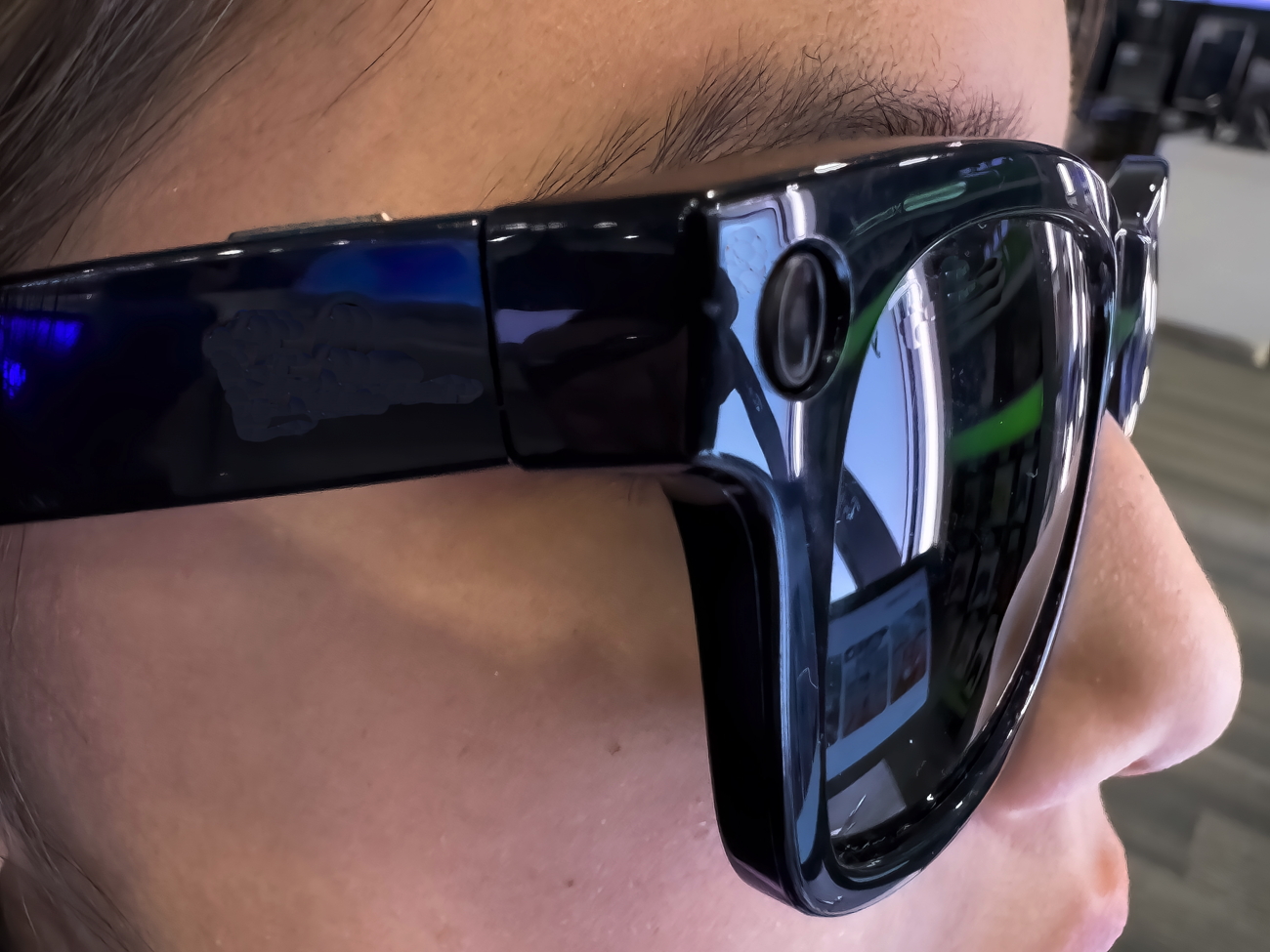
Illustration: Connected glasses - Shutterstock - 2622791433
References
1- Energy needs
https://www.sante-sur-le-net.com/nutrition-bien-etre/nutrition/besoins-energetiques/
2- Qualifying customers: how to qualify prospects - DSales Group
https://salesgroup.ai/fr/qualification-du-client/
3- Brands, teenagers' credo? - UFAPEC
https://www.ufapec.be/files/files/analyses/2009/13les-jeunes-et-marques.pdf
4-Critical thinking
- 7 steps to critical thinking, including examples - Asana - Julia Martins
https://asana.com/fr/resources/critical-thinking-skills
- Developing young people's critical thinking about the influence of advertising on their health: why and how? - Health Education
https://educationsante.be/developper-lesprit-critique-des-jeunes-vis-a-vis-de-linfluence-des-publicites-sur-leur-sante-pourquoi-et-comment/
- 12 concrete tips for getting started in critical thinking education - Martine Rioux - École branchée
https://ecolebranchee.com/12-conseils-concrets-pour-demarrer-dans-leducation-a-lesprit-critique/
- Critical thinking in education - Thot Cursus - https://cursus.edu/fr/recherche?motcle=esprit%20critique
5- Digital 2025 July Global Statshot Report
6- What a Waste 2.0: A Global Snapshot of Solid Waste Management to 2050 - Banque mondiale - Open Knowledge repository - https://openknowledge.worldbank.org/entities/publication/d3f9d45e-115f-559b-b14f-28552410e90a
or
https://openknowledge.worldbank.org/server/api/core/bitstreams/92a50475-3878-5984-829e-0a09a6a9badc/content
7- En 2024, le monde se réarme - Conflits - Revue de géopolitique
https://www.revueconflits.com/en-2024-le-monde-se-rearme/
8- Melian dialogue - Wikipedia - https://fr.wikipedia.org/wiki/Dialogue_m%C3%A9lien
9- Ranking of billionaires - Forbes
https://www.forbes.fr/classements/classement-milliardaires-forbes-decembre-2025-qui-sont-les-dix-personnalites-les-plus-riches-au-monde/
10- Preparing for Digital Disruption - Erik Schrijvers , Corien Prins , Reijer Passchier - Springer Nature
https://link.springer.com/book/10.1007/978-3-030-77838-5
You might also like:
75% of teenagers and young adults check their devices every 15 minutes or even more often. If they can't, they become anxious, and anxiety is known to inhibit learning... Mastering concentration is an educational priority.
Music: a false universal language?
Music is a common feature of all human cultures. We all like to listen to tunes and, sometimes, wiggle to them. So much so that some claim that music is a universal language. But is it really? While some studies try to prove it, others slow down the ardor by reminding us that there really is no such thing as musical universality.
Effectuation, another way to create reality
Effectuation is a know-how and an entrepreneurial posture to create reality.
Learning to the end, learning from your own end
This is an article for those who are learning to the limit and wonder how far they can learn. Without suspense, the answer is: until the end. But you have to be prepared...
Meditation: the invisible training of attention
Meditation enhances attention by providing concentration training. It helps us to combat modern distractions, mainly from networks and our smartphones. By practicing meditation, we regain a greater presence and efficiency, counterbalancing dispersion.