This feeling of excitement can arise in many situations, such as the first day in a new job, or moving into a new house, and many others. Also, the excitement of a class or a crowd can lead to uncontrolled situations, which is why it's important to talk about how to manage it. A good level of understanding is therefore conducive to better management.
The naturalness of excitement.
The sensation of excitement sometimes arises unknowingly in particular situations in our lives. It arises in the face of significant change, such as the first steps in a professional adventure or a first public appearance. We often hear people say "I can't wait to get started" or "I can't wait to move into my new apartment". At such moments, waves of excitement resonate within us.
On a human level, it's the result of a combination of the action of various happiness hormones (dopamine, oxytocin, etc.), stress hormones (cortisol) and increased blood flow. To top it all off, adrenalin is also involved, depending on the context. In this vein, we feel a particular sense of power.
This description sheds light on the world of excitement. It's the result of the body's natural reaction to external data. It's a signal announcing an inner change, an emotional shift. The trajectory followed in this circumstance is not always controlled, especially in a crowd.
Managing excitement: the case of crowds
When a crowd rushes forward in a frenzy to do battle, or a class heckles out of control, it's difficult to thwart them and put an end to their ambition. To a lesser extent, everything usually starts with an individual before it gets going; as if to say that learning to manage excitement can become a personal exercise. The more you know how to do it, the more you can transmit a different mood to others, namely one of appeasement.
The concept of crowd psychology, as explained by Gustave Le Bon, already gives us some insight:
"the crowd is driven almost completely by the unconscious...The actions performed may be perfect as to their execution, the brain not directing them, the individual acts according to the hazards of excitement."
The escalation of a situation is sometimes the result of the exponential transfer of arousal from one person to another. For example, on January 18, 2025, following a controversial refereeing decision during the final of the CAN (African Cup of Nations) 2025 between Senegal and Morocco, clashes gradually broke out between disgruntled Senegalese fans and stewards. Fortunately, calm was restored thanks in particular to the intervention of the forces of law and order.
The path of appeasement is recommended in such circumstances. For crowds often driven by feelings such as anger, an emphasis on joy can "tend to keep a common goal of positive sharing". It's not a one-size-fits-all solution, but an avenue to be explored depending on the context.
In the same vein, a corporate demonstration is not the same as an agitated, less controllable crowd in a soccer stadium, for example. In both cases, thinking in terms of prevention helps you to anticipate.
According to Vermeiren, the best way to prepare for a mass event is to take the following risk factors into account:
- Predisposing factors
- crowd density and composition, lack of supervision, lack of community experience - Facilitating factors
- climate of apprehension, rumors, terrain, darkness, lack of information - Triggering factors
- sudden, abrupt events, anxiety-provoking signals, "panic-inducing" individuals
Breathe easier, talk to each other...
Even before crowding, poorly managed personal excitement can lead to an undesired state. Hormones tend to increase breathing frequency. According to the Breath Foundation, "breathing can regulate emotions through its direct link to the autonomic nervous system."
In this vein, "when we breathe quickly and shallowly, the sympathetic nervous system, responsible for stress and tension reactions, is activated. Conversely, slow, deep breathing (less than 10 cycles per minute) stimulates the parasympathetic system, which induces a state of calm and relaxation."
In a situation of intense excitement, deep breathing is therefore an asset for regaining a certain state of calm. In addition to this, you can have a conversation with yourself. Indeed, self-talk in a state of excitement paves the way for gradual relaxation. However, it's no guarantee of sudden control, as it's not always easy to understand or control what comes naturally.
Positive self-talk has the capacity to transform human beings. Whatever the context, repeating positive phrases has a psychological influence on changing a negative mood into a positive one. Jacques Van Rillaer speaks of saving self-instructions as an approach to "solving a problem or soothing painful emotions".
In this vein, when faced with discouraging voices, inwardly encouraging oneself with positive statements helps to change perspective. Many people tend to see the glass as half-empty, but seeing it as half-full can change the whole picture.
No ready-made solution for dealing with excitement will always work. Nevertheless, there are a number of avenues that can be explored, including calming and anticipatory crowd management, the cultivation of deep breathing and self-talk as strategies for evaluating and managing personal emotions.
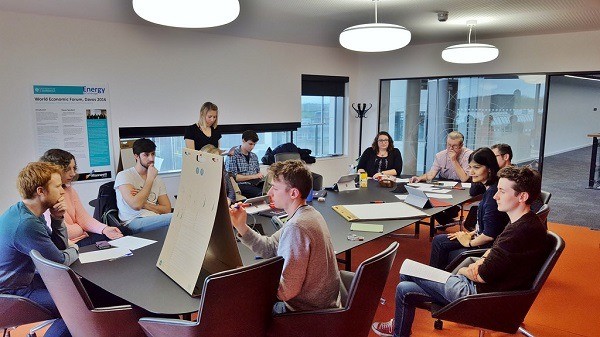
Illustration: image generated by Meta Ai
Sources
Senegal-Morocco ( 1-0): Senegalese fans clash with stewards over the penalty kick - Le parisien
https:// www.leparisien.fr/sports/football/coupe-d-afrique-des-nations/senegal-maroc-1-0-les-affrontements-a-coups-de-chaises-entre-les-supporters-senegalais-et-les-stadiers-au-moment-du-penalty-19-01-2026-OHRHPEMBD5B5VAPM7MHSCF5OZA.php
Happiness hormones (dopamine, serotonin, oxytocin and endorphin), how to stimulate them?
https://www.carenity.com/infos-maladie/magazine/actualites/les-hormones-du-bonheur-les-comprendre-et-les-stimuler-2612
Cortisol: is the stress hormone responsible for your health problems?
https://www.bbc.com/afrique/articles/c51196m916lo
Breathing better - https://www.lesouffle.org/sites/default/files/2025-05/118_2025_LettreFDS_MieuxRespirer.pdf
Crowd psychology: elements of understanding and prevention in collective disaster situations
https:// www.sfmu.org/upload/70_formation/02_eformation/02_congres/Urgences/urgences2007/donnees/pdf/78_vermeiren.pdf
Inner speech, emotions and stress - https://www.youtube.com/watch?v=jXEDZCKXPsI
Self-talk - https://moodle.uclouvain.be/pluginfile.php/138212/mod_resource/content/2/Dialogue%20inte%CC%81rieur.pdf
See more articles by this author