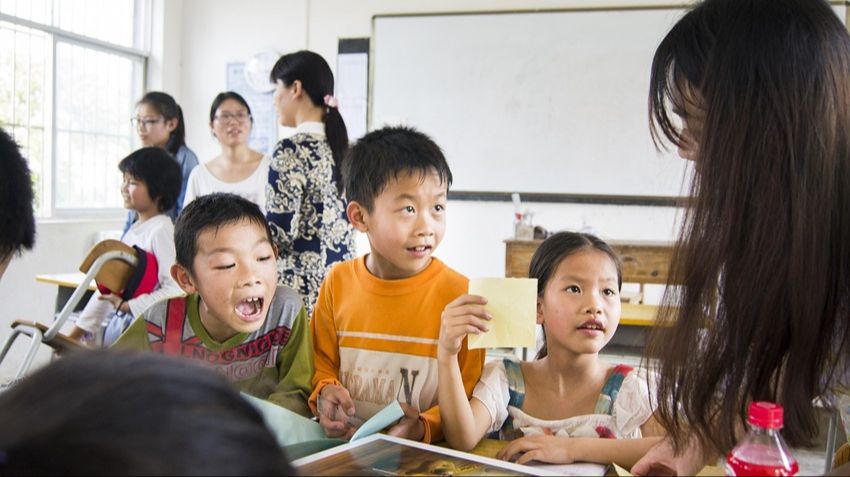
Classroom management strategies for elementary schools
Managing a class of children is no simple matter. Teachers are faced with classes of twenty to thirty students, each with their own particularities. It can quickly become a headache to ensure that everything takes place in an environment conducive to learning. Or not, depending on the inventiveness of some.
In this issue of "Être prof", we hear from teachers who have found ways to improve classroom discipline without resorting to the classic vertical approach.
They propose a variety of methods to create a framework in which students are individually, but above all collectively, rewarded for doing the right thing. To make clear what is expected of them, one teacher uses the principle of missions chosen by the learners each day. This can be as simple as making sure that students don't leave their satchels lying around, or maintaining silence during explanations of an exercise. At the start of the day, she picks a name, which she keeps secret, and uses it as a barometer to check that the objectives are being met. As a result, everyone must act according to the missions to ensure success. If one fails, the students formulate another for the following day. Another teacher uses an approach akin to a weekly salary for small perks. In this way, some students keep too much and finish the year with little or no money spent, while others will always have used up their "money". The idea is above all to empower students.
When it comes to excitement or troubled behavior, the idea is to use ways for everyone to feel invested in calming things down. Some teachers will use the image of a dragon forming when they feel frustration mounting, and the students can in this way soothe the "awakening beast" by proposing solutions. This also applies to children who feel anger inside them; the teacher can help them put the dragon back to sleep by being empathetic, trying to understand what's going on with them rather than constantly placing blame.
Many serious games address the topic of sustainable development. Yet before such solutions were proposed, innovative people had to go against the social grain and fight to improve their environment. A humorous adventure game, hosted by the National Film Board, teaches children the attitudes they need to adopt to make a difference.
All our lives have an online component. As a result, a large proportion of Internet users are at risk of being tricked by hackers. A short game invites Internet users to remember certain elements of cybersecurity using a space theme.
To a layman, music is just a tune performed by a musician. Yet, if he were to play Meludia, he would learn all the rudiments and terms associated with musical practice.
The sharing economy has led to small changes in various economic sectors such as transportation, housing, etc. This approach has changed the relationship of citizens for different services, now cheaper and offered by their fellow citizens. However, who actually benefits from this new economy? The people or the companies in question? A U.S. newsgame shows how the life of Uber drivers isn't as lucrative as one might think.
Video games designed for people with disabilities are already a rare resource. An experience that allows multiple players is even rarer. Yet this latest creation from "Ludociels for All" challenges players to light up an entire maze by walking balls of light.