Publish at February 10 2026Updated February 10 2026
Has French cinema become a distorting mirror?
An art dominated in France by a social class
France can largely claim to be the father of cinema. It has enabled this seventh art form to grow throughout the world, and every country develops its own cinematography. Nevertheless, France's cinematography is widely recognized, even beyond its borders. But is it representative of the Hexagonean population? More or less.
Rob Grams, deputy editor of Frustration Magazine and author of the book "Bourgeois Gaze", questions the place of the working classes in French cinema. Indeed, they are often under-represented. Most of the protagonists generally have advanced degrees, white-collar jobs and live in rather large, posh living environments compared to the vast majority of the public.
They are mostly apolitical, promoting the status quo and avoiding divisive topics. It's a picture that's far too smooth, partly because the film world is made up of middle-class people who know their social class. Even actors, in general, tend to come from this social stratum.
The problem with this "bourgeois gaze" is that it defines what a society would be like without showing its strata. It even has a tendency to dramatize the lower strata. Stories about proletarians regularly end in tragedy, and suburban films come close to the voyeurism of riots and banditry, forgetting that these millions of people also have personal stories that don't always involve pathos and deserve to be told.
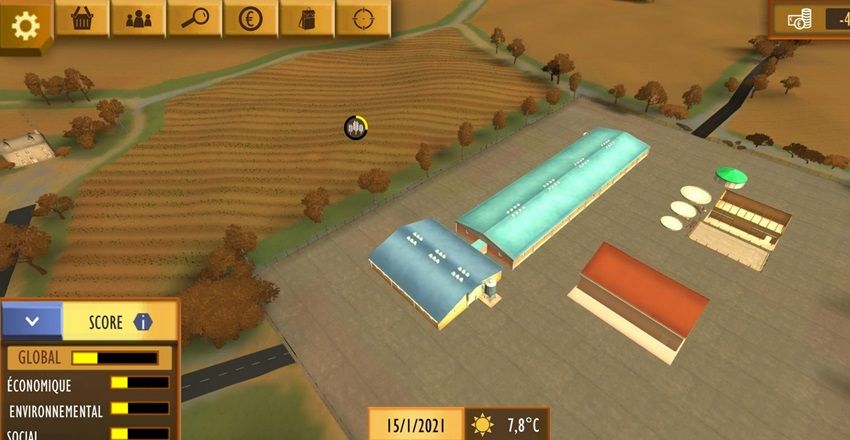
There's nothing simple about being a farmer. You have to plan your activities throughout the year, make sure you have the right machinery, maintain it and so on. All with a view to ecology. A serious French game seeks to teach agroecology.
Video games designed for people with disabilities are already a rare resource. An experience that allows multiple players is even rarer. Yet this latest creation from "Ludociels for All" challenges players to light up an entire maze by walking balls of light.
Many serious games address the topic of sustainable development. Yet before such solutions were proposed, innovative people had to go against the social grain and fight to improve their environment. A humorous adventure game, hosted by the National Film Board, teaches children the attitudes they need to adopt to make a difference.