Publish at February 25 2026Updated February 25 2026
The invisible biases that hold women back in academia
Many stereotypes and biases to overcome
The issue of gender parity is still very much alive. Although some claim that parity has been achieved, research figures clearly show that biases and stereotypes are still prevalent in society, and particularly in academia.
Although women are very much in evidence, there is a noticeable decline, and not just in the scientific fields, where they are effectively under-represented (except in biology). Charlotte Jacquemot, a researcher in cognitive science at the École Normale Supérieure (ENS), presents clear and conclusive figures.
Research shows, for example, that exercises presented as mathematics or art create disparities in success between boys and girls. When a class is told that a test has been done better by men, they do better, whereas if we say that there is no difference, this also affects the success rate of women. The presence of individuals displaying male stereotypes in a female student's environment will affect her performance.
Biases are present among teaching staff and jury members, especially when they fail to recognize internal biases and associate the whole thing solely with questions of competence. Research has shown, for example, that for the same curriculum vitae, the one with a man's name will be selected more often than the one with a woman's name.
These numerous disparities have strong costs on society, on scientific fields and even on men, since excessive "virility" leads to expenses of 95 billion a year, among other things, given their over-representation in the prison population and court cases, or the much higher suicide rate (75%) among young men.
Running time: 31min37
Image created by AI (Copilot) "Differentiation between male and female students (gender bias) at university using the image of a scale".
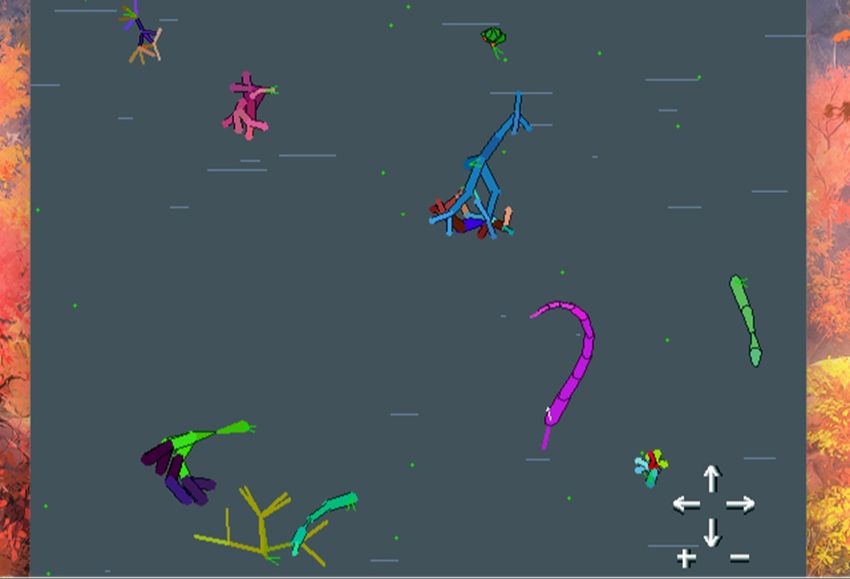
How do you talk to children about genetics and heredity? A British museum has come up with the method: design a game in which you create a line of adorable creatures with precise objectives. The game is fun, colorful and easy to learn. Even adults will succumb to the charms of the bugs and their large families.
The Englishes MOOC course was developed by an artist and is designed for anyone interested in the (English) language. It explores the history of English, its pronunciation, and its relationship to the art world.